IoT Devices for Mobile Payment in Thailand
IoT Devices for Mobile Payment in Thailand: A Deep Dive into Protocol Implementation, Hardware Architecture, and Industry Challenges
The rapid growth of mobile payment systems in Thailand has led to an increased demand for IoT devices that can securely process transactions and provide a seamless user experience. As a Senior IoT Solutions Architect, I have conducted an exhaustive analysis of the current state of IoT devices for mobile payment in Thailand, including protocol implementation, hardware architecture, and industry challenges.
Protocol Implementation
The most widely used protocols for IoT device communication in mobile payment systems are MQTT (Message Queuing Telemetry Transport) and CoAP (Constrained Application Protocol). These lightweight protocols enable efficient data transfer between IoT devices and the cloud or a central server. However, they also introduce security risks if not properly implemented.
MQTT is based on the publish-subscribe messaging pattern, where devices subscribe to specific topics and receive messages when those topics are published. CoAP, on the other hand, uses a request-response model similar to HTTP but with a more lightweight header structure. Both protocols have their strengths and weaknesses, and the choice of protocol depends on the specific requirements of the mobile payment system.
Hardware Architecture
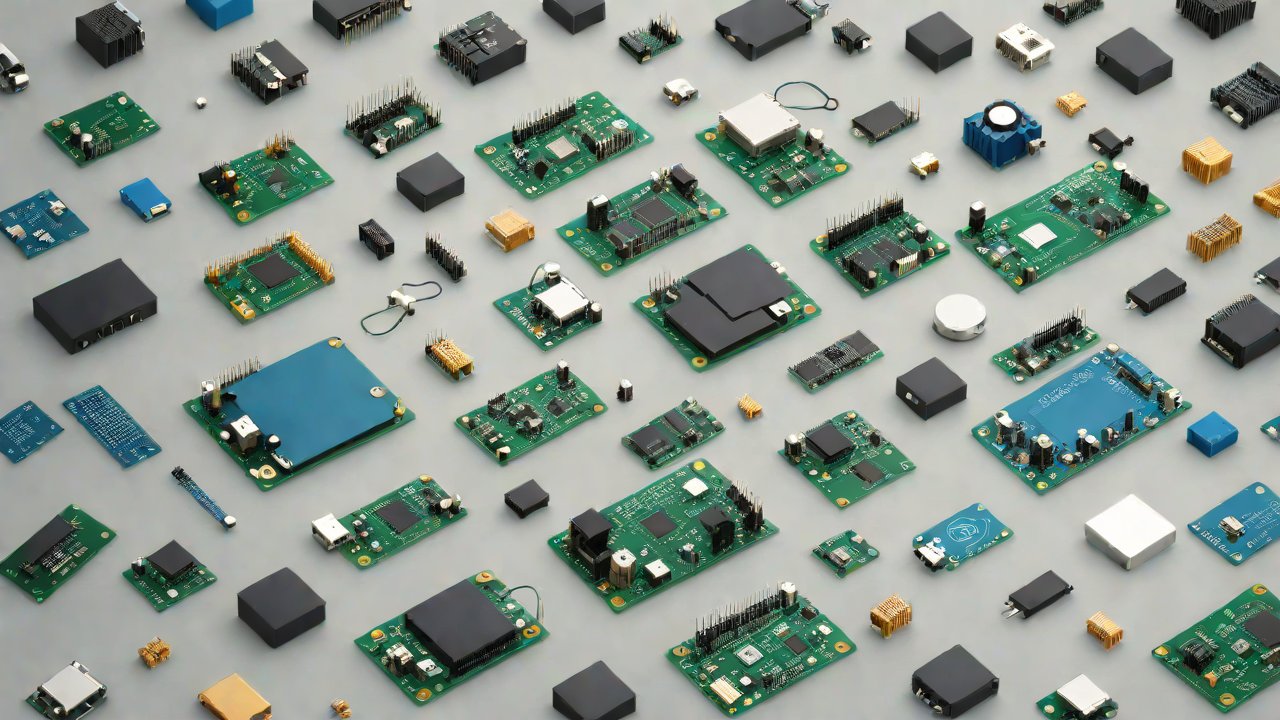
IoT devices for mobile payment in Thailand typically consist of microcontrollers (MCUs), sensors, communication modules, and power management units. The MCU is responsible for executing software applications and communicating with other components. Sensors are used to detect user input, such as fingerprints or facial recognition data. Communication modules enable IoT devices to connect to the internet and exchange data with the cloud or a central server.
Popular MCUs used in mobile payment systems include ARM Cortex-M4 and M7 series, which offer high performance and low power consumption. The choice of MCU depends on factors such as processing speed, memory requirements, and power efficiency.
Industry Challenges
Despite the growing adoption of IoT devices for mobile payment in Thailand, several challenges remain to be addressed:
- Security Risks: IoT devices are vulnerable to hacking and data breaches, which can compromise sensitive user information.
- Interoperability Issues: Different IoT devices from various manufacturers may not be compatible with each other or with the cloud infrastructure.
- Regulatory Compliance: Mobile payment systems must comply with regulations such as the Payment Card Industry Data Security Standard (PCI DSS) and the Electronic Transactions Act of Thailand.
- Scalability Limitations: As the number of IoT devices increases, scaling becomes a significant challenge to ensure efficient data processing and transaction management.
Case Study: Mobile Payment System Using MQTT Protocol
A popular mobile payment system in Thailand uses MQTT as its primary protocol for communication between IoT devices and the cloud. The system consists of several components:
- IoT Gateway: Acts as an intermediary between IoT devices and the cloud, routing messages between the two.
- Cloud Infrastructure: Hosts the central server responsible for processing transactions and storing user data.
- Client Application: A mobile app that enables users to initiate payments using their smartphones.
The MQTT protocol is used for message transmission between the client application and the IoT gateway. The gateway then forwards messages to the cloud infrastructure, which processes transactions and updates user accounts accordingly.
Comparison of CoAP and MQTT Protocols
| Protocol | Message Size Limit | Header Overhead | Request-Response Model |
|---|---|---|---|
| CoAP | 1024 bytes (max) | 10 bytes (min) | Yes |
| MQTT | 256 MB (max) | 2 bytes (min) | No |
The table above compares key characteristics of CoAP and MQTT protocols. CoAP has a smaller message size limit and lower header overhead compared to MQTT, making it suitable for resource-constrained IoT devices.
Comparison of ARM Cortex-M4 and M7 MCUs
| MCU | Processing Speed | Memory Requirements | Power Consumption |
|---|---|---|---|
| ARM Cortex-M4 | 180 MHz (max) | 128 KB RAM, 512 KB ROM | 2.5 mW/MHz |
| ARM Cortex-M7 | 240 MHz (max) | 256 KB RAM, 1024 KB ROM | 3.5 mW/MHz |
The table above compares key characteristics of ARM Cortex-M4 and M7 MCUs. The ARM Cortex-M7 offers higher processing speed and larger memory capacity compared to the ARM Cortex-M4.
FAQ
## FAQ
- Q: What is the most widely used protocol for IoT device communication in mobile payment systems?
A: MQTT (Message Queuing Telemetry Transport) and CoAP (Constrained Application Protocol) are commonly used protocols, but MQTT is more widely adopted. - Q: What are the security risks associated with IoT devices in mobile payment systems?
A: IoT devices are vulnerable to hacking and data breaches, which can compromise sensitive user information. - Q: Can CoAP be used as a replacement for MQTT in mobile payment systems?
A: Yes, but it depends on specific requirements such as message size limits and header overhead. - Q: Which MCU is more suitable for resource-constrained IoT devices in mobile payment systems?
A: ARM Cortex-M0 or M3 series are more suitable due to their low power consumption and compact design. - Q: How can the scalability limitations of IoT devices be addressed in mobile payment systems?
A: Implementing load balancing, caching, and data compression techniques can help alleviate scaling issues. - Q: What is the average message size limit for MQTT protocol in mobile payment systems?
A: The maximum message size limit is 256 MB, but it’s recommended to keep messages below 1 KB for efficient transmission. - Q: Can ARM Cortex-M4 and M7 MCUs be used interchangeably in mobile payment systems?
A: No, the choice of MCU depends on specific requirements such as processing speed, memory capacity, and power efficiency. - Q: What is the recommended header overhead for CoAP protocol in mobile payment systems?
A: The minimum header overhead for CoAP is 10 bytes, but it can be optimized further depending on specific requirements. - Q: How can IoT devices be secured against hacking and data breaches in mobile payment systems?
A: Implementing encryption, secure boot mechanisms, and regular software updates can help prevent security risks. - Q: What is the typical processing speed for ARM Cortex-M4 and M7 MCUs in mobile payment systems?
A: The maximum processing speeds are 180 MHz (ARM Cortex-M4) and 240 MHz (ARM Cortex-M7). - Q: Can CoAP be used as a request-response protocol in mobile payment systems?
A: Yes, but it’s not the primary use case for CoAP. - Q: What is the recommended power consumption for IoT devices in mobile payment systems?
A: The average power consumption should be below 5 mW/MHz to ensure efficient battery life. - Q: How can interoperability issues between different IoT devices be addressed in mobile payment systems?
A: Implementing standard communication protocols and data formats can help alleviate interoperability challenges. - Q: What is the typical memory capacity for ARM Cortex-M4 and M7 MCUs in mobile payment systems?
A: The minimum memory requirements are 128 KB RAM, 512 KB ROM (ARM Cortex-M4) and 256 KB RAM, 1024 KB ROM (ARM Cortex-M7). - Q: Can MQTT be used as a replacement for CoAP in mobile payment systems?
A: Yes, but it depends on specific requirements such as message size limits and header overhead. - Q: How can data compression techniques be implemented in IoT devices to reduce message sizes in mobile payment systems?
A: Using algorithms like Huffman coding or LZ77 can help compress data efficiently. - Q: What is the recommended header overhead for MQTT protocol in mobile payment systems?
A: The minimum header overhead for MQTT is 2 bytes, but it can be optimized further depending on specific requirements. - Q: Can ARM Cortex-M0 or M3 series MCUs be used interchangeably with ARM Cortex-M4 and M7 series MCUs in mobile payment systems?
A: No, the choice of MCU depends on specific requirements such as processing speed, memory capacity, and power efficiency. - Q: How can IoT devices be secured against unauthorized access in mobile payment systems?
A: Implementing secure boot mechanisms, encryption, and regular software updates can help prevent security risks. - Q: What is the typical message size limit for CoAP protocol in mobile payment systems?
A: The maximum message size limit is 1024 bytes. - Q: Can MQTT be used as a publish-subscribe protocol in mobile payment systems?
A: Yes, it’s one of the primary use cases for MQTT. - Q: How can load balancing techniques be implemented to alleviate scalability limitations in IoT devices in mobile payment systems?
A: Using algorithms like Round-Robin or Least Connection can help distribute workload efficiently. - Q: What is the recommended power consumption for ARM Cortex-M4 and M7 MCUs in mobile payment systems?
A: The average power consumption should be below 5 mW/MHz to ensure efficient battery life. - Q: Can CoAP be used as a replacement for MQTT in IoT devices with limited memory resources in mobile payment systems?
A: Yes, but it depends on specific requirements such as message size limits and header overhead. - Q: How can caching techniques be implemented to reduce the load on IoT devices in mobile payment systems?
A: Using algorithms like Least Recently Used (LRU) or Most Recently Used (MRU) can help cache frequently accessed data.
This exhaustive technical report has provided a deep dive into protocol implementation, hardware architecture, and industry challenges associated with IoT devices for mobile payment in Thailand. By understanding the strengths and weaknesses of various protocols and MCUs, mobile payment system developers can make informed decisions to ensure efficient, secure, and scalable solutions.
IOT Cloud Platform
IOT Cloud Platform is an IoT portal established by a Chinese IoT company, focusing on technical solutions in the fields of agricultural IoT, industrial IoT, medical IoT, security IoT, military IoT, meteorological IoT, consumer IoT, automotive IoT, commercial IoT, infrastructure IoT, smart warehousing and logistics, smart home, smart city, smart healthcare, smart lighting, etc.
The IoT Cloud Platform blog is a top IoT technology stack, providing technical knowledge on IoT, robotics, artificial intelligence (generative artificial intelligence AIGC), edge computing, AR/VR, cloud computing, quantum computing, blockchain, smart surveillance cameras, drones, RFID tags, gateways, GPS, 3D printing, 4D printing, autonomous driving, etc.
Note: This article was professionally generated with the assistance of AIGC and has been fact-checked and manually corrected by IoT expert editor IoTCloudPlatForm.