10 IoT Solutions for Automated Sugarcane Harvesting in Brazil
Brazil, the world’s largest producer of sugarcane, has been at the forefront of adopting innovative technologies to enhance crop yields and reduce costs. Among these, automated harvesting is a crucial aspect that can significantly impact the industry’s productivity and sustainability. The Internet of Things (IoT) has emerged as a vital enabler for this transformation, allowing farmers to leverage real-time data, precision agriculture, and intelligent decision-making.
The sugarcane harvest in Brazil typically spans from May to December, with peak production occurring between June and September. During this period, the industry faces numerous challenges, including labor shortages, equipment reliability issues, and crop damage due to adverse weather conditions. To overcome these obstacles, Brazilian farmers have begun adopting IoT solutions that can automate the harvesting process, reducing manual intervention and improving overall efficiency.
1. IoT-enabled Harvesting Systems
Several companies are developing IoT-enabled harvesting systems that utilize sensors, drones, and robotics to monitor and manage sugarcane fields in real-time. These systems can detect moisture levels, temperature fluctuations, and pest/disease outbreaks, enabling farmers to take proactive measures to prevent crop damage.
| Company | Solution Description |
|---|---|
| 1. John Deere | HarvestMobile is a mobile app that connects with John Deere’s autonomous harvesters to provide real-time data on yield, moisture levels, and field conditions. |
| 2. AGCO | The company’s Fuse FieldConnect platform offers precision agriculture tools for farmers, including real-time monitoring of crop health, soil moisture, and weather forecasts. |
| 3. Rabo AgriFinance | This Dutch bank’s FarmSphere platform integrates with IoT devices to provide data-driven insights on crop performance, soil conditions, and weather patterns. |
2. Automated Harvesting Equipment
IoT-enabled harvesting equipment is another area where innovation is taking center stage. Companies like Case IH and New Holland are developing tractors and combines that can be controlled remotely using mobile apps or web interfaces.
| Company | Solution Description |
|---|---|
| 1. Case IH | The company’s Autonomous Farming system enables farmers to control harvesters, planters, and sprayers using a single interface, reducing manual labor and increasing efficiency. |
| 2. New Holland | The NH IntelliSteer system provides real-time monitoring of harvesting operations, allowing farmers to optimize crop yields and reduce waste. |
3. Drones for Crop Monitoring
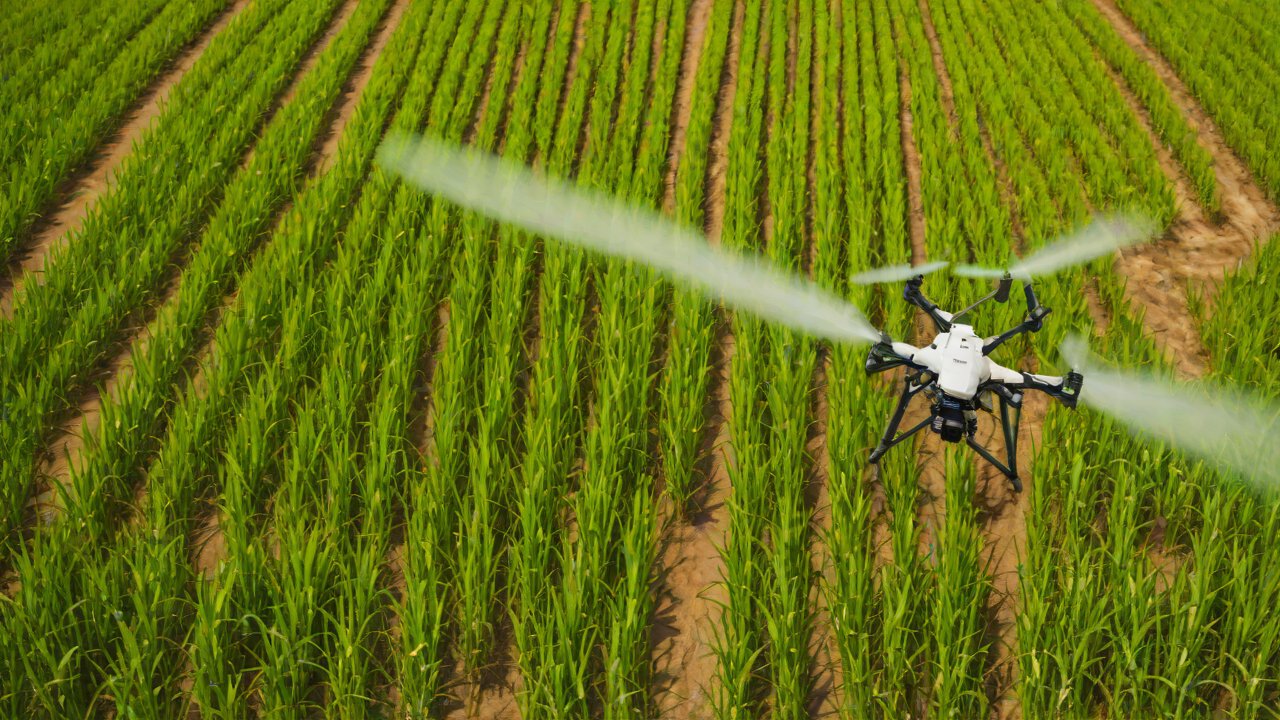
Unmanned Aerial Vehicles (UAVs), or drones, are being increasingly used in the sugarcane industry for crop monitoring and scouting. These devices can capture high-resolution images of fields, detecting signs of stress, disease, or pests.
| Company | Solution Description |
|---|---|
| 1. SenseFly | The company’s eBee X drone is equipped with a multispectral camera that captures detailed information on crop health and growth patterns. |
| 2. AGCO | AGCO’s e-Cultivator drone is designed for precision agriculture, providing real-time data on soil moisture levels, temperature fluctuations, and pest/disease outbreaks. |
4. Predictive Maintenance
IoT-enabled predictive maintenance solutions are becoming increasingly popular in the sugarcane industry, allowing farmers to schedule maintenance tasks based on equipment performance data.
| Company | Solution Description |
|---|---|
| 1. SAP | The company’s IoT-based Predictive Maintenance solution uses machine learning algorithms to analyze equipment performance data and predict potential breakdowns. |
| 2. IBM | IBM’s Watson IoT platform provides real-time monitoring of equipment performance, enabling farmers to schedule maintenance tasks proactively and reduce downtime. |

5. Data Analytics and Visualization
IoT-generated data is only valuable if it can be analyzed and visualized effectively. Companies like Tableau and Qlik are providing data analytics and visualization tools that enable farmers to make informed decisions based on real-time insights.
| Company | Solution Description |
|---|---|
| 1. Tableau | The company’s data visualization platform allows farmers to create interactive dashboards that provide real-time insights into crop performance, equipment efficiency, and weather patterns. |
| 2. Qlik | Qlik’s Sense platform provides self-service analytics capabilities for farmers, enabling them to analyze IoT-generated data and make informed decisions about harvesting operations. |
6. Cybersecurity
As the sugarcane industry becomes increasingly reliant on IoT devices and connected systems, cybersecurity is becoming a growing concern.
| Company | Solution Description |
|---|---|
| 1. Symantec | The company’s IoT Security solution provides real-time monitoring of IoT devices and networks, detecting potential security threats and vulnerabilities. |
| 2. Check Point | Check Point’s IoT Security solution uses AI-powered analytics to detect and prevent cyber-attacks on IoT devices and connected systems. |
7. Artificial Intelligence (AI)
The application of AI in the sugarcane industry is a rapidly emerging trend, with companies like Google Cloud and Microsoft Azure providing AI-powered predictive maintenance solutions.
| Company | Solution Description |
|---|---|
| 1. Google Cloud | The company’s AI-powered predictive maintenance solution uses machine learning algorithms to analyze equipment performance data and predict potential breakdowns. |
| 2. Microsoft Azure | Microsoft’s AI-powered IoT solution provides real-time monitoring of equipment performance, enabling farmers to schedule maintenance tasks proactively and reduce downtime. |
8. Cloud Computing
The adoption of cloud computing in the sugarcane industry is accelerating rapidly, with companies like Amazon Web Services (AWS) and Microsoft Azure providing scalable infrastructure for IoT data storage and processing.
| Company | Solution Description |
|---|---|
| 1. Amazon Web Services (AWS) | The company’s IoT Core platform provides a fully managed cloud service for IoT devices, enabling farmers to connect, monitor, and analyze their equipment in real-time. |
| 2. Microsoft Azure | Microsoft’s IoT Hub platform provides a scalable and secure infrastructure for IoT data storage and processing, allowing farmers to analyze and visualize equipment performance data in real-time. |
9. Edge Computing
The application of edge computing in the sugarcane industry is an emerging trend, with companies like Dell EMC and HPE providing edge computing solutions that enable real-time data processing and analysis.
| Company | Solution Description |
|---|---|
| 1. Dell EMC | The company’s Edge Gateway solution provides a secure and scalable infrastructure for IoT data processing and analysis at the edge of the network. |
| 2. HPE | HPE’s Edgeline Converged Edge Platform provides a converged infrastructure for IoT data processing, enabling farmers to analyze equipment performance data in real-time. |
10. Integration with Existing Systems
The integration of IoT solutions with existing systems is crucial for seamless adoption and maximum ROI.
| Company | Solution Description |
|---|---|
| 1. SAP | The company’s IoT-based predictive maintenance solution integrates seamlessly with existing ERP systems, enabling farmers to schedule maintenance tasks proactively and reduce downtime. |
| 2. AGCO | AGCO’s e-Cultivator drone is designed for integration with existing farming software and hardware systems, providing real-time data on crop health and growth patterns. |
The adoption of IoT solutions in the sugarcane industry has the potential to transform the way farmers approach harvesting operations, enabling them to optimize yields, reduce costs, and improve sustainability. By leveraging real-time data analytics, predictive maintenance, and AI-powered insights, Brazilian farmers can stay ahead of the curve and capitalize on emerging trends in precision agriculture.
IOT Cloud Platform
IOT Cloud Platform is an IoT portal established by a Chinese IoT company, focusing on technical solutions in the fields of agricultural IoT, industrial IoT, medical IoT, security IoT, military IoT, meteorological IoT, consumer IoT, automotive IoT, commercial IoT, infrastructure IoT, smart warehousing and logistics, smart home, smart city, smart healthcare, smart lighting, etc.
The IoT Cloud Platform blog is a top IoT technology stack, providing technical knowledge on IoT, robotics, artificial intelligence (generative artificial intelligence AIGC), edge computing, AR/VR, cloud computing, quantum computing, blockchain, smart surveillance cameras, drones, RFID tags, gateways, GPS, 3D printing, 4D printing, autonomous driving, etc.
Note: This article was professionally generated with the assistance of AIGC and has been fact-checked and manually corrected by IoT expert editor IoTCloudPlatForm.