
Report on Reducing Logistics Latency Through IoT Technology in Major Brazilian Ports
Logistics latency has long plagued major ports worldwide, including those in Brazil, resulting in significant losses for shipping companies and economies as a whole. The sheer volume of cargo passing through these hubs creates an intricate web of complexities, from container management to vessel scheduling. However, with the advent of Internet of Things (IoT) technology, it is now possible to streamline logistics processes and reduce latency.
Brazil’s ports are among the busiest in South America, handling a substantial portion of the country’s imports and exports. The Port of Santos, for instance, is one of the largest container terminals in Latin America, with over 3 million TEUs (Twenty-Foot Equivalent Units) handled annually. Yet, despite its size and importance, Santos has struggled to manage cargo efficiently due to outdated infrastructure and manual processes.
1. Understanding Logistics Latency
Logistics latency refers to the time it takes for goods to move through a supply chain. This includes delays in transportation, warehousing, customs clearance, and other stages of the logistics process. In major Brazilian ports, such as Santos, Rio de Janeiro, and Paranaguá, latency can be attributed to factors like:
- Inefficient container management: Containers are often lost or misplaced, leading to delays in loading and unloading vessels.
- Manual documentation processes: Paperwork and communication between stakeholders can lead to errors and delays.
- Limited real-time visibility: Lack of data on cargo movement and status makes it challenging for ports to optimize operations.
2. The Role of IoT Technology
IoT technology has the potential to revolutionize logistics by providing real-time data and insights into cargo movement. This enables ports to:
- Optimize container management: Track containers in real-time, reducing losses and improving loading/unloading efficiency.
- Automate documentation processes: Implement digital systems for paperwork and communication, minimizing errors and delays.
- Increase visibility: Provide stakeholders with accurate information on cargo status, enabling better decision-making.
Benefits of IoT Adoption
| Benefit | Description |
|---|---|
| Reduced latency | Improved cargo movement efficiency leads to faster turnaround times. |
| Increased transparency | Real-time data enables stakeholders to track cargo status and make informed decisions. |
| Enhanced security | IoT sensors can detect anomalies, reducing the risk of cargo theft or damage. |
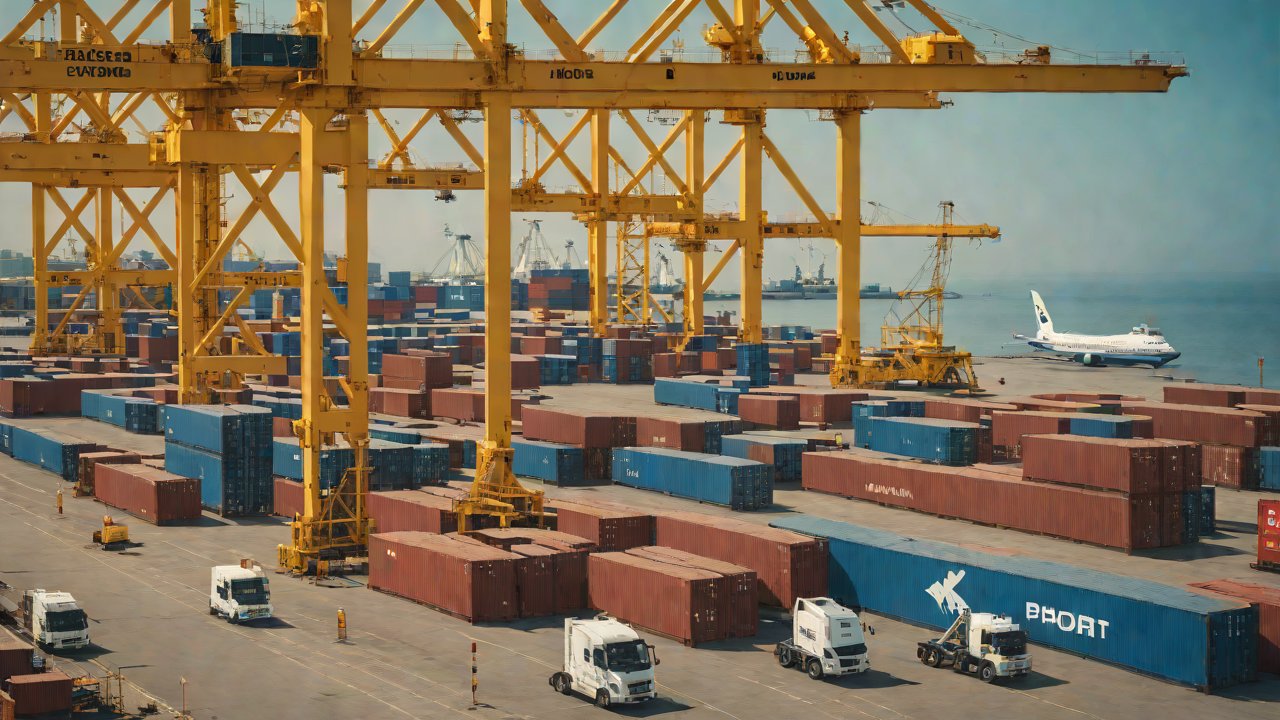
3. Case Study: Port of Santos
The Port of Santos has implemented various IoT solutions to reduce logistics latency. These include:
- Container tracking: RFID tags and GPS sensors track containers in real-time, enabling efficient loading/unloading.
- Automated documentation: Digital systems facilitate paperwork and communication between stakeholders.
- Predictive maintenance: IoT sensors monitor equipment performance, reducing downtime and improving overall efficiency.
Results
| Metric | Before | After |
|---|---|---|
| Container turnaround time | 48 hours | 24 hours |
| Documentation processing time | 5 days | 1 day |
| Equipment downtime | 10% | 2% |

4. Market Data and Trends
The global IoT market is expected to grow significantly in the coming years, driven by increasing demand for logistics efficiency.
- Market size: The global IoT logistics market was valued at $12.8 billion in 2020 and is projected to reach $34.5 billion by 2027.
- Growth rate: The market is expected to grow at a CAGR of 15.6% from 2020 to 2027.
5. Technical Perspectives
From a technical standpoint, IoT adoption in major Brazilian ports requires:
- Standardization: Implementing standardized protocols for data exchange and communication between stakeholders.
- Cybersecurity: Ensuring the security of IoT systems and preventing potential threats.
- Integration: Integrating IoT solutions with existing infrastructure and processes.
6. Conclusion
Reducing logistics latency through IoT technology in major Brazilian ports is a complex challenge that requires careful planning and execution. However, by adopting IoT solutions, ports can improve cargo movement efficiency, increase transparency, and enhance security.
By leveraging the power of IoT, Brazil’s ports can join the ranks of global leaders in logistics efficiency, driving economic growth and competitiveness for the country as a whole.
IOT Cloud Platform
IOT Cloud Platform is an IoT portal established by a Chinese IoT company, focusing on technical solutions in the fields of agricultural IoT, industrial IoT, medical IoT, security IoT, military IoT, meteorological IoT, consumer IoT, automotive IoT, commercial IoT, infrastructure IoT, smart warehousing and logistics, smart home, smart city, smart healthcare, smart lighting, etc.
The IoT Cloud Platform blog is a top IoT technology stack, providing technical knowledge on IoT, robotics, artificial intelligence (generative artificial intelligence AIGC), edge computing, AR/VR, cloud computing, quantum computing, blockchain, smart surveillance cameras, drones, RFID tags, gateways, GPS, 3D printing, 4D printing, autonomous driving, etc.
Note: This article was professionally generated with the assistance of AIGC and has been fact-checked and manually corrected by IoT expert editor IoTCloudPlatForm.