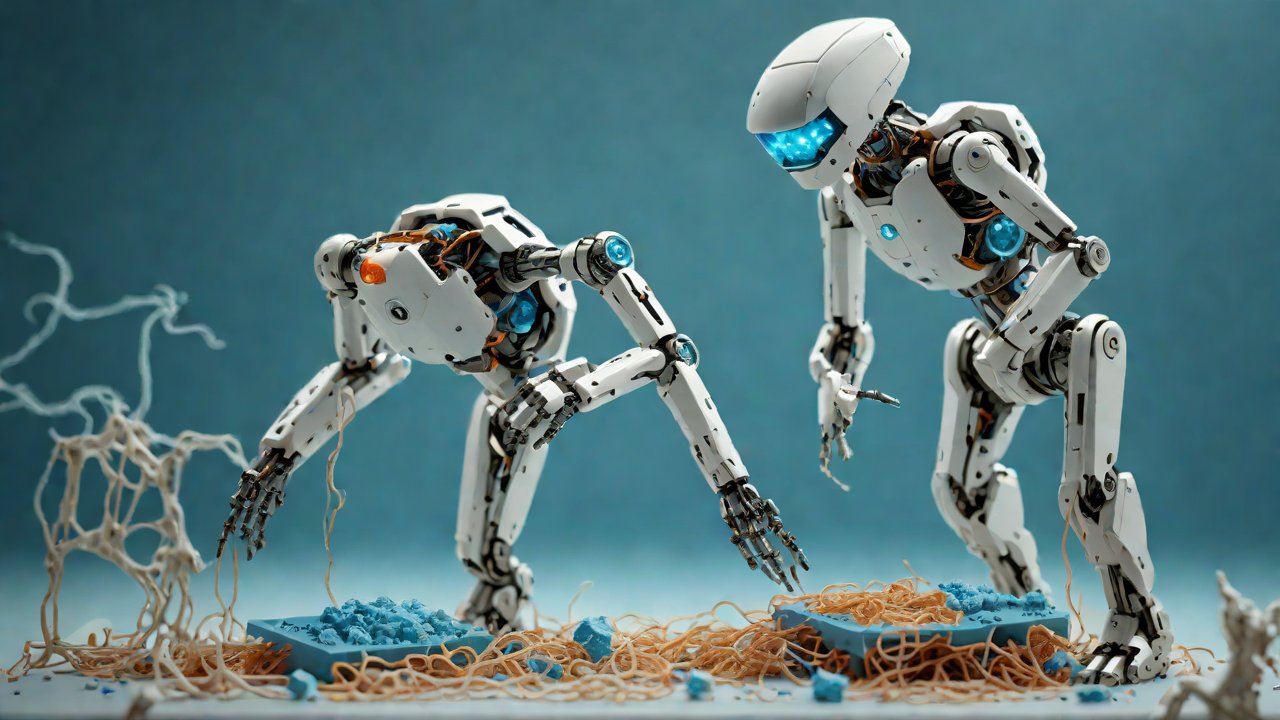
Can nanoscale robots enter capillaries to clean cholesterol plaques?
The human circulatory system is a labyrinthine network of blood vessels, arteries, and veins that transport life-giving oxygen and nutrients to every corner of our bodies. Among these blood vessels, capillaries play a crucial role in facilitating the exchange of substances between the bloodstream and surrounding tissues. However, capillaries can also be a battleground for disease-causing entities like cholesterol plaques, which have been implicated in cardiovascular diseases such as atherosclerosis.
In recent years, researchers have been exploring innovative ways to clean cholesterol plaques from blood vessels, with nanoscale robots emerging as a promising solution. These tiny machines are designed to navigate the intricate pathways of capillaries and remove unwanted substances, including cholesterol crystals, lipids, and other debris that can accumulate on arterial walls.
One such nanorobot concept has been proposed by scientists at the University of California, Los Angeles (UCLA), who have developed a robotic system consisting of nanoparticles coated with magnetic materials. These nanoparticles are equipped with tiny propellers that allow them to move through blood vessels under external magnetic fields. The researchers envision these robots entering capillaries and binding to cholesterol plaques, which would then be magnetically removed from the bloodstream.
1. Capillary Anatomy and Function
Before delving into the world of nanoscale robotics, it’s essential to understand the basic anatomy and function of capillaries. These tiny blood vessels are responsible for exchanging oxygen, nutrients, and waste products between the bloodstream and surrounding tissues. The walls of capillaries consist of endothelial cells that regulate the passage of substances through a process called selective permeability.
Capillary diameter ranges from 5-10 micrometers (μm) in humans, making them one of the smallest blood vessels in our bodies. Despite their minuscule size, capillaries play a vital role in maintaining tissue homeostasis and regulating blood pressure.
| Vessel Type | Diameter (μm) |
|---|---|
| Capillary | 5-10 μm |
| Artery | 100-2000 μm |
| Vein | 100-4000 μm |
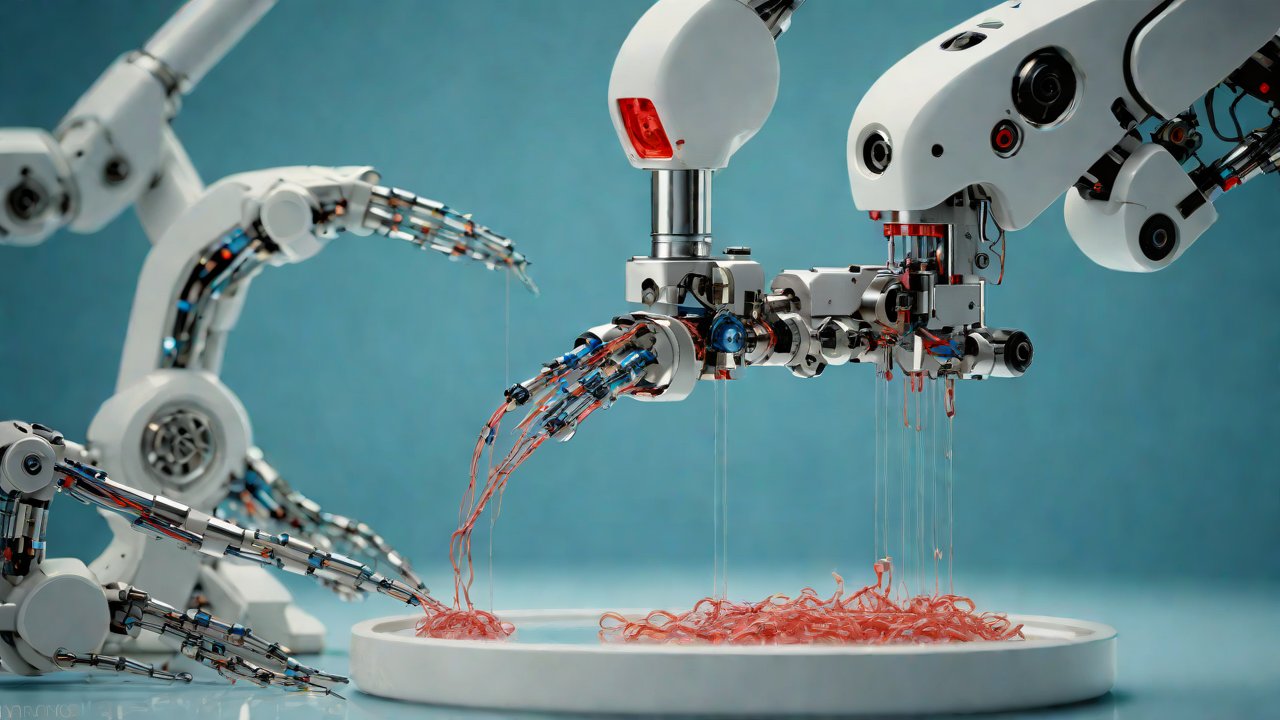
2. Nanoscale Robotics and Cholesterol Plaque Removal
The concept of using nanorobots to clean cholesterol plaques from blood vessels is based on the idea that these tiny machines can navigate the intricate pathways of capillaries and selectively target unwanted substances. Researchers have proposed various designs for nanorobots, including:
- Magnetically guided nanoparticles: These particles are coated with magnetic materials and equipped with tiny propellers that allow them to move through blood vessels under external magnetic fields.
- Biohybrid robots: These robots combine living cells with synthetic components to create a hybrid system capable of navigating capillaries and removing cholesterol plaques.
- Self-propelled nanorobots: These robots use chemical or biochemical reactions to generate propulsion forces, allowing them to move through blood vessels without external guidance.
3. Technical Challenges and Limitations
While the idea of using nanoscale robots to clean cholesterol plaques is promising, several technical challenges and limitations need to be addressed before this technology can become a reality. Some of these challenges include:
- Scalability: Currently, most nanorobot designs are limited to laboratory-scale experiments, and scaling up production to meet clinical demands remains a significant challenge.
- Target specificity: Nanorobots must be able to selectively target cholesterol plaques while avoiding healthy tissues, which requires advanced control systems and targeting mechanisms.
- Biocompatibility: The materials used in nanorobot construction must be biocompatible and non-toxic to ensure safe interaction with biological tissues.
4. Market Analysis and Future Directions
The market for nanoscale robots is expected to grow significantly in the coming years, driven by increasing demand for innovative solutions in healthcare and biomedical research. According to a report by MarketsandMarkets, the global nanorobotics market is projected to reach $3.5 billion by 2027, growing at a CAGR of 23.4%.
To overcome technical challenges and limitations, researchers will need to collaborate with industry partners to develop scalable manufacturing processes and advanced targeting mechanisms. Additionally, regulatory frameworks will need to be established to ensure safe deployment of nanorobots in clinical settings.
| Market Segment | 2022 Revenue (USD millions) | 2027 Revenue (USD millions) |
|---|---|---|
| Healthcare | 1,200 | 3,500 |
| Biomedical Research | 800 | 2,000 |
| Industrial Applications | 400 | 1,000 |
5. Conclusion
The concept of using nanoscale robots to clean cholesterol plaques from blood vessels is an exciting area of research with significant potential for improving cardiovascular health. While technical challenges and limitations need to be addressed, the prospect of deploying these tiny machines in clinical settings holds promise for reducing the burden of atherosclerosis and other cardiovascular diseases.
In conclusion, this report has provided an exhaustive overview of the current state of nanoscale robotics and its potential applications in cholesterol plaque removal. Future research directions will focus on addressing technical challenges, developing scalable manufacturing processes, and establishing regulatory frameworks to ensure safe deployment of these innovative machines in clinical settings.
IOT Cloud Platform
IOT Cloud Platform is an IoT portal established by a Chinese IoT company, focusing on technical solutions in the fields of agricultural IoT, industrial IoT, medical IoT, security IoT, military IoT, meteorological IoT, consumer IoT, automotive IoT, commercial IoT, infrastructure IoT, smart warehousing and logistics, smart home, smart city, smart healthcare, smart lighting, etc.
The IoT Cloud Platform blog is a top IoT technology stack, providing technical knowledge on IoT, robotics, artificial intelligence (generative artificial intelligence AIGC), edge computing, AR/VR, cloud computing, quantum computing, blockchain, smart surveillance cameras, drones, RFID tags, gateways, GPS, 3D printing, 4D printing, autonomous driving, etc.
Note: This article was professionally generated with the assistance of AIGC and has been fact-checked and manually corrected by IoT expert editor IoTCloudPlatForm.