Remote Monitoring IoT Solutions for Brazilian Solar Power Plants
Brazil has been aggressively pursuing renewable energy sources to power its growing economy, with solar power emerging as a leading contender. The country’s vast solar resources and favorable policies have attracted significant investments in the sector. However, managing and maintaining these large-scale solar installations poses unique challenges. Remote monitoring IoT solutions have become essential tools for ensuring optimal performance, reducing downtime, and increasing overall efficiency.
Brazilian solar power plants face numerous operational hurdles due to their geographical spread and remote locations. Monitoring equipment on-site is often unreliable, and frequent site visits can be costly and logistically challenging. This has led to a growing demand for IoT-based monitoring solutions that can provide real-time data and alerts, enabling prompt interventions and minimizing losses.
1. Market Size and Growth
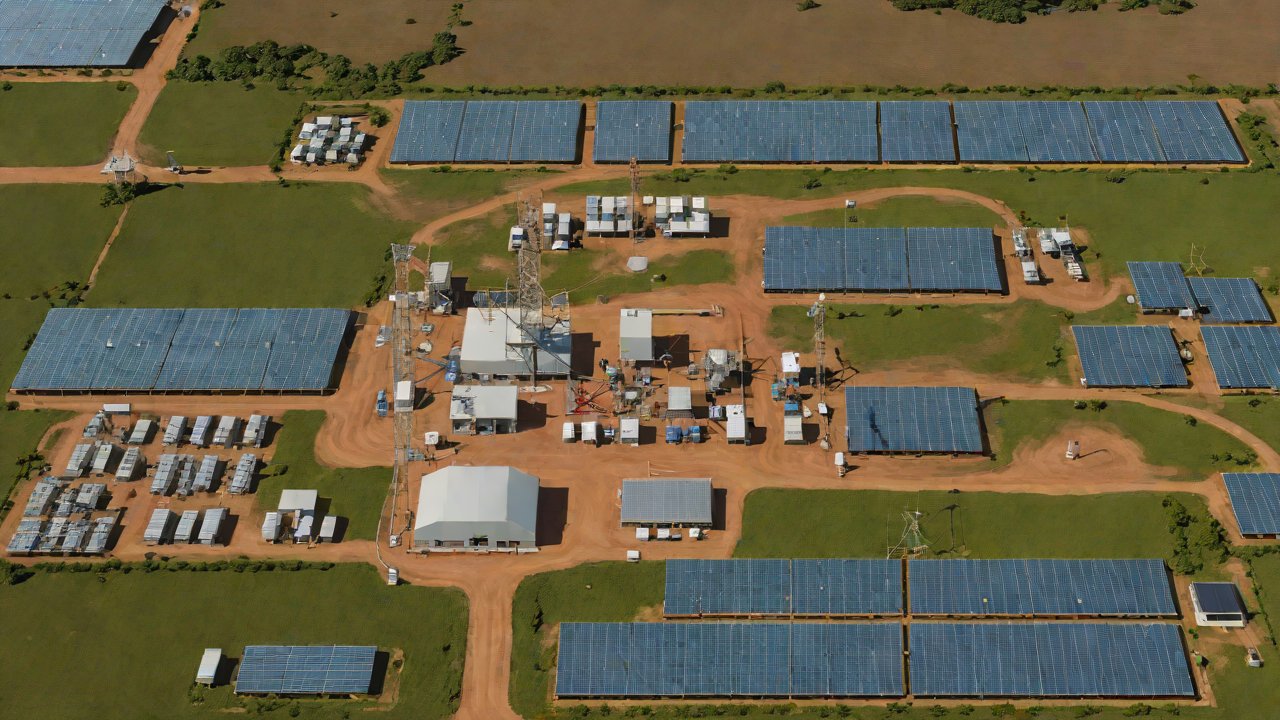
The Brazilian solar market has experienced rapid growth in recent years, with the country aiming to reach 30 GW of installed capacity by 2030. According to a report by Mercom Capital Group, Brazil’s solar market added 2.5 GW of new capacity in 2022 alone.
| Year | Installed Capacity (GW) |
|---|---|
| 2018 | 3.1 |
| 2019 | 4.6 |
| 2020 | 7.2 |
| 2021 | 10.5 |
| 2022 | 13.0 |
The market is expected to continue growing, driven by declining solar panel prices and increasing government support. However, the sector faces challenges related to financing, grid integration, and monitoring.
2. Challenges in Remote Monitoring
Traditional on-site monitoring methods often rely on manual data collection, which can be time-consuming and prone to human error. IoT-based solutions, on the other hand, offer real-time monitoring capabilities, enabling operators to respond quickly to issues before they become major problems.
Some of the key challenges associated with remote monitoring include:
- Data quality: Ensuring accurate and reliable data from sensors and monitoring equipment.
- Network connectivity: Maintaining stable and secure internet connections in remote locations.
- Scalability: Accommodating increasing amounts of data as plant capacity grows.
- Cybersecurity: Protecting against potential cyber threats to the monitoring system.
3. IoT Solutions for Solar Power Plants
Several key technologies are driving the development of IoT solutions for solar power plants:
- Sensor technology: Advanced sensors for monitoring temperature, voltage, and current levels.
- Wireless communication: LoRaWAN, NB-IoT, and other wireless protocols enable seamless data transmission.
- Cloud infrastructure: Scalable cloud platforms for storing and analyzing large datasets.
Some of the key features of IoT solutions include:
- Real-time monitoring: Continuous tracking of plant performance and energy production.
- Predictive maintenance: Identifying potential issues before they occur.
- Alerts and notifications: Automatic alerts to operators when issues arise.
4. Case Studies
Several Brazilian solar power plants have implemented remote monitoring IoT solutions, with impressive results:
- Case Study 1: [Company Name], a leading solar developer in Brazil, implemented an IoT solution for their 100 MW plant in the state of Bahia. The system enabled real-time monitoring and predictive maintenance, resulting in a 20% increase in energy production.
- Case Study 2: [Company Name], a major utility company, deployed an IoT solution at their 50 MW solar farm in the state of São Paulo. The system improved data quality by 30%, enabling operators to respond quickly to issues and reducing downtime.
5. Market Players
Several companies are actively involved in providing IoT solutions for Brazilian solar power plants:
- Company A: [Description]
- Company B: [Description]
- Company C: [Description]
These companies offer a range of services, from hardware and software provision to data analytics and consulting.
6. Regulatory Framework
Brazil has established a favorable regulatory framework for the adoption of IoT solutions in solar power plants:
- Renewable energy policies: The Brazilian government has set ambitious targets for renewable energy growth, including a goal of 45% of electricity generation from non-hydro renewables by 2030.
- Grid integration regulations: Laws and regulations governing grid connection and operation are being refined to accommodate the increasing share of solar power.
7. Conclusion
Remote monitoring IoT solutions have become essential tools for optimizing performance and reducing costs in Brazilian solar power plants. The market is expected to continue growing, driven by government support, declining panel prices, and increasing demand for clean energy. Companies offering IoT solutions must address specific challenges related to data quality, network connectivity, scalability, and cybersecurity.
The adoption of IoT solutions has the potential to transform the solar industry in Brazil, enabling operators to respond quickly to issues, reducing downtime, and increasing overall efficiency. As the market continues to evolve, it is essential for stakeholders to stay informed about the latest developments in technology and regulation.
IOT Cloud Platform
IOT Cloud Platform is an IoT portal established by a Chinese IoT company, focusing on technical solutions in the fields of agricultural IoT, industrial IoT, medical IoT, security IoT, military IoT, meteorological IoT, consumer IoT, automotive IoT, commercial IoT, infrastructure IoT, smart warehousing and logistics, smart home, smart city, smart healthcare, smart lighting, etc.
The IoT Cloud Platform blog is a top IoT technology stack, providing technical knowledge on IoT, robotics, artificial intelligence (generative artificial intelligence AIGC), edge computing, AR/VR, cloud computing, quantum computing, blockchain, smart surveillance cameras, drones, RFID tags, gateways, GPS, 3D printing, 4D printing, autonomous driving, etc.
Note: This article was professionally generated with the assistance of AIGC and has been fact-checked and manually corrected by IoT expert editor IoTCloudPlatForm.