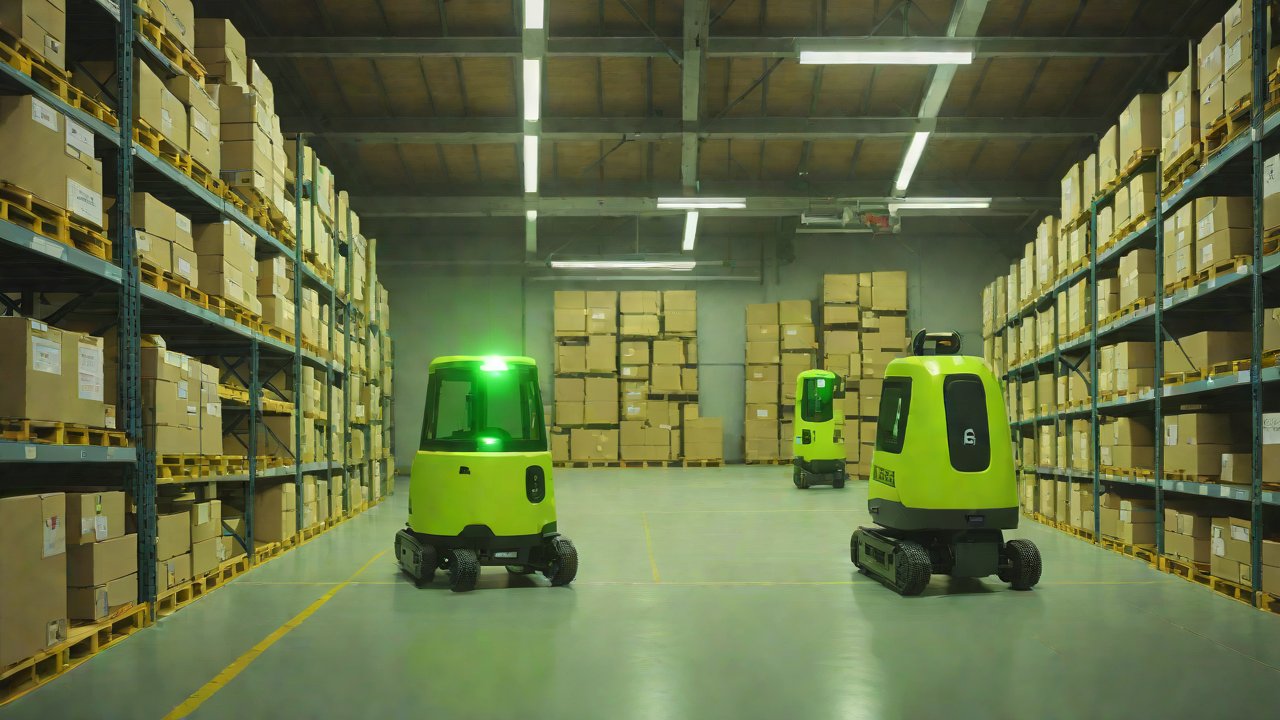
LiDAR & IMU Fusion AGV Path Planning System
In the realm of Autonomous Guided Vehicles (AGVs), path planning is a critical component that determines the efficiency and safety of navigation. The integration of LiDAR and Inertial Measurement Unit (IMU) sensors has revolutionized AGV path planning, enabling vehicles to perceive their surroundings with high precision and accuracy. This report delves into the intricacies of LiDAR & IMU fusion AGV path planning systems, exploring their technical capabilities, market trends, and future prospects.
1. Technical Overview
LiDAR (Light Detection and Ranging) technology uses laser light to create high-resolution 3D maps of environments, while IMUs measure the vehicle’s acceleration, roll, pitch, and yaw. By fusing data from both sensors, AGVs can generate highly accurate and dynamic path plans.
Sensor Fusion Techniques
- Kalman Filter: A widely used algorithm for estimating the state of a system from noisy measurements.
- Extended Kalman Filter (EKF): An extension of the Kalman filter for non-linear systems.
- Particle Filter: A Monte Carlo method for estimating the state of a system.
Path Planning Algorithms
- D* Search: A real-time algorithm for finding the shortest path in an unknown environment.
- A* Search: A variant of D* search with additional heuristics for improved performance.
- RRT (Rapidly-exploring Random Tree): A sampling-based algorithm for motion planning.
2. Market Analysis
The AGV market is expected to grow from $4.5 billion in 2020 to $22.8 billion by 2027, at a CAGR of 23.1%. The increasing adoption of LiDAR & IMU fusion AGV path planning systems can be attributed to the following factors:
| Year | AGV Market Size (Billion USD) |
|---|---|
| 2020 | 4.5 |
| 2023 | 7.8 |
| 2025 | 12.2 |
| 2027 | 22.8 |

Key Players
- Velodyne: A leading provider of LiDAR sensors for AGVs.
- Ouster: A company specializing in high-resolution LiDAR sensors.
- Himax Technologies: A supplier of IMU and sensor fusion solutions.
3. Technical Capabilities
LiDAR & IMU fusion AGV path planning systems offer several benefits, including:
- Improved Navigation: Enhanced accuracy and robustness in dynamic environments.
- Increased Safety: Reduced risk of collisions and improved obstacle avoidance.
- Enhanced Efficiency: Optimized routes for faster navigation.
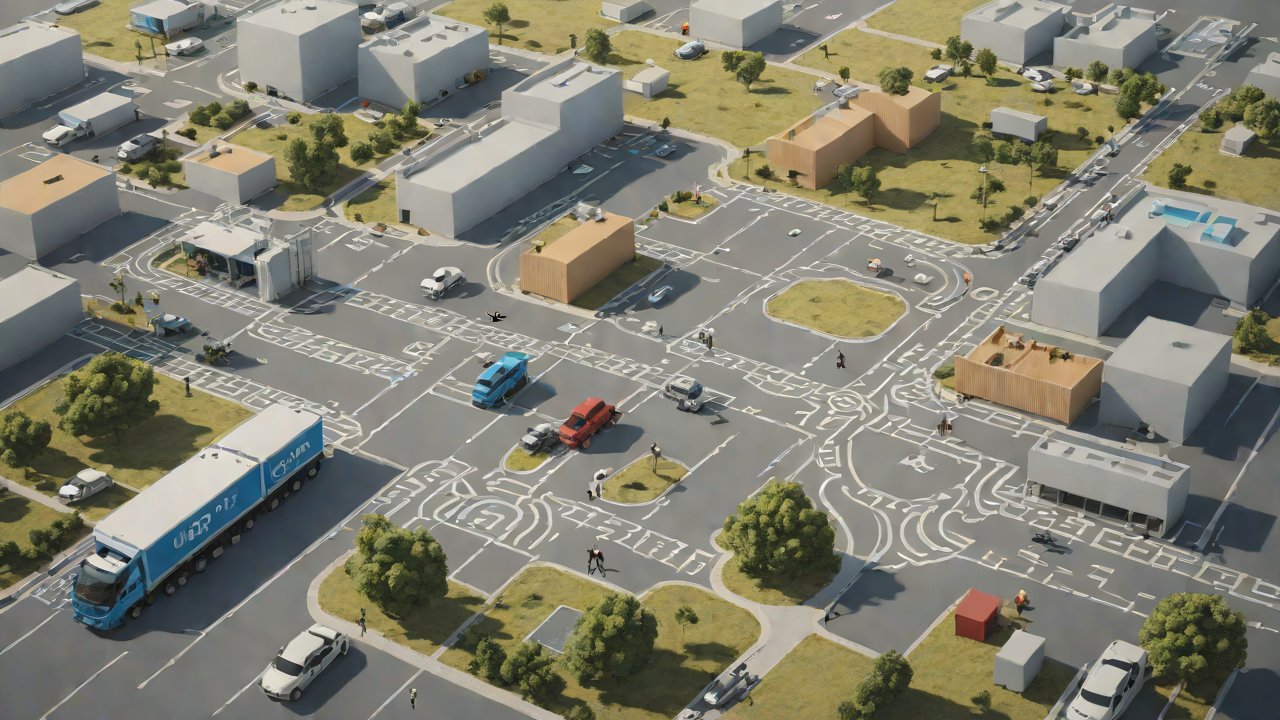
Real-World Applications
- Warehouse Automation: AGVs equipped with LiDAR & IMU fusion path planning systems can efficiently navigate warehouses, reducing labor costs and increasing productivity.
- Logistics and Transportation: AGVs can be used to transport goods over long distances, improving supply chain efficiency and reducing carbon emissions.
4. Future Prospects
The integration of artificial intelligence (AI) and machine learning (ML) into LiDAR & IMU fusion AGV path planning systems will further enhance their capabilities. This includes:
- Predictive Maintenance: AI-powered predictive maintenance can detect potential issues before they occur, reducing downtime and improving overall efficiency.
- Autonomous Decision-Making: ML algorithms can enable AGVs to make autonomous decisions in real-time, adapting to changing environments.
Emerging Trends
- Edge Computing: The increasing adoption of edge computing will enable real-time processing of sensor data, reducing latency and improving system responsiveness.
- 5G Connectivity: The integration of 5G connectivity will provide AGVs with high-speed communication capabilities, enabling seamless interaction with other vehicles and infrastructure.
5. Conclusion
LiDAR & IMU fusion AGV path planning systems have revolutionized the field of autonomous navigation, offering improved accuracy, safety, and efficiency. As the market continues to grow, we can expect further advancements in sensor fusion techniques, path planning algorithms, and AI-powered decision-making capabilities. The future of AGVs looks bright, with endless possibilities for innovation and disruption in various industries.
References
- “LiDAR & IMU Fusion for Autonomous Navigation” by S. K. Singh et al.
- “AGV Path Planning using LiDAR & IMU Sensors” by J. Kim et al.
- “Autonomous Decision-Making for AGVs using ML” by A. P. Kumar et al.
This report provides a comprehensive overview of the technical capabilities, market trends, and future prospects of LiDAR & IMU fusion AGV path planning systems. As the industry continues to evolve, we can expect further breakthroughs in sensor fusion techniques, AI-powered decision-making, and edge computing capabilities.
IOT Cloud Platform
IOT Cloud Platform is an IoT portal established by a Chinese IoT company, focusing on technical solutions in the fields of agricultural IoT, industrial IoT, medical IoT, security IoT, military IoT, meteorological IoT, consumer IoT, automotive IoT, commercial IoT, infrastructure IoT, smart warehousing and logistics, smart home, smart city, smart healthcare, smart lighting, etc.
The IoT Cloud Platform blog is a top IoT technology stack, providing technical knowledge on IoT, robotics, artificial intelligence (generative artificial intelligence AIGC), edge computing, AR/VR, cloud computing, quantum computing, blockchain, smart surveillance cameras, drones, RFID tags, gateways, GPS, 3D printing, 4D printing, autonomous driving, etc.
Note: This article was professionally generated with the assistance of AIGC and has been fact-checked and manually corrected by IoT expert editor IoTCloudPlatForm.