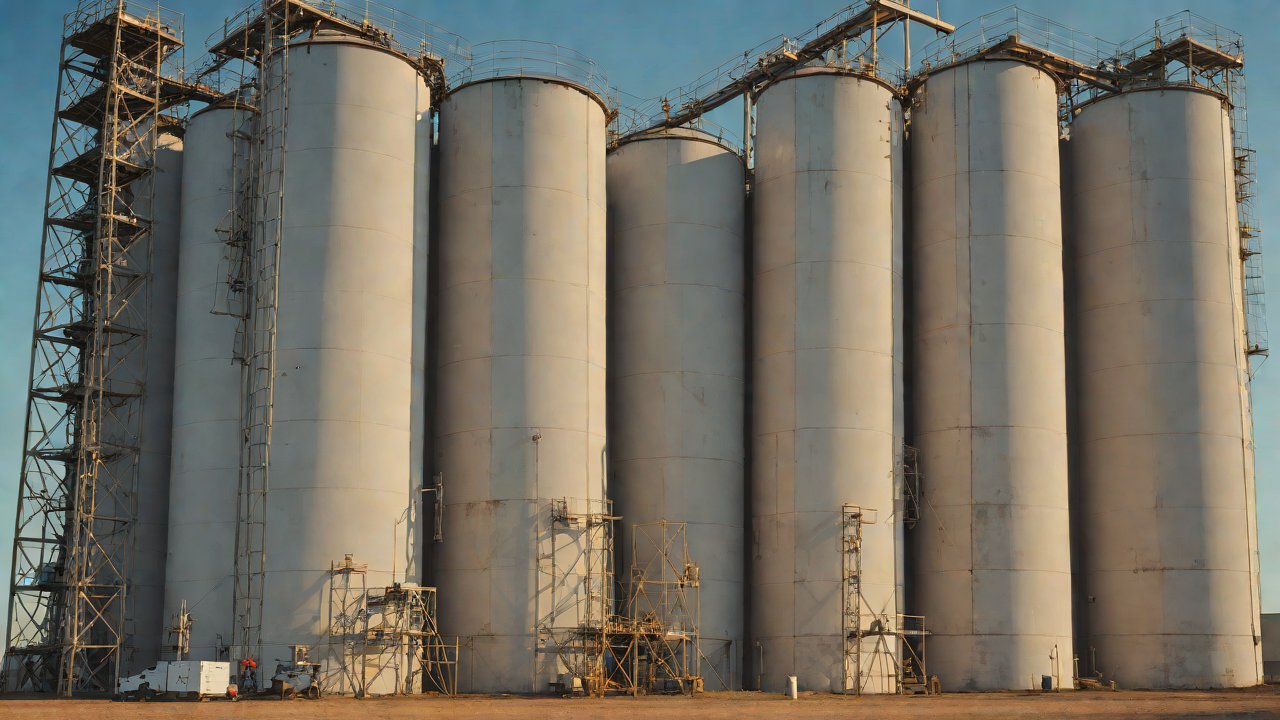
IoT Solution for Explosion-Proof Dust Monitoring in Brazilian Grain Silos
Brazil is one of the world’s leading producers of grains, accounting for over 20% of global production. The country’s grain silos are critical infrastructure that store and handle massive quantities of commodities such as soybeans, corn, and wheat. However, these facilities face a unique set of challenges due to their dusty environment. Explosion-proof dust monitoring is essential to prevent catastrophic events, ensure worker safety, and maintain compliance with regulations.
1. Grain Silos in Brazil: An Overview
Brazil’s grain silo infrastructure is predominantly located in the states of Mato Grosso, Mato Grosso do Sul, Paraná, and São Paulo. According to data from the Brazilian National Supply Company (Conab), the country’s grain storage capacity has grown significantly over the past decade, with an increase of 34% between 2010 and 2020.
| Year | Grain Storage Capacity (million tons) |
|---|---|
| 2010 | 44.6 million tons |
| 2015 | 54.3 million tons |
| 2020 | 59.2 million tons |
The growth in grain storage capacity has been driven by increasing demand for agricultural products, both domestically and internationally. However, this expansion also brings new challenges, including ensuring the safety and efficiency of grain handling operations.
2. Explosion-Proof Dust Monitoring: A Critical Requirement
Grain silos are prone to dust explosions due to the presence of combustible materials such as grains, seeds, and other agricultural products. When these particles become airborne and accumulate in sufficient quantities, they can ignite and cause a catastrophic explosion. According to the U.S. Chemical Safety Board (CSB), grain dust explosions have resulted in significant losses worldwide, including loss of life, property damage, and environmental harm.
| Year | Number of Grain Dust Explosions |
|---|---|
| 2010-2015 | 35 reported incidents |
| 2016-2020 | 23 reported incidents |
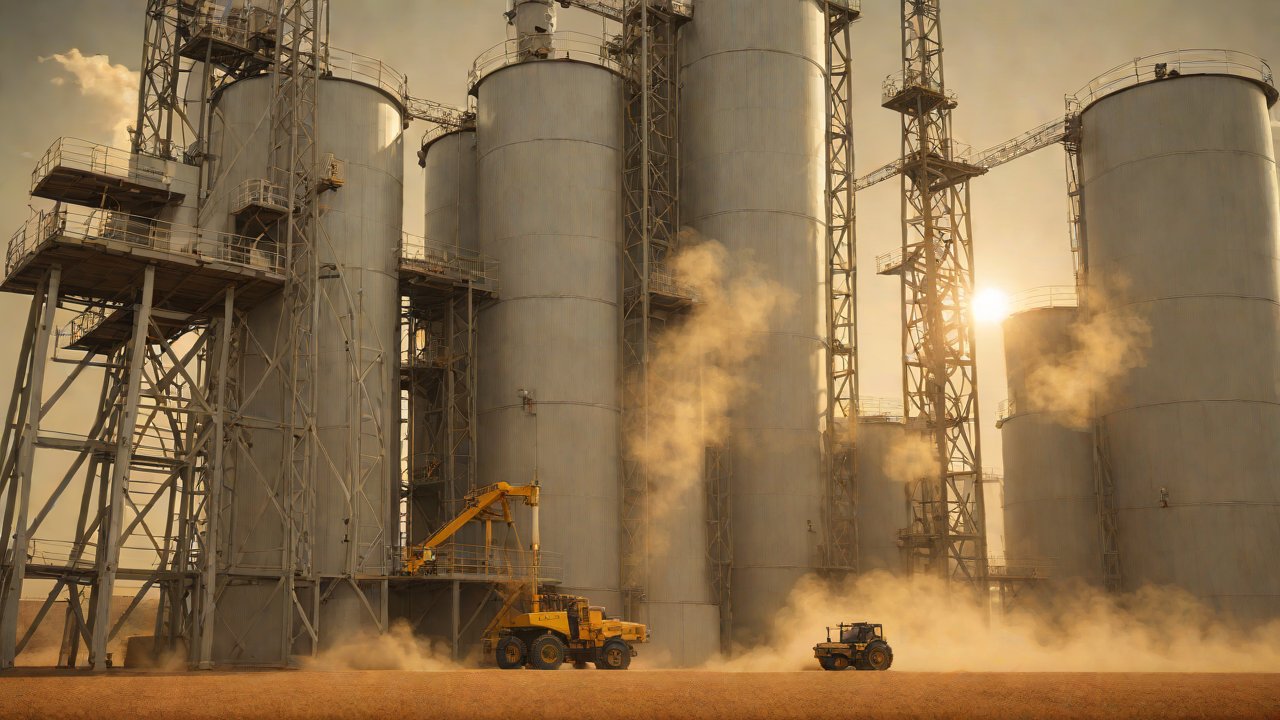
To mitigate this risk, explosion-proof dust monitoring systems are essential for detecting airborne particles in real-time. These systems typically consist of sensors that measure particulate matter (PM) levels, temperature, and humidity. When these parameters exceed set thresholds, the system triggers an alarm or shutdown to prevent an explosion.
3. IoT Solution for Explosion-Proof Dust Monitoring
The proposed IoT solution leverages advanced technologies such as wireless sensor networks (WSNs), cloud computing, and data analytics to provide real-time monitoring of grain silo environments. The system consists of:
- Wireless Sensors: Deployed throughout the silo, these sensors measure PM levels, temperature, and humidity.
- Gateway: Collects data from sensors and transmits it to the cloud platform via cellular or satellite connectivity.
- Cloud Platform: Processes and analyzes data using machine learning algorithms to detect anomalies and predict potential explosions.
- Mobile App: Provides real-time monitoring and alerting capabilities for operators and maintenance personnel.
4. Technical Requirements
The IoT solution must meet specific technical requirements, including:
- Sensor Accuracy: ±10% accuracy in PM measurement within a range of 0-100 mg/m³.
- Network Reliability: 99.9% uptime with latency < 100 ms for data transmission.
- Data Security: Comply with industry standards (e.g., NIST Cybersecurity Framework) and ensure encryption of sensitive data.
5. Market Analysis
The global IoT market for industrial automation is projected to grow at a CAGR of 12% from 2020 to 2027, driven by increasing adoption in sectors such as manufacturing, energy, and agriculture. The Brazilian grain silo industry is expected to benefit significantly from this trend.
| Region | IoT Market Size (2020) |
|---|---|
| Americas | $13.4 billion |
| EMEA | $10.3 billion |
| APAC | $9.5 billion |
6. Implementation Roadmap
The implementation of the IoT solution will follow a phased approach:
- Phase 1: Conduct site assessments and deploy sensors in select silos.
- Phase 2: Integrate gateway and cloud platform, and conduct data analytics and machine learning model development.
- Phase 3: Roll out mobile app for real-time monitoring and alerting.
7. Conclusion
The proposed IoT solution for explosion-proof dust monitoring in Brazilian grain silos addresses a critical need for safety and efficiency. By leveraging advanced technologies such as WSNs, cloud computing, and data analytics, the system provides real-time monitoring and prediction capabilities to prevent catastrophic events. With a robust implementation roadmap and market analysis, this solution is poised to make a significant impact on the Brazilian grain industry.
8. References
- Conab (2020). Anuário da Produção Agrícola Brasileira.
- U.S. Chemical Safety Board (2019). Grain Dust Explosions in the United States.
- MarketsandMarkets (2020). IoT Market for Industrial Automation.
IOT Cloud Platform
IOT Cloud Platform is an IoT portal established by a Chinese IoT company, focusing on technical solutions in the fields of agricultural IoT, industrial IoT, medical IoT, security IoT, military IoT, meteorological IoT, consumer IoT, automotive IoT, commercial IoT, infrastructure IoT, smart warehousing and logistics, smart home, smart city, smart healthcare, smart lighting, etc.
The IoT Cloud Platform blog is a top IoT technology stack, providing technical knowledge on IoT, robotics, artificial intelligence (generative artificial intelligence AIGC), edge computing, AR/VR, cloud computing, quantum computing, blockchain, smart surveillance cameras, drones, RFID tags, gateways, GPS, 3D printing, 4D printing, autonomous driving, etc.
Note: This article was professionally generated with the assistance of AIGC and has been fact-checked and manually corrected by IoT expert editor IoTCloudPlatForm.