IoT Applications for Integrity Monitoring of Brazilian Oil and Gas Pipelines
The Brazilian oil and gas industry is a critical component of the country’s energy landscape, with vast networks of pipelines transporting crude oil, natural gas, and refined products across the nation. However, maintaining the integrity of these pipelines is an increasingly complex challenge due to various factors such as aging infrastructure, corrosion, and harsh environmental conditions. In recent years, the Internet of Things (IoT) has emerged as a transformative technology for pipeline integrity monitoring, offering unprecedented levels of precision, scalability, and cost-effectiveness.
The Brazilian oil and gas industry is already witnessing significant adoption of IoT technologies, driven by the need to optimize operations, reduce costs, and enhance safety. Major players such as Petrobras, OGX, and Galp Energia are investing heavily in digital transformation initiatives, which include the deployment of IoT sensors, data analytics platforms, and advanced predictive maintenance techniques. This report explores the current state of IoT applications for pipeline integrity monitoring in Brazil, highlighting key trends, success stories, and future opportunities.
1. Pipeline Integrity Challenges in Brazil
Brazil’s oil and gas pipeline network spans over 40,000 kilometers, with a significant portion operating at or near capacity. The industry faces numerous challenges related to pipeline integrity, including:
- Aging infrastructure: Many pipelines in Brazil are decades old, with some dating back to the 1970s and 1980s.
- Corrosion: Saltwater, soil acidity, and other environmental factors contribute to corrosion, which can lead to catastrophic failures if left unchecked.
- Harsh climate: Extreme temperatures, humidity, and weather conditions can accelerate degradation of pipeline materials.
- Regulatory compliance: Brazil’s regulatory framework requires operators to conduct regular integrity assessments and maintenance activities.
2. IoT Applications for Pipeline Integrity Monitoring
IoT technologies have the potential to revolutionize pipeline integrity monitoring in Brazil by providing real-time data on pipeline condition, reducing inspection intervals, and enabling predictive maintenance. Key applications include:
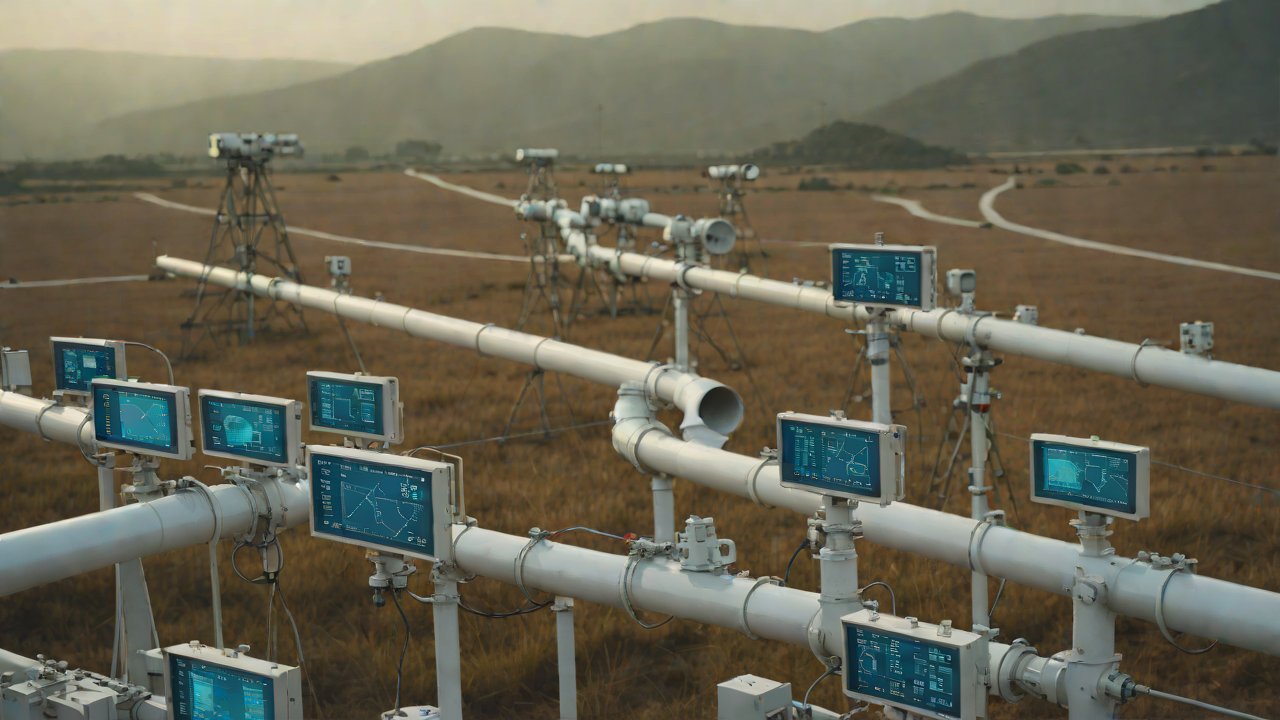
- Sensor-based monitoring: Deployment of sensors to track temperature, pressure, flow rate, and other parameters that indicate pipeline health.
- Acoustic emission testing (AET): Use of sensors to detect minute vibrations generated by internal corrosion or other defects.
- Pipeline scanning: Utilization of non-destructive testing techniques such as magnetic flux leakage (MFL) and pipeline inspection gauge (PIG) to identify anomalies.
- Data analytics and machine learning: Application of advanced algorithms to process sensor data, predict potential failures, and optimize maintenance schedules.
3. Case Studies: Successful IoT Deployments in Brazil
Several Brazilian oil and gas operators have already implemented successful IoT-based pipeline integrity monitoring initiatives:
Table 1: Petrobras’ Pipeline Integrity Monitoring Program
| Feature | Description |
|---|---|
| Sensor deployment | Installation of over 10,000 sensors on pipelines across the country |
| Data analytics platform | Implementation of a cloud-based platform for data processing and visualization |
| Predictive maintenance | Application of machine learning algorithms to predict potential failures |

Table 2: OGX’s Acoustic Emission Testing (AET) Program
| Feature | Description |
|---|---|
| Sensor installation | Deployment of AET sensors on high-risk pipelines |
| Real-time monitoring | Continuous monitoring and alerting for potential defects |
| Maintenance optimization | Use of data analytics to optimize maintenance schedules |
4. Market Trends and Forecasts
The Brazilian oil and gas industry is expected to drive significant growth in the IoT market, with a projected CAGR of 15% by 2025. Key trends include:
- Increased adoption of sensor-based monitoring: Rising demand for real-time data on pipeline condition.
- Growing importance of data analytics: Operators seeking to leverage advanced algorithms for predictive maintenance and optimization.
- Emergence of new players: Small and medium-sized enterprises (SMEs) entering the market with innovative IoT solutions.
5. AIGC Perspectives: Challenges and Opportunities
Advanced IoT applications for pipeline integrity monitoring in Brazil face several challenges, including:
- Data standardization: Ensuring seamless integration of data from different sources and formats.
- Cybersecurity: Protecting against potential threats to sensitive data and systems.
- Regulatory compliance: Navigating complex regulatory frameworks and ensuring adherence to local standards.
However, the benefits of IoT-based pipeline integrity monitoring in Brazil are substantial:
- Enhanced safety: Reduced risk of catastrophic failures and associated environmental damage.
- Cost savings: Optimized maintenance schedules and reduced inspection intervals.
- Increased efficiency: Real-time data analytics enabling operators to make informed decisions.
In conclusion, the adoption of IoT technologies for pipeline integrity monitoring in Brazil is gaining momentum. As the industry continues to evolve, it is essential to address challenges related to data standardization, cybersecurity, and regulatory compliance while leveraging opportunities presented by advanced IoT applications. By doing so, Brazilian oil and gas operators can enhance safety, reduce costs, and optimize operations, ultimately contributing to a more sustainable energy future for the country.
IOT Cloud Platform
IOT Cloud Platform is an IoT portal established by a Chinese IoT company, focusing on technical solutions in the fields of agricultural IoT, industrial IoT, medical IoT, security IoT, military IoT, meteorological IoT, consumer IoT, automotive IoT, commercial IoT, infrastructure IoT, smart warehousing and logistics, smart home, smart city, smart healthcare, smart lighting, etc.
The IoT Cloud Platform blog is a top IoT technology stack, providing technical knowledge on IoT, robotics, artificial intelligence (generative artificial intelligence AIGC), edge computing, AR/VR, cloud computing, quantum computing, blockchain, smart surveillance cameras, drones, RFID tags, gateways, GPS, 3D printing, 4D printing, autonomous driving, etc.
Note: This article was professionally generated with the assistance of AIGC and has been fact-checked and manually corrected by IoT expert editor IoTCloudPlatForm.