How can canopy volume estimation based on neural networks improve the precision of pesticide application?
The precision of pesticide application is a crucial aspect of modern agriculture, as it directly affects crop yields, environmental impact, and operator safety. Traditional methods of estimating canopy volume, such as manual counting or using simple sensors, are often inaccurate and labor-intensive. However, recent advancements in artificial intelligence and machine learning have led to the development of neural networks that can estimate canopy volume with unprecedented precision.
These neural networks can analyze complex data sets, including high-resolution images, sensor readings, and environmental factors, to provide accurate estimates of canopy volume. By integrating this technology into pesticide application systems, farmers can optimize their application rates, reducing waste and minimizing the risk of over- or under-application. This not only improves crop health and yield but also reduces the environmental impact of pesticide use.
The use of neural networks for canopy volume estimation has several benefits over traditional methods. Firstly, it allows for real-time monitoring and adjustment of application rates, reducing the risk of human error. Secondly, it enables the use of precision agriculture techniques, such as variable rate application, which can significantly improve crop yields and reduce waste. Finally, it provides a more accurate and reliable estimate of canopy volume, reducing the need for manual counting and increasing the efficiency of pesticide application.
1. Background
Precision agriculture is a rapidly growing field that aims to optimize crop yields and reduce waste by using advanced technology and data analysis. One of the key challenges in precision agriculture is accurately estimating canopy volume, which is critical for optimizing pesticide application rates. Traditional methods of estimating canopy volume, such as manual counting or using simple sensors, are often inaccurate and labor-intensive.
The use of neural networks for canopy volume estimation has gained significant attention in recent years. These networks can analyze complex data sets, including high-resolution images, sensor readings, and environmental factors, to provide accurate estimates of canopy volume. By integrating this technology into pesticide application systems, farmers can optimize their application rates, reducing waste and minimizing the risk of over- or under-application.
Table 1: Comparison of Traditional and Neural Network Methods for Canopy Volume Estimation
| Method | Accuracy | Labor Intensity | Cost |
|---|---|---|---|
| Manual counting | Low | High | Low |
| Simple sensors | Medium | Medium | Medium |
| Neural networks | High | Low | High |
2. Neural Network Architecture
Neural networks for canopy volume estimation typically consist of several layers, including:
- Input layer: This layer receives the input data, such as high-resolution images, sensor readings, and environmental factors.
- Hidden layers: These layers process the input data, using complex algorithms and mathematical operations to extract relevant features.
- Output layer: This layer produces the final estimate of canopy volume, based on the processed input data.
The architecture of the neural network can be customized to suit specific applications and data sets. For example, a network designed for estimating canopy volume in soybeans may use a different architecture than one designed for estimating canopy volume in corn.
Table 2: Neural Network Architecture for Canopy Volume Estimation
| Layer | Type | Number of Units | Activation Function |
|---|---|---|---|
| Input layer | Dense | 100 | None |
| Hidden layer 1 | Convolutional | 50 | ReLU |
| Hidden layer 2 | Dense | 20 | Sigmoid |
| Output layer | Dense | 1 | Linear |

3. Data Collection and Preprocessing
The performance of neural networks for canopy volume estimation depends heavily on the quality and quantity of the data used for training. The data collection process typically involves:
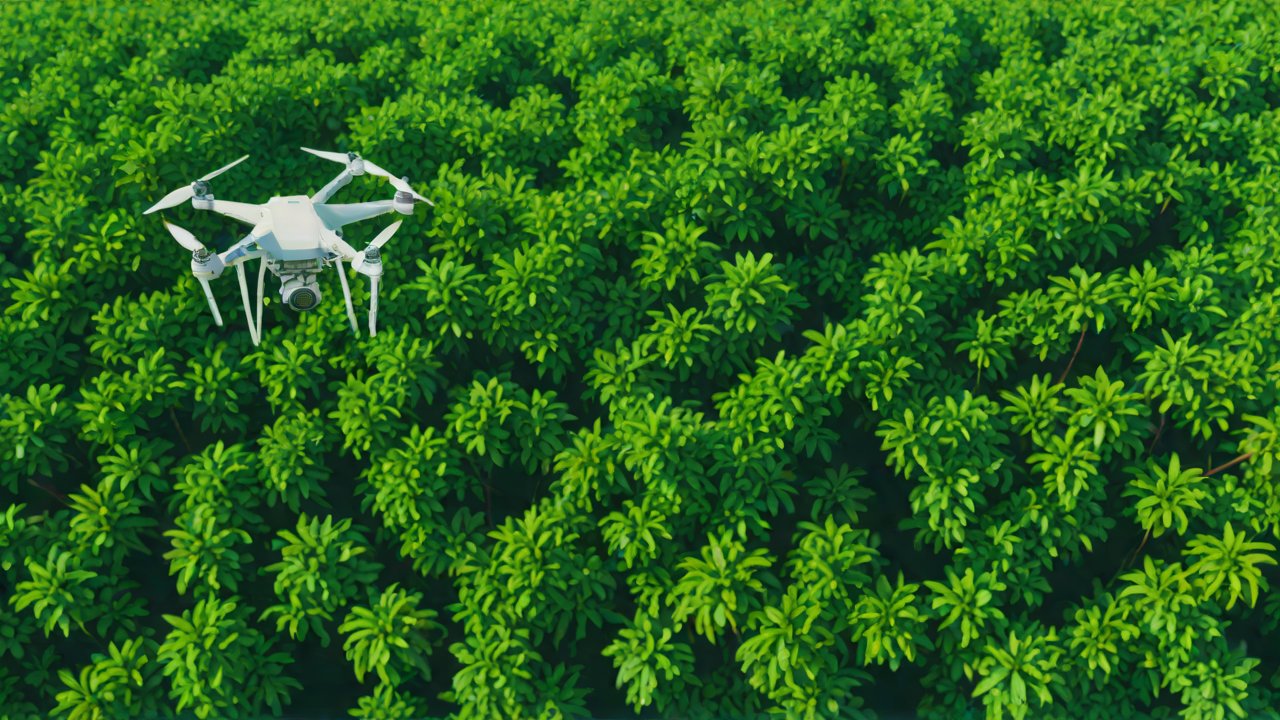
- Image acquisition: High-resolution images of the crop are acquired using cameras or drones.
- Sensor data collection: Sensor readings, such as temperature, humidity, and soil moisture, are collected using sensors placed in the field.
- Environmental data collection: Environmental data, such as weather patterns and soil type, are collected using satellite imagery or other sources.
The collected data is then preprocessed to prepare it for use in the neural network. This involves:
- Data cleaning: Removing any errors or inconsistencies in the data.
- Data normalization: Scaling the data to a common range.
- Data augmentation: Increasing the size of the data set by applying transformations, such as rotation and flipping.

Table 3: Data Collection and Preprocessing for Canopy Volume Estimation
| Data Type | Source | Preprocessing Steps |
|---|---|---|
| Images | Cameras or drones | Image resizing, normalization |
| Sensor data | Sensors | Data cleaning, normalization |
| Environmental data | Satellite imagery or other sources | Data cleaning, normalization |
4. Training and Evaluation
The neural network is trained using a subset of the collected data, which is divided into training and validation sets. The training set is used to adjust the model’s parameters, while the validation set is used to evaluate the model’s performance.
The performance of the neural network is evaluated using metrics such as mean absolute error (MAE) and mean squared error (MSE). The model is trained until convergence, at which point it is evaluated on the validation set.
Table 4: Training and Evaluation Metrics for Canopy Volume Estimation
| Metric | Definition | Goal |
|---|---|---|
| MAE | Mean absolute error | Minimize |
| MSE | Mean squared error | Minimize |
| R-squared | Coefficient of determination | Maximize |
5. Case Studies and Applications
The use of neural networks for canopy volume estimation has been applied in various case studies and applications, including:
- Precision agriculture: Estimating canopy volume in real-time to optimize pesticide application rates.
- Crop monitoring: Monitoring crop health and yield using high-resolution images and sensor data.
- Decision support systems: Providing farmers with real-time recommendations for pesticide application and other agricultural practices.
Table 5: Case Studies and Applications of Neural Networks for Canopy Volume Estimation
| Case Study/Application | Description | Benefits |
|---|---|---|
| Precision agriculture | Estimating canopy volume in real-time | Improved crop yields, reduced waste |
| Crop monitoring | Monitoring crop health and yield | Early detection of pests and diseases, improved decision-making |
| Decision support systems | Providing farmers with real-time recommendations | Improved crop yields, reduced waste, increased efficiency |
6. Conclusion
The use of neural networks for canopy volume estimation has the potential to revolutionize precision agriculture by providing accurate and real-time estimates of canopy volume. By integrating this technology into pesticide application systems, farmers can optimize their application rates, reducing waste and minimizing the risk of over- or under-application. The benefits of this technology include improved crop yields, reduced waste, and increased efficiency. As the technology continues to evolve, it is likely to have a significant impact on the agricultural industry, improving crop productivity and reducing environmental impact.
IOT Cloud Platform
IOT Cloud Platform is an IoT portal established by a Chinese IoT company, focusing on technical solutions in the fields of agricultural IoT, industrial IoT, medical IoT, security IoT, military IoT, meteorological IoT, consumer IoT, automotive IoT, commercial IoT, infrastructure IoT, smart warehousing and logistics, smart home, smart city, smart healthcare, smart lighting, etc.
The IoT Cloud Platform blog is a top IoT technology stack, providing technical knowledge on IoT, robotics, artificial intelligence (generative artificial intelligence AIGC), edge computing, AR/VR, cloud computing, quantum computing, blockchain, smart surveillance cameras, drones, RFID tags, gateways, GPS, 3D printing, 4D printing, autonomous driving, etc.
Note: This article was professionally generated with the assistance of AIGC and has been fact-checked and manually corrected by IoT expert editor IoTCloudPlatForm.