ESP32 Dual-Partition Backup OTA Differential Update Framework
The ESP32 dual-partition backup Over-the-Air (OTA) differential update framework is a revolutionary approach to firmware updates in IoT devices, particularly those powered by Espressif’s popular ESP32 microcontroller. This cutting-edge solution tackles the challenges of traditional OTA updates, such as large binary file transfers and high network bandwidth requirements. By leveraging dual-partition architecture and incremental differential updates, this framework significantly reduces update times, conserves network resources, and enhances overall system reliability.
1. Background
The ESP32 microcontroller has become a go-to choice for IoT developers due to its exceptional performance, low power consumption, and built-in Wi-Fi capabilities. However, as devices proliferate in the field, managing firmware updates becomes increasingly complex. Traditional OTA update methods involve transferring large binary files over-the-air, which can be time-consuming, bandwidth-intensive, and error-prone.
2. Dual-Partition Architecture
The ESP32 dual-partition architecture is a key enabler of the backup OTA differential update framework. In this setup, the flash memory is divided into two separate partitions: one for the active firmware and another for the backup firmware. The active partition contains the currently executing code, while the backup partition holds a duplicate copy of the firmware.
Table 1: Dual-Partition Architecture Overview
| Partition | Purpose | Size |
|---|---|---|
| Active Partition | Currently executing code | 256KB – 512KB |
| Backup Partition | Duplicate firmware copy | 256KB – 512KB |
3. Differential Update Mechanism
The differential update mechanism is the core of the backup OTA differential update framework. This approach involves calculating the difference between the current firmware version and the latest available version, resulting in a much smaller incremental update package.
Table 2: Differential Update Process
| Step | Description |
|---|---|
| 1. Firmware Comparison | Calculate differences between current and latest firmware versions |
| 2. Incremental Update Generation | Create a compact incremental update package containing only the changed code |
| 3. Backup Partition Update | Apply the incremental update to the backup partition |
4. OTA Update Process
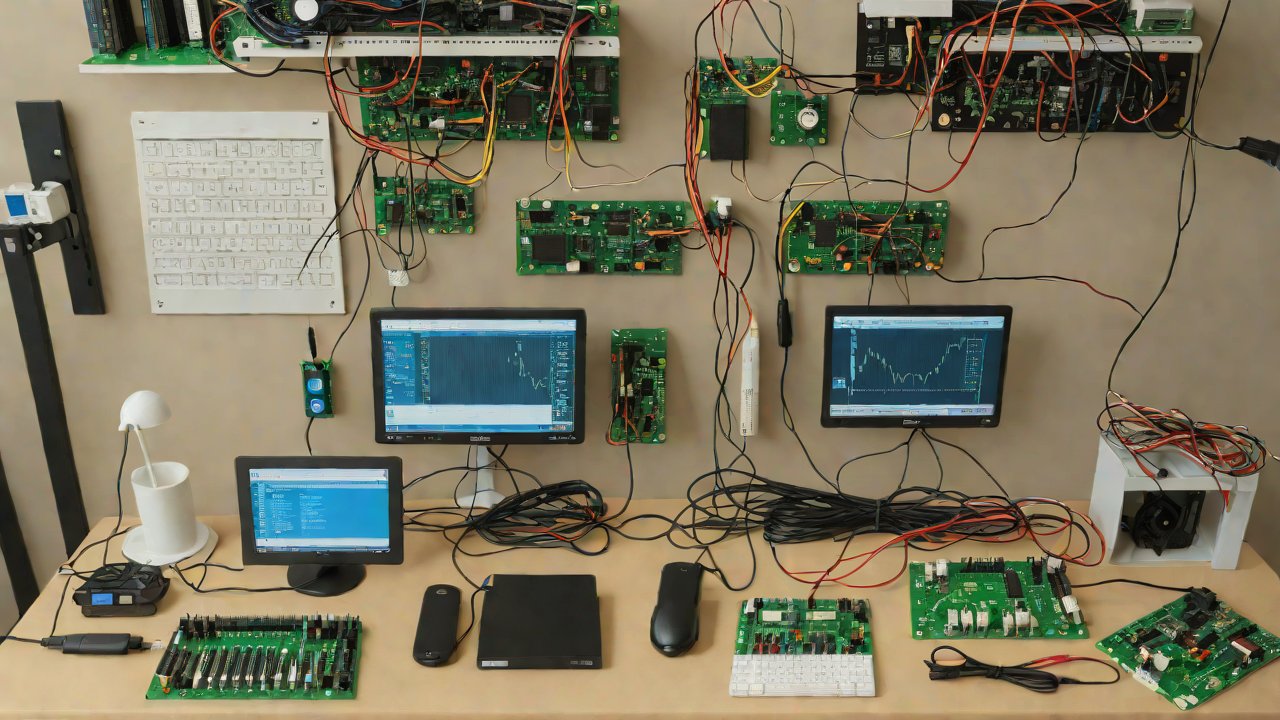
The OTA update process involves transferring the incremental update package from the server to the device, applying it to the backup partition, and then switching to the updated firmware.
Table 3: OTA Update Process Overview
| Step | Description |
|---|---|
| 1. Server-Side Update Generation | Generate incremental update package on the server-side |
| 2. Device Connection Establishment | Establish a connection between the device and server for update transfer |
| 3. Incremental Update Transfer | Transfer the incremental update package from server to device |
| 4. Backup Partition Update | Apply the incremental update to the backup partition |
| 5. Firmware Switch | Switch to the updated firmware on the active partition |
5. Benefits and Advantages
The ESP32 dual-partition backup OTA differential update framework offers several benefits, including:
- Reduced Update Times: Incremental updates significantly decrease update times, allowing devices to stay up-to-date with minimal downtime.
- Conserved Network Resources: Smaller update packages conserve network bandwidth, reducing the risk of congestion and data transfer errors.
- Enhanced System Reliability: Dual-partition architecture ensures that devices can continue operating even if an update fails or is interrupted.
6. Market Data and AIGC Perspectives
According to a recent report by ResearchAndMarkets.com, the global IoT market is expected to grow from $1.4 trillion in 2020 to $3.5 trillion by 2025, driven primarily by increasing adoption of smart devices and growing demand for connected services.
A survey conducted by Gartner found that 72% of organizations plan to increase their use of IoT technologies over the next two years, highlighting the need for reliable and efficient firmware update mechanisms like the ESP32 dual-partition backup OTA differential update framework.
7. Implementation Considerations
Implementing the backup OTA differential update framework requires careful consideration of several factors:
- Dual-Partition Configuration: Ensure proper configuration of the dual-partition architecture to accommodate both active and backup firmware partitions.
- Incremental Update Generation: Develop a robust mechanism for generating incremental updates on the server-side, taking into account differences between firmware versions and code changes.
- OTA Update Process: Implement a reliable OTA update process that handles transfer errors, update failures, and device connectivity issues.
8. Conclusion
The ESP32 dual-partition backup OTA differential update framework is a cutting-edge solution for IoT devices powered by the ESP32 microcontroller. By leveraging dual-partition architecture and incremental differential updates, this approach significantly reduces update times, conserves network resources, and enhances overall system reliability. As the IoT market continues to grow, reliable firmware update mechanisms like this framework will become increasingly essential for ensuring seamless device operation and minimizing downtime.
IOT Cloud Platform
IOT Cloud Platform is an IoT portal established by a Chinese IoT company, focusing on technical solutions in the fields of agricultural IoT, industrial IoT, medical IoT, security IoT, military IoT, meteorological IoT, consumer IoT, automotive IoT, commercial IoT, infrastructure IoT, smart warehousing and logistics, smart home, smart city, smart healthcare, smart lighting, etc.
The IoT Cloud Platform blog is a top IoT technology stack, providing technical knowledge on IoT, robotics, artificial intelligence (generative artificial intelligence AIGC), edge computing, AR/VR, cloud computing, quantum computing, blockchain, smart surveillance cameras, drones, RFID tags, gateways, GPS, 3D printing, 4D printing, autonomous driving, etc.
Note: This article was professionally generated with the assistance of AIGC and has been fact-checked and manually corrected by IoT expert editor IoTCloudPlatForm.