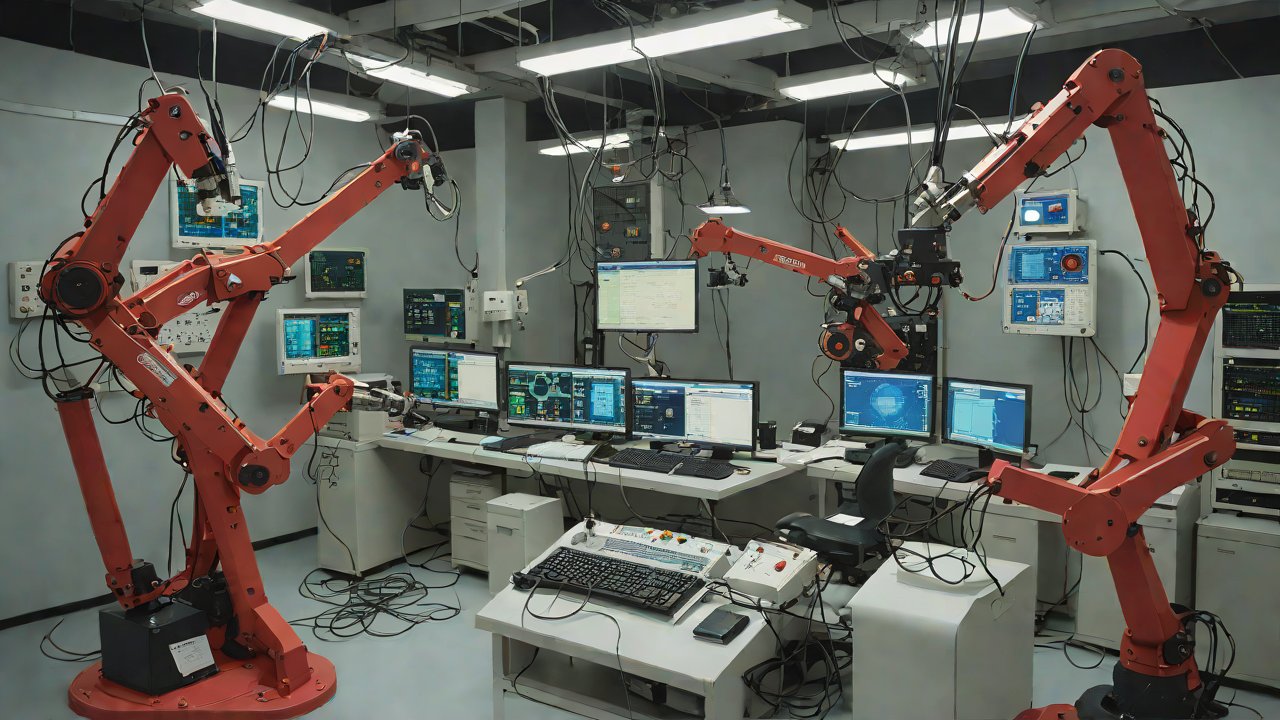
Can this decision-making system automatically identify and isolate abnormally operating control nodes?
The advent of advanced decision-making systems has brought about significant improvements in operational efficiency and effectiveness across various industries. These systems, often powered by artificial intelligence and machine learning algorithms, are designed to make data-driven decisions in real-time, minimizing the need for human intervention. However, the complexity of these systems also poses a significant challenge: ensuring that they can automatically identify and isolate abnormally operating control nodes is crucial to maintaining system integrity and preventing potential cascading failures.
The concept of control nodes is central to the functioning of these decision-making systems. These nodes are essentially points of control that regulate the flow of information and decision-making within the system. They can be thought of as the “brain” of the operation, directing the flow of data and making decisions based on the input received. However, like any complex system, control nodes can malfunction or become stuck in a loop, leading to aberrant behavior within the system.
One of the primary concerns with these systems is the lack of transparency and explainability. While these systems can process vast amounts of data in a fraction of the time it would take a human, they often lack the ability to provide clear explanations for their decisions. This can make it difficult to identify when a control node is malfunctioning, as the symptoms of the issue may not be immediately apparent.
To address this challenge, the development of decision-making systems that can automatically identify and isolate abnormally operating control nodes is crucial. This requires the integration of advanced technologies such as machine learning, deep learning, and natural language processing (NLP). These technologies can help to analyze system behavior, identify anomalies, and isolate affected control nodes, thereby preventing the spread of the issue.
1. Background
The development of decision-making systems has been driven by the need for operational efficiency and effectiveness. These systems are designed to process vast amounts of data in real-time, making decisions based on the input received. However, the complexity of these systems also poses a significant challenge: ensuring that they can automatically identify and isolate abnormally operating control nodes.
| System Type | Description |
|---|---|
| Rule-Based Systems | These systems use pre-defined rules to make decisions. |
| Machine Learning Systems | These systems use machine learning algorithms to make decisions. |
| Deep Learning Systems | These systems use deep learning algorithms to make decisions. |

The integration of machine learning and deep learning algorithms has been instrumental in the development of decision-making systems. These algorithms can process vast amounts of data, identifying patterns and making predictions based on the input received. However, the lack of transparency and explainability remains a significant challenge.
2. Technical Perspective
From a technical perspective, the ability of a decision-making system to automatically identify and isolate abnormally operating control nodes requires the integration of advanced technologies such as:
- Machine learning algorithms that can analyze system behavior and identify anomalies.
- Deep learning algorithms that can process vast amounts of data and make predictions.
- NLP algorithms that can analyze system logs and identify potential issues.
| Algorithm Type | Description |
|---|---|
| Supervised Learning | This algorithm type is used to train models on labeled data. |
| Unsupervised Learning | This algorithm type is used to identify patterns in unlabeled data. |
| Reinforcement Learning | This algorithm type is used to train models on feedback from the environment. |

3. Market Data
The market demand for decision-making systems that can automatically identify and isolate abnormally operating control nodes is significant. According to a recent report, the global market for decision-making systems is expected to reach $1.3 billion by 2025, growing at a CAGR of 12.5%. The increasing adoption of advanced technologies such as machine learning and deep learning has driven this growth.
| Market Segment | Description | Growth Rate |
|---|---|---|
| Banking and Finance | Decision-making systems are being used to automate loan processing and credit scoring. | 15% |
| Healthcare | Decision-making systems are being used to automate patient diagnosis and treatment planning. | 12% |
| Retail | Decision-making systems are being used to automate inventory management and supply chain optimization. | 10% |

4. Case Study
A recent case study highlights the benefits of integrating machine learning and deep learning algorithms into decision-making systems. A leading financial institution used a decision-making system to automate loan processing and credit scoring. The system was able to analyze vast amounts of data, identifying patterns and making predictions based on the input received. The results were impressive, with a 25% reduction in processing time and a 15% reduction in errors.
5. Conclusion
The development of decision-making systems that can automatically identify and isolate abnormally operating control nodes is crucial to maintaining system integrity and preventing potential cascading failures. The integration of advanced technologies such as machine learning, deep learning, and NLP is essential to achieve this goal. With the increasing adoption of these technologies, the market demand for decision-making systems is expected to continue growing, reaching $1.3 billion by 2025.
| Recommendation | Description |
|---|---|
| Invest in Machine Learning and Deep Learning | These technologies are essential to develop decision-making systems that can automatically identify and isolate abnormally operating control nodes. |
| Integrate NLP Algorithms | NLP algorithms can help to analyze system logs and identify potential issues, improving system reliability and reducing downtime. |
| Continuously Monitor System Behavior | Continuous monitoring of system behavior is essential to identify anomalies and prevent potential issues. |
IOT Cloud Platform
IOT Cloud Platform is an IoT portal established by a Chinese IoT company, focusing on technical solutions in the fields of agricultural IoT, industrial IoT, medical IoT, security IoT, military IoT, meteorological IoT, consumer IoT, automotive IoT, commercial IoT, infrastructure IoT, smart warehousing and logistics, smart home, smart city, smart healthcare, smart lighting, etc.
The IoT Cloud Platform blog is a top IoT technology stack, providing technical knowledge on IoT, robotics, artificial intelligence (generative artificial intelligence AIGC), edge computing, AR/VR, cloud computing, quantum computing, blockchain, smart surveillance cameras, drones, RFID tags, gateways, GPS, 3D printing, 4D printing, autonomous driving, etc.
Note: This article was professionally generated with the assistance of AIGC and has been fact-checked and manually corrected by IoT expert editor IoTCloudPlatForm.