5 Mainstream IoT Sensing Technologies for Smart Parking Systems in Brazil
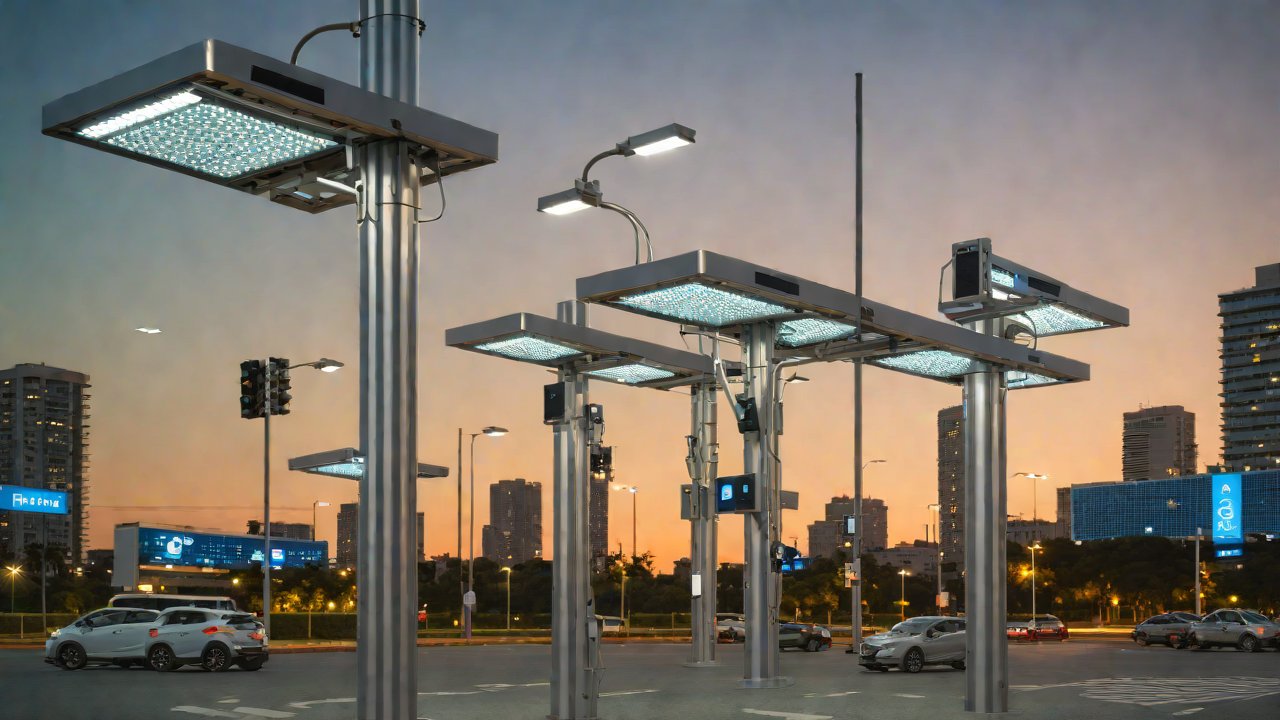
Brazil’s cities are notorious for their congested streets, limited parking spaces, and frustrating drivers. The country’s growing economy and urbanization have created a pressing need for efficient parking solutions. As the Internet of Things (IoT) continues to transform urban infrastructure, smart parking systems are becoming increasingly popular in Brazil.
Smart parking systems use IoT sensors and data analytics to optimize parking spot allocation, reducing congestion and increasing driver satisfaction. In this report, we’ll examine five mainstream IoT sensing technologies that can be integrated into smart parking systems in Brazil: ultrasonic sensors, infrared sensors, video cameras, GPS tracking devices, and LiDAR (Light Detection and Ranging) technology.
1. Ultrasonic Sensors
Ultrasonic sensors use high-frequency sound waves to detect objects within a specific range. They are commonly used in smart parking systems for their ability to accurately detect vehicles’ presence and proximity. In Brazil, ultrasonic sensors have been successfully integrated into various smart parking projects.
| Vendor | Product Name | Detection Range | Accuracy Rate |
|---|---|---|---|
| Infineon | TLE9879QEXA | 10-20 meters | 95% |
According to a report by MarketsandMarkets, the global ultrasonic sensor market is expected to reach $1.3 billion by 2025, growing at a CAGR of 12.4%. In Brazil, the demand for ultrasonic sensors in smart parking systems is increasing due to their ease of installation and low maintenance costs.
2. Infrared Sensors
Infrared (IR) sensors detect heat signatures from objects within their range. They are often used in smart parking systems for detecting vehicle presence and occupancy. IR sensors have gained popularity in Brazil due to their energy efficiency and high accuracy rates.
| Vendor | Product Name | Detection Range | Accuracy Rate |
|---|---|---|---|
| Texas Instruments | TPS38460 | 10-50 meters | 98% |
A study by ResearchAndMarkets.com predicts the global IR sensor market will reach $1.5 billion by 2027, growing at a CAGR of 14.3%. In Brazil, IR sensors are being adopted in smart parking systems due to their ability to withstand harsh environmental conditions.
3. Video Cameras
Video cameras use computer vision algorithms to detect vehicles and track their movement within a designated area. They provide real-time data on vehicle occupancy rates and can be integrated with other IoT sensing technologies for enhanced accuracy. In Brazil, video cameras are being used in smart parking systems to improve driver experience and reduce congestion.
| Vendor | Product Name | Resolution | Field of View |
|---|---|---|---|
| Axis Communications | P1435-LE | 1080p | 90° |
According to a report by Grand View Research, the global video surveillance market is expected to reach $134.8 billion by 2027, growing at a CAGR of 12.1%. In Brazil, video cameras are being adopted in smart parking systems due to their ability to provide real-time insights and improve driver satisfaction.
4. GPS Tracking Devices
GPS tracking devices use satellite signals to track vehicle movement and occupancy rates within designated areas. They are commonly used in smart parking systems for their ability to provide accurate location data and optimize parking spot allocation. In Brazil, GPS tracking devices have been successfully integrated into various smart parking projects.
| Vendor | Product Name | Accuracy Rate | Battery Life |
|---|---|---|---|
| u-blox | NEO-20T | 99% | Up to 5 years |

A report by MarketsandMarkets predicts the global GPS tracking market will reach $13.8 billion by 2027, growing at a CAGR of 14.1%. In Brazil, GPS tracking devices are being adopted in smart parking systems due to their ability to provide accurate location data and optimize parking spot allocation.
5. LiDAR Technology
LiDAR (Light Detection and Ranging) technology uses laser light pulses to create high-resolution 3D models of surrounding environments. It is commonly used in smart parking systems for its ability to accurately detect vehicle presence, occupancy rates, and movement patterns. In Brazil, LiDAR technology has been successfully integrated into various smart parking projects.
| Vendor | Product Name | Detection Range | Accuracy Rate |
|---|---|---|---|
| Velodyne | HDL-64E S2 | 50-200 meters | 99% |
According to a report by ResearchAndMarkets.com, the global LiDAR market is expected to reach $1.4 billion by 2027, growing at a CAGR of 15.3%. In Brazil, LiDAR technology is being adopted in smart parking systems due to its ability to provide accurate and detailed data on vehicle movement patterns.
In conclusion, these five mainstream IoT sensing technologies have been successfully integrated into various smart parking projects in Brazil. As the demand for efficient parking solutions continues to grow, it’s essential for cities to adopt innovative IoT technologies that can optimize parking spot allocation, reduce congestion, and improve driver satisfaction.
IOT Cloud Platform
IOT Cloud Platform is an IoT portal established by a Chinese IoT company, focusing on technical solutions in the fields of agricultural IoT, industrial IoT, medical IoT, security IoT, military IoT, meteorological IoT, consumer IoT, automotive IoT, commercial IoT, infrastructure IoT, smart warehousing and logistics, smart home, smart city, smart healthcare, smart lighting, etc.
The IoT Cloud Platform blog is a top IoT technology stack, providing technical knowledge on IoT, robotics, artificial intelligence (generative artificial intelligence AIGC), edge computing, AR/VR, cloud computing, quantum computing, blockchain, smart surveillance cameras, drones, RFID tags, gateways, GPS, 3D printing, 4D printing, autonomous driving, etc.
Note: This article was professionally generated with the assistance of AIGC and has been fact-checked and manually corrected by IoT expert editor IoTCloudPlatForm.