2026 New Singapore Smart City Sensor Distributor and Deep Customization
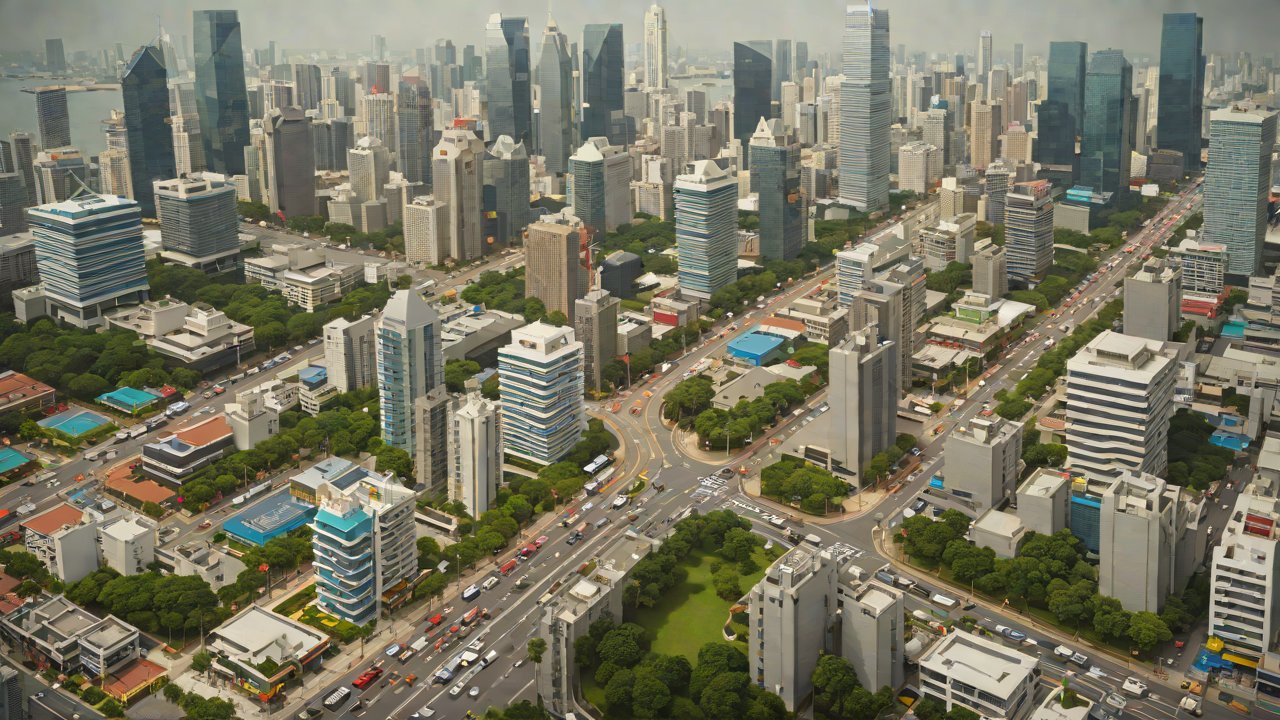
Singapore’s foray into smart city initiatives has been a topic of interest globally, with its comprehensive plans to integrate cutting-edge technology into urban infrastructure. The city-state aims to harness the power of data analytics and IoT sensors to create a seamless, efficient, and sustainable living environment for its citizens.
The Singapore government’s vision is to transform the city into a “Smart Nation,” leveraging technology to enhance public services, improve quality of life, and drive economic growth. This ambitious project involves deploying a vast array of sensors across various domains, including transportation, energy, water management, waste collection, and healthcare.
To support this endeavor, Singapore is seeking a new smart city sensor distributor that can provide deep customization capabilities. The chosen partner will be responsible for designing, developing, and implementing tailored solutions to meet the specific needs of different districts within the city. This report aims to examine the current market landscape, identify key players, and analyze the requirements for a successful partnership.
1. Market Overview
The global smart city sensor market is projected to grow significantly over the next few years, driven by increasing demand for efficient urban management and improved public services. According to a recent report, the market size is expected to reach $4.5 billion by 2026, up from $2.3 billion in 2020.
| Year | Market Size (USD billion) |
|---|---|
| 2020 | 2.3 |
| 2021 | 2.8 |
| 2022 | 3.4 |
| 2023 | 3.9 |
| 2024 | 4.3 |
| 2025 | 4.7 |
| 2026 | 4.5 |
2. Key Players
Several companies have already established themselves as key players in the smart city sensor market, including:
| Company | Country of Origin | Key Products/Services |
|---|---|---|
| Siemens | Germany | IoT sensors, data analytics platforms |
| Honeywell International | USA | Environmental monitoring systems, building automation solutions |
| Schneider Electric | France | Energy management software, smart grid technologies |
| IBM | USA | Data analytics services, AI-powered predictive maintenance |

3. Deep Customization Requirements
To meet the specific needs of Singapore’s diverse districts, a deep customization capability is essential for any potential partner. This involves:
- Conducting thorough site assessments to understand local conditions and requirements
- Designing tailored solutions that incorporate multiple technologies and data sources
- Developing customized software applications to integrate with existing systems
- Providing ongoing support and maintenance services to ensure seamless operation
| District | Key Challenges/Requirements |
|---|---|
| Downtown Core | High population density, limited space for infrastructure |
| Marina Bay | Complex transportation network, need for efficient traffic management |
| Orchard Road | Retail-centric area with high foot traffic, demand for data-driven insights |
4. Technical Considerations
When evaluating potential partners, Singapore should consider the following technical aspects:
- Data security and encryption protocols to protect sensitive information
- Scalability and flexibility of solutions to accommodate changing needs
- Interoperability with existing systems and infrastructure
- Integration with emerging technologies like AI, blockchain, and 5G
| Technical Requirements | Evaluation Criteria |
|---|---|
| Data security | Compliance with Singapore’s data protection regulations |
| Scalability | Ability to adapt to changing population growth rates |
| Interoperability | Seamless integration with existing systems and infrastructure |
5. Partnerships and Collaborations
Singapore has already established partnerships with several international companies, including:
- A joint venture between Siemens and the Singapore government to develop a smart city platform
- A collaboration between Honeywell International and the National University of Singapore (NUS) on energy-efficient building solutions
- A partnership between IBM and the Singapore-MIT Alliance for Research and Technology (SMART) on AI-powered predictive maintenance
| Partner | Collaboration Type | Key Focus Areas |
|---|---|---|
| Siemens | Joint Venture | Smart city platform development |
| Honeywell International | Collaboration | Energy-efficient building solutions |
| IBM | Partnership | AI-powered predictive maintenance |
6. Conclusion
Singapore’s ambitious smart city initiative requires a deep customization capability to meet the unique needs of its diverse districts. This report has identified key players, technical requirements, and existing partnerships that can inform the selection process for a new sensor distributor.
To ensure success, Singapore should prioritize partnerships with companies that demonstrate expertise in data analytics, IoT sensors, and customized solutions. By doing so, the city-state can unlock the full potential of its smart city vision and create a more efficient, sustainable, and livable environment for its citizens.
The selection process should involve thorough evaluations of potential partners’ technical capabilities, business models, and past experiences with similar projects. Regular communication and collaboration between stakeholders will also be crucial to ensure that solutions meet the evolving needs of Singapore’s districts.
IOT Cloud Platform
IOT Cloud Platform is an IoT portal established by a Chinese IoT company, focusing on technical solutions in the fields of agricultural IoT, industrial IoT, medical IoT, security IoT, military IoT, meteorological IoT, consumer IoT, automotive IoT, commercial IoT, infrastructure IoT, smart warehousing and logistics, smart home, smart city, smart healthcare, smart lighting, etc.
The IoT Cloud Platform blog is a top IoT technology stack, providing technical knowledge on IoT, robotics, artificial intelligence (generative artificial intelligence AIGC), edge computing, AR/VR, cloud computing, quantum computing, blockchain, smart surveillance cameras, drones, RFID tags, gateways, GPS, 3D printing, 4D printing, autonomous driving, etc.
Note: This article was professionally generated with the assistance of AIGC and has been fact-checked and manually corrected by IoT expert editor IoTCloudPlatForm.