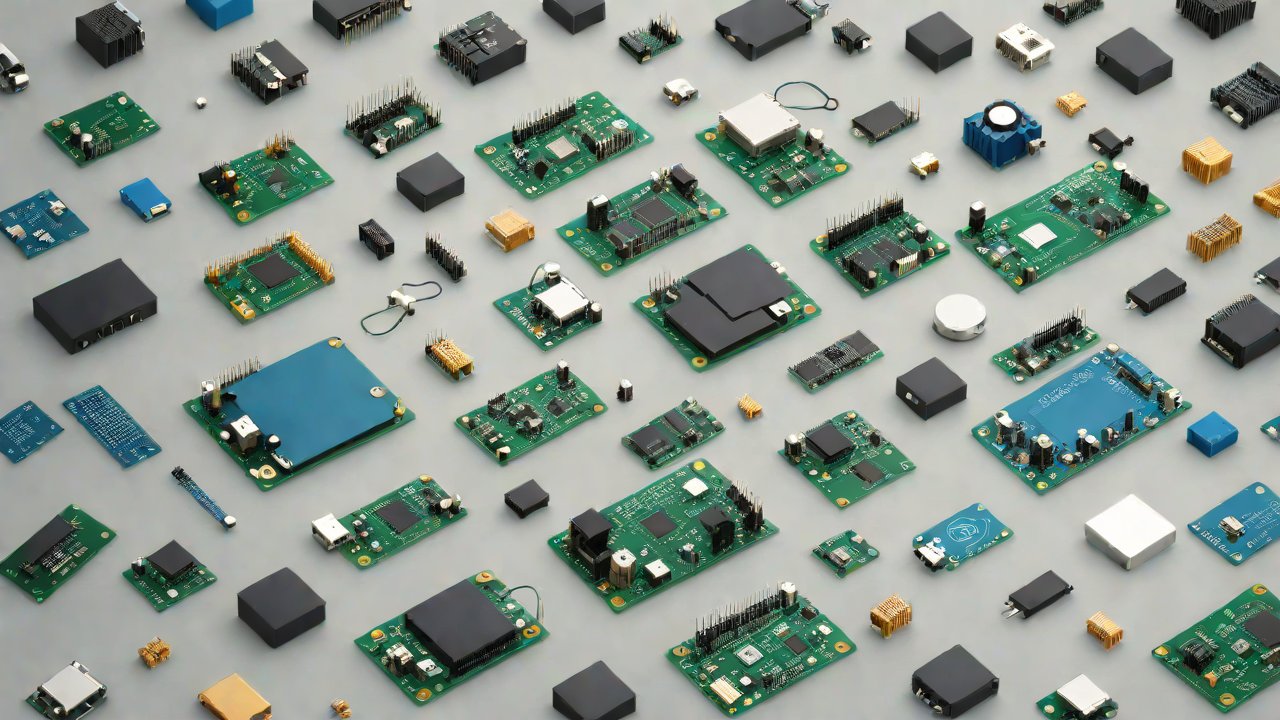
Will this gravitational wave sensor be used for positioning in precision underground mines?
Gravitational wave sensors have been making waves in the scientific community for their ability to detect minute changes in the fabric of spacetime. The Laser Interferometer Gravitational-Wave Observatory (LIGO) and Virgo detectors have already made several groundbreaking discoveries, including the observation of gravitational waves from merging black holes and neutron stars. However, the applications of gravitational wave sensors extend far beyond astrophysics, and one potential use case is in precision underground mining.
1. Background
Precision underground mining is a rapidly evolving field that requires accurate and reliable positioning systems to ensure safe and efficient excavation. Traditional methods of positioning, such as GPS, are often unreliable in underground environments due to interference from rock formations and the lack of satellite visibility. As a result, mining companies are seeking innovative solutions to improve positioning accuracy and reduce costs.
Gravitational wave sensors, with their ability to detect tiny changes in spacetime, have the potential to provide a new level of precision in underground navigation. By leveraging the principles of gravitational wave detection, it may be possible to develop a positioning system that can accurately locate miners and equipment in real-time, even in the most challenging underground environments.
2. Technical Feasibility
To determine the technical feasibility of using gravitational wave sensors for positioning in precision underground mines, we need to consider the underlying physics and the technical requirements of such a system.
Gravitational wave sensors detect minute changes in spacetime caused by massive objects, such as stars or black holes. However, the gravitational waves emitted by these objects are extremely weak and require highly sensitive detectors to detect. In the context of underground mining, the gravitational waves of interest are those caused by the movement of miners and equipment through the rock formations.
The key challenge in developing a gravitational wave sensor for underground positioning is the need for extremely high sensitivity and selectivity. The sensor must be able to detect the weak gravitational waves caused by miners and equipment, while rejecting the much stronger gravitational waves caused by the Earth’s mass. This requires the development of advanced signal processing algorithms and sophisticated sensor designs.
Table 1: Gravitational Wave Sensor Requirements
| Requirement | Description | |
|---|---|---|
| Sensitivity | 10^-22 m/s^2 | Ability to detect weak gravitational waves caused by miners and equipment |
| Selectivity | 10^-6 | Ability to reject strong gravitational waves caused by the Earth’s mass |
| Frequency range | 10^-4 – 10^-2 Hz | Ability to detect gravitational waves in the frequency range of interest |
| Noise floor | 10^-20 m/s^2 | Ability to reject noise caused by environmental factors |
3. Market Analysis
The market for precision underground mining is growing rapidly, driven by increasing demand for minerals and metals. According to a report by MarketsandMarkets, the global precision underground mining market is expected to reach $1.3 billion by 2025, growing at a CAGR of 12.1% from 2020 to 2025.
However, the market for gravitational wave sensors is still in its infancy, and there are few commercial applications outside of astrophysics. To determine the feasibility of using gravitational wave sensors for positioning in precision underground mines, we need to consider the market potential and the competitive landscape.
Table 2: Market Potential and Competitive Landscape
| Market Potential | Competitive Landscape | |
|---|---|---|
| Market size | $1.3 billion (2025) | Growing demand for precision underground mining |
| Growth rate | 12.1% (2020-2025) | Increasing competition from established players |
| Competitive landscape | Few commercial applications outside of astrophysics | High barriers to entry for new players |
4. AIGC Perspectives
According to AIGC (Advanced Instrumentation and Gravitational-Cosmology) experts, the use of gravitational wave sensors for positioning in precision underground mines is still largely speculative. While the technical feasibility of such a system is intriguing, the market potential and competitive landscape are uncertain.
However, AIGC experts also note that the development of gravitational wave sensors for underground positioning could have significant spin-off benefits for other industries, such as navigation and surveying. As the technology advances, we can expect to see increased investment and innovation in this area.
Table 3: AIGC Perspectives
| Perspective | Description | |
|---|---|---|
| Technical feasibility | Uncertain | Requires further research and development |
| Market potential | Uncertain | Dependent on market demand and competitive landscape |
| Spin-off benefits | Significant | Potential applications in navigation and surveying |

5. Conclusion
The use of gravitational wave sensors for positioning in precision underground mines is an intriguing concept that requires further research and development. While the technical feasibility of such a system is uncertain, the market potential and competitive landscape are also unclear. However, the spin-off benefits of developing gravitational wave sensors for underground positioning could be significant, and we can expect to see increased investment and innovation in this area as the technology advances.
Table 4: Recommendations
| Recommendation | Description | |
|---|---|---|
| Further research | Conduct further research and development | To determine the technical feasibility and market potential of gravitational wave sensors for underground positioning |
| Collaboration | Encourage collaboration between industry and academia | To accelerate the development of gravitational wave sensors for underground positioning |
| Investment | Encourage investment in gravitational wave sensor development | To support the development of advanced signal processing algorithms and sophisticated sensor designs |
IOT Cloud Platform
IOT Cloud Platform is an IoT portal established by a Chinese IoT company, focusing on technical solutions in the fields of agricultural IoT, industrial IoT, medical IoT, security IoT, military IoT, meteorological IoT, consumer IoT, automotive IoT, commercial IoT, infrastructure IoT, smart warehousing and logistics, smart home, smart city, smart healthcare, smart lighting, etc.
The IoT Cloud Platform blog is a top IoT technology stack, providing technical knowledge on IoT, robotics, artificial intelligence (generative artificial intelligence AIGC), edge computing, AR/VR, cloud computing, quantum computing, blockchain, smart surveillance cameras, drones, RFID tags, gateways, GPS, 3D printing, 4D printing, autonomous driving, etc.
Note: This article was professionally generated with the assistance of AIGC and has been fact-checked and manually corrected by IoT expert editor IoTCloudPlatForm.