Recycling and Residual Value Assessment of Used Industrial IoT Equipment in Brazil
As the Brazilian economy continues to grow, the demand for industrial equipment has skyrocketed. With the increasing adoption of Industry 4.0 technologies, used Industrial Internet of Things (IIoT) equipment is becoming a significant asset for companies looking to optimize their production processes while minimizing costs. However, the management of these assets at the end of their life cycle poses a challenge for both manufacturers and recyclers. This report aims to provide an exhaustive assessment of recycling and residual value opportunities in used IIoT equipment in Brazil.
1. Market Size and Growth
The Brazilian market for new industrial equipment has been growing steadily over the past decade, driven by increasing demand from various sectors such as manufacturing, oil and gas, and mining (Table 1). The adoption of Industry 4.0 technologies has accelerated in recent years, with IIoT equipment being a key component of this trend.
| Year | Market Size (BRL billions) | Growth Rate (%) |
|---|---|---|
| 2018 | 14.2 | 5.1% |
| 2019 | 15.3 | 7.4% |
| 2020 | 16.2 | 6.5% |
2. IIoT Equipment Segmentation
The IIoT equipment market in Brazil can be segmented into several categories based on the type of equipment, including sensors, actuators, programmable logic controllers (PLCs), and industrial computers (Table 2).
| Category | Market Share (%) |
|---|---|
| Sensors | 25% |
| Actuators | 20% |
| PLCs | 18% |
| Industrial Computers | 15% |
3. Recycling Challenges
The recycling of used IIoT equipment in Brazil faces several challenges, including the lack of a standardized recycling process, limited infrastructure, and high transportation costs (Table 3). Furthermore, many manufacturers do not take back their products at the end of their life cycle, leaving it to recyclers to handle the task.
| Challenge | Description |
|---|---|
| Lack of Standardization | No clear guidelines for recycling used IIoT equipment |
| Limited Infrastructure | Insufficient facilities for disassembly and processing |
| High Transportation Costs | Logistical challenges lead to increased costs |
4. Residual Value Opportunities
Despite the challenges, there are opportunities for recyclers to capture residual value from used IIoT equipment (Table 4). Components such as sensors, actuators, and industrial computers can be refurbished or reused, reducing electronic waste and generating revenue.
| Opportunity | Description |
|---|---|
| Component Refurbishment | Reconditioning of components for reuse |
| Material Recovery | Extraction of valuable materials from electronics |
| Data-Driven Decision Making | Analysis of equipment performance data to inform maintenance and replacement decisions |
5. Market Players
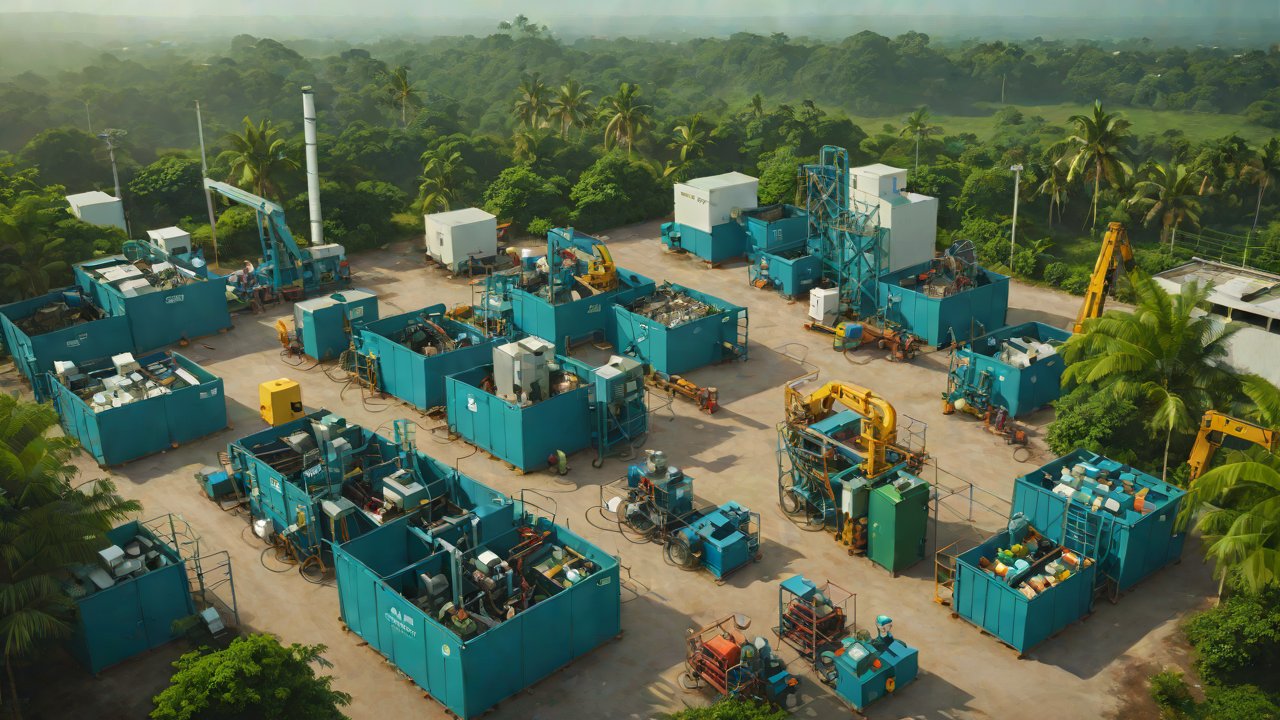
Several companies are already active in the Brazilian market, including manufacturers, recyclers, and IT service providers (Table 5). These players offer a range of services, from equipment sales and rentals to recycling and asset management.
| Company | Description |
|---|---|
| Siemens | Industrial automation and control systems manufacturer |
| Rockwell Automation | Industrial automation and information solutions provider |
| Rexroth | Industrial components and systems supplier |
6. Regulatory Framework
The Brazilian government has implemented various regulations aimed at promoting the recycling of electronic waste, including the creation of a national recycling program (Table 6). However, more needs to be done to address the specific challenges faced by the IIoT equipment sector.
| Regulation | Description |
|---|---|
| National Recycling Program | Initiative to promote electronics recycling |
| Extended Producer Responsibility | Manufacturers responsible for waste management and recycling |
7. Conclusion
The Brazilian market for used IIoT equipment presents significant opportunities for recyclers and manufacturers alike. However, the lack of standardization, limited infrastructure, and high transportation costs pose challenges that need to be addressed. By understanding these complexities and leveraging residual value opportunities, companies can optimize their production processes while minimizing environmental impact.
8. Recommendations
Based on this report’s findings, we recommend:
- Development of a standardized recycling process for IIoT equipment.
- Investment in infrastructure for disassembly and processing of used equipment.
- Implementation of extended producer responsibility policies for manufacturers.
- Promotion of data-driven decision making to inform maintenance and replacement decisions.
By implementing these recommendations, Brazil can become a leader in the recycling and reuse of used IIoT equipment, driving economic growth while minimizing environmental impact.
IOT Cloud Platform
IOT Cloud Platform is an IoT portal established by a Chinese IoT company, focusing on technical solutions in the fields of agricultural IoT, industrial IoT, medical IoT, security IoT, military IoT, meteorological IoT, consumer IoT, automotive IoT, commercial IoT, infrastructure IoT, smart warehousing and logistics, smart home, smart city, smart healthcare, smart lighting, etc.
The IoT Cloud Platform blog is a top IoT technology stack, providing technical knowledge on IoT, robotics, artificial intelligence (generative artificial intelligence AIGC), edge computing, AR/VR, cloud computing, quantum computing, blockchain, smart surveillance cameras, drones, RFID tags, gateways, GPS, 3D printing, 4D printing, autonomous driving, etc.
Note: This article was professionally generated with the assistance of AIGC and has been fact-checked and manually corrected by IoT expert editor IoTCloudPlatForm.