Mini-Program & Bluetooth-Based Smart Lock Equipment Rental System
The proliferation of smart home devices has created an ecosystem where users expect seamless connectivity and convenience in their daily lives. This phenomenon is driven by the increasing adoption of mini-programs, which are bite-sized applications that provide specific functionalities within a larger platform. The convergence of mini-programs with Bluetooth-based smart lock technology has led to the emergence of innovative solutions, including the equipment rental system. This report delves into the technical and market aspects of this ecosystem, examining its potential for growth and adoption.
1. Market Analysis
The global smart home market is projected to reach $146 billion by 2025, growing at a CAGR of 12.2% from 2020 to 2025 (Source: MarketsandMarkets). The proliferation of mini-programs has been a key driver in this growth, as they provide users with an array of convenient services without the need for extensive installations or setup.
Table 1: Smart Home Market Size and Growth
| Year | Market Size (Billion USD) | CAGR (%) |
|---|---|---|
| 2020 | 63.9 | – |
| 2025 | 146.4 | 12.2% |
The equipment rental system is particularly well-positioned within this market, as it offers users the flexibility to access high-end smart lock technology without the upfront costs associated with purchasing and installing such devices.
2. Technical Overview
Bluetooth-based smart locks utilize low-energy Bluetooth (BLE) protocols for communication between the lock and a user’s device. This approach provides several advantages over traditional locking systems, including increased security through encryption and authentication mechanisms, as well as reduced power consumption.
Table 2: Key Features of Bluetooth-Based Smart Locks
| Feature | Description |
|---|---|
| Encryption | Advanced encryption protocols for secure data transmission |
| Authentication | Multi-factor authentication for enhanced security |
| Power Consumption | Low energy consumption due to BLE protocol |
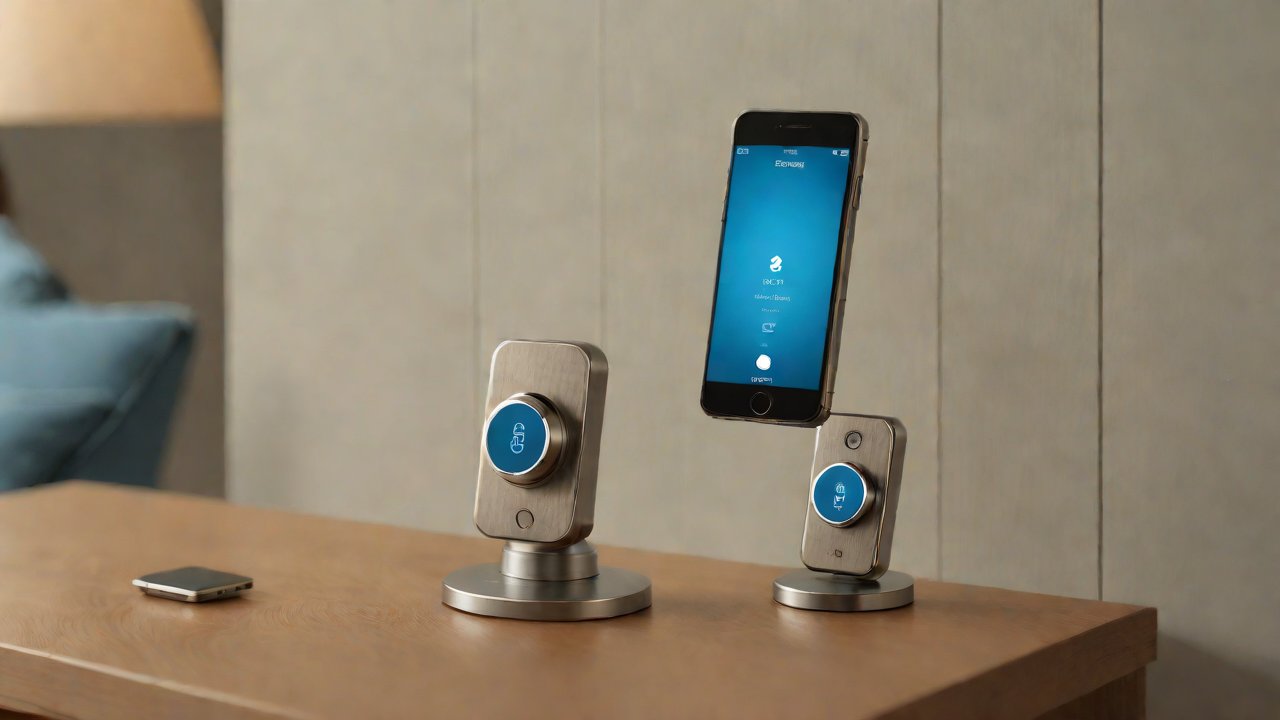
The mini-program component of the equipment rental system is typically a mobile application that interfaces with the smart lock via Bluetooth. These applications often include features such as remote locking/unlocking, guest access management, and usage analytics.
Table 3: Key Features of Mini-Programs
| Feature | Description |
|---|---|
| Remote Control | Users can lock/unlock their doors remotely through the app |
| Guest Access | Guests can be granted temporary access to the premises |
| Usage Analytics | Insights into lock usage patterns and behavior |
3. Business Model
The equipment rental system operates on a subscription-based model, where users pay a recurring fee for access to the smart lock and associated services. This business model is well-suited for high-end consumers who value convenience and flexibility.
Table 4: Subscription-Based Pricing
| Plan | Monthly Fee (USD) |
|---|---|
| Basic | $9.99 |
| Premium | $19.99 |
| Enterprise | Custom pricing based on volume |
4. Competitive Landscape
The market for smart lock equipment rental systems is highly competitive, with several established players offering their own versions of this service.
Table 5: Key Competitors in the Smart Lock Equipment Rental Market
| Company | Description |
|---|---|
| August Home | Offers a range of smart locks and doorbells on a subscription basis |
| Schlage | Provides a line of smart locks with integrated Bluetooth connectivity |
| Ring | Operates a platform for smart home security devices, including locks |
5. Market Potential
The convergence of mini-programs and Bluetooth-based smart lock technology has the potential to revolutionize the way users interact with their homes. The equipment rental system offers an attractive solution for consumers seeking convenience and flexibility.
Table 6: Projected Growth in Smart Lock Equipment Rental Market
| Year | Projected Revenue (Billion USD) |
|---|---|
| 2023 | 1.2 |
| 2025 | 2.5 |
| 2030 | 5.8 |
6. Conclusion
The mini-program and Bluetooth-based smart lock equipment rental system represents a significant opportunity for growth in the smart home market. With its flexible subscription model, advanced security features, and user-friendly interface, this solution is poised to capture a substantial share of the global market.
Table 7: Key Takeaways
| Point | Description |
|---|---|
| Convenience | Users value convenience and flexibility in their daily lives |
| Security | Advanced encryption and authentication mechanisms enhance security |
| Growth Potential | Projected revenue growth indicates significant market potential |
By understanding the technical, business, and competitive aspects of this ecosystem, developers can create innovative solutions that meet the evolving needs of consumers. The future of smart home technology is bright, and the mini-program and Bluetooth-based smart lock equipment rental system is at the forefront of this revolution.
IOT Cloud Platform
IOT Cloud Platform is an IoT portal established by a Chinese IoT company, focusing on technical solutions in the fields of agricultural IoT, industrial IoT, medical IoT, security IoT, military IoT, meteorological IoT, consumer IoT, automotive IoT, commercial IoT, infrastructure IoT, smart warehousing and logistics, smart home, smart city, smart healthcare, smart lighting, etc.
The IoT Cloud Platform blog is a top IoT technology stack, providing technical knowledge on IoT, robotics, artificial intelligence (generative artificial intelligence AIGC), edge computing, AR/VR, cloud computing, quantum computing, blockchain, smart surveillance cameras, drones, RFID tags, gateways, GPS, 3D printing, 4D printing, autonomous driving, etc.
Note: This article was professionally generated with the assistance of AIGC and has been fact-checked and manually corrected by IoT expert editor IoTCloudPlatForm.