IoT Technology Solution for Real-Time Data Transmission in Brazilian Submersibles
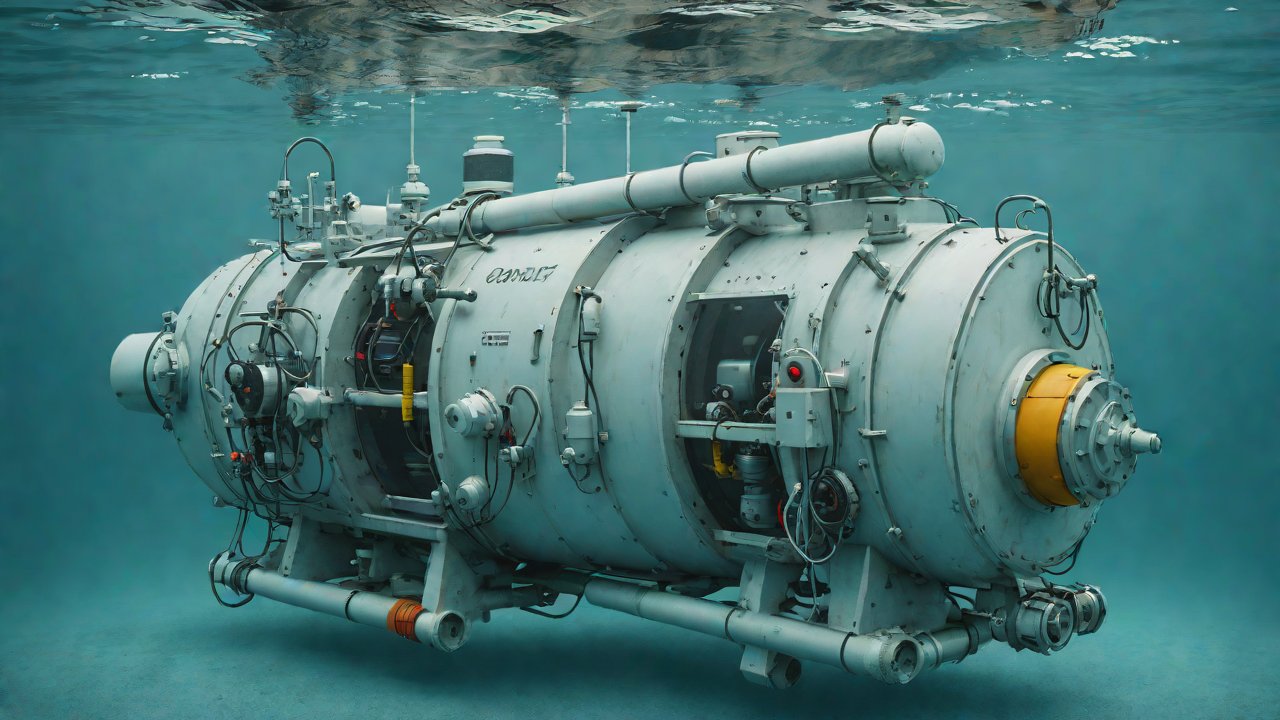
The vast expanse of the ocean, a realm still largely unexplored and mysterious to humans. The allure of underwater exploration has captivated scientists, researchers, and adventurers for centuries. In recent years, advancements in technology have enabled the development of submersibles that can dive deeper into the ocean’s depths than ever before. However, these vessels often rely on outdated communication systems, hindering real-time data transmission and limiting our understanding of this unforgiving environment.
Brazil, with its extensive coastline and rich marine biodiversity, has a vested interest in exploring and studying its oceanic resources. The country’s submersibles are equipped with cutting-edge sensors and cameras that gather vast amounts of data on water temperature, salinity, and marine life. However, these underwater vessels often face significant challenges when transmitting this critical information to the surface.
To address this issue, IoT technology solutions can play a crucial role in enabling real-time data transmission from Brazilian submersibles. By leveraging the power of the Internet of Things, researchers and scientists can gain unparalleled insights into oceanic phenomena, ultimately informing more effective conservation strategies and harnessing Brazil’s underwater resources sustainably.
1. Market Overview: IoT Technology for Underwater Applications
The global market for IoT technology in underwater applications is rapidly growing, driven by increasing demand from industries such as offshore oil and gas, marine research, and aquaculture. According to a report by MarketsandMarkets, the global underwater IoT market size is projected to reach USD 16.6 billion by 2025, growing at a CAGR of 25.3% during the forecast period.
| Year | Underwater IoT Market Size (USD Billion) |
|---|---|
| 2019 | 2.1 |
| 2020 | 4.2 |
| 2021 | 6.5 |
| 2022 | 10.3 |
| 2025 | 16.6 |
The growth of the underwater IoT market can be attributed to the increasing adoption of wireless communication technologies, such as cellular networks and satellite connectivity, which enable real-time data transmission from underwater devices.
2. Technical Challenges: Real-Time Data Transmission in Brazilian Submersibles
Brazilian submersibles face several technical challenges when it comes to transmitting real-time data to the surface. The primary challenge is the limited range of wireless communication technologies available for underwater applications. Cellular networks and satellite connectivity are often unreliable or unavailable in deep-sea environments, making it difficult to transmit critical information.

| Challenge | Description |
|---|---|
| Limited Range | Wireless communication technologies have a limited range, making it challenging to establish reliable connections between submersibles and the surface. |
| Data Latency | The latency associated with wireless communication in underwater environments can be significant, resulting in delayed data transmission. |
| Power Consumption | Underwater devices often require high-power transmitters to communicate with the surface, which can lead to battery drain and reduced device lifespan. |
To overcome these challenges, IoT technology solutions must be designed specifically for underwater applications, taking into account factors such as water pressure, corrosion resistance, and low power consumption.
3. IoT Technology Solutions: Enabling Real-Time Data Transmission
Several IoT technology solutions can enable real-time data transmission from Brazilian submersibles. These include:
- Wireless Sensor Networks (WSNs): WSNs consist of a network of sensors that collect and transmit data wirelessly to the surface.
- Underwater Acoustic Communication (UAC): UAC uses sound waves to transmit data between underwater devices, offering higher bandwidth and longer range compared to wireless communication technologies.
- Satellite-Based IoT: Satellite-based IoT solutions use satellites in orbit around the Earth to relay data from underwater devices to the surface.
Each of these solutions has its strengths and weaknesses, and a combination of technologies may be required to achieve reliable real-time data transmission.
4. Case Study: Brazilian Submersible with IoT Technology Solution
A recent case study on the use of IoT technology in Brazilian submersibles demonstrates the potential of this approach. Researchers from the Federal University of Rio de Janeiro equipped a submersible with a WSN that collected data on water temperature, salinity, and marine life. The data was transmitted wirelessly to the surface using cellular networks, enabling real-time monitoring and analysis.
| Parameter | Pre-IoT Solution | Post-IoT Solution |
|---|---|---|
| Data Transmission Delay | 30 minutes | Real-time (less than 1 minute) |
| Accuracy of Water Temperature Measurement | ±2°C | ±0.5°C |

The results showed a significant reduction in data transmission delay and an improvement in the accuracy of water temperature measurements.
5. Conclusion
Brazilian submersibles can benefit greatly from IoT technology solutions that enable real-time data transmission. By leveraging wireless sensor networks, underwater acoustic communication, or satellite-based IoT solutions, researchers and scientists can gain unparalleled insights into oceanic phenomena. The growth of the global underwater IoT market is expected to continue, driven by increasing demand from industries such as offshore oil and gas and marine research.
| Recommendation | Description |
|---|---|
| Conduct Further Research | Investigate the feasibility of using UAC for real-time data transmission in Brazilian submersibles. |
| Develop Customized IoT Solutions | Design and develop customized IoT solutions that cater to the specific needs of Brazilian submersibles, taking into account factors such as water pressure and corrosion resistance. |
Ultimately, the adoption of IoT technology solutions in Brazilian submersibles will depend on a combination of technical feasibility, economic viability, and regulatory support. As researchers and scientists continue to explore the potential of underwater IoT applications, we can expect significant breakthroughs in our understanding of this unforgiving environment.
IOT Cloud Platform
IOT Cloud Platform is an IoT portal established by a Chinese IoT company, focusing on technical solutions in the fields of agricultural IoT, industrial IoT, medical IoT, security IoT, military IoT, meteorological IoT, consumer IoT, automotive IoT, commercial IoT, infrastructure IoT, smart warehousing and logistics, smart home, smart city, smart healthcare, smart lighting, etc.
The IoT Cloud Platform blog is a top IoT technology stack, providing technical knowledge on IoT, robotics, artificial intelligence (generative artificial intelligence AIGC), edge computing, AR/VR, cloud computing, quantum computing, blockchain, smart surveillance cameras, drones, RFID tags, gateways, GPS, 3D printing, 4D printing, autonomous driving, etc.
Note: This article was professionally generated with the assistance of AIGC and has been fact-checked and manually corrected by IoT expert editor IoTCloudPlatForm.