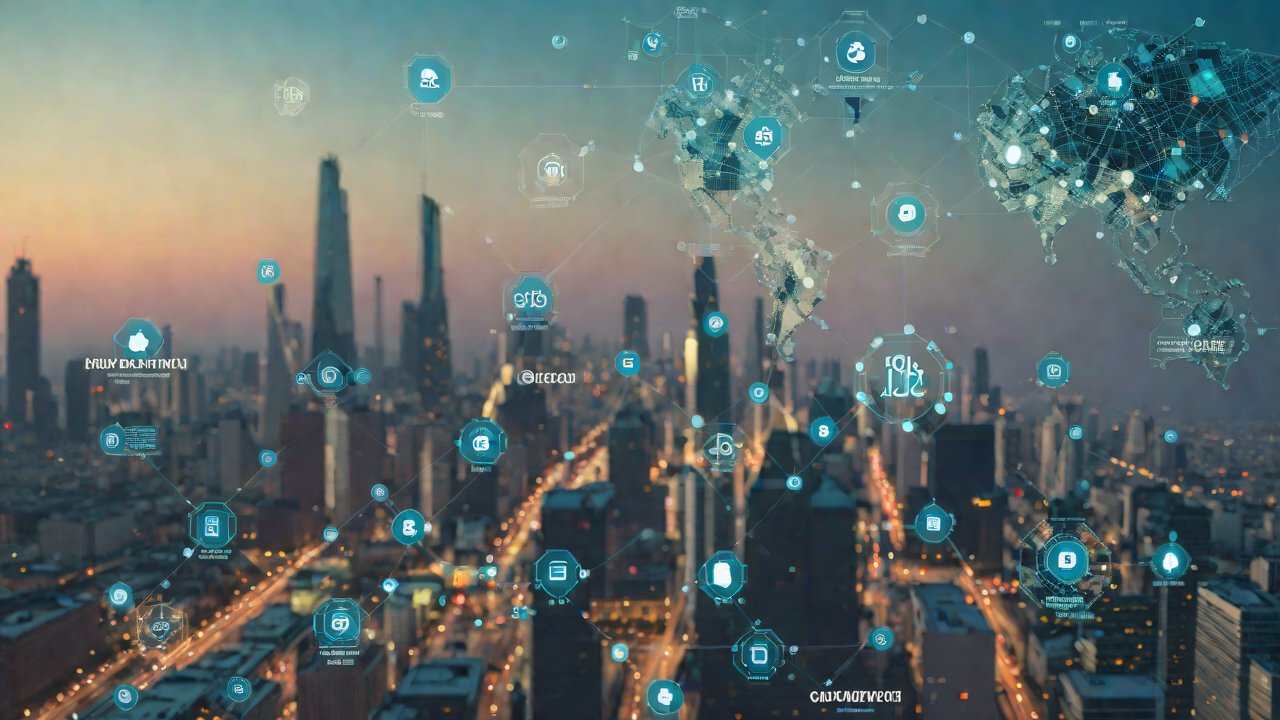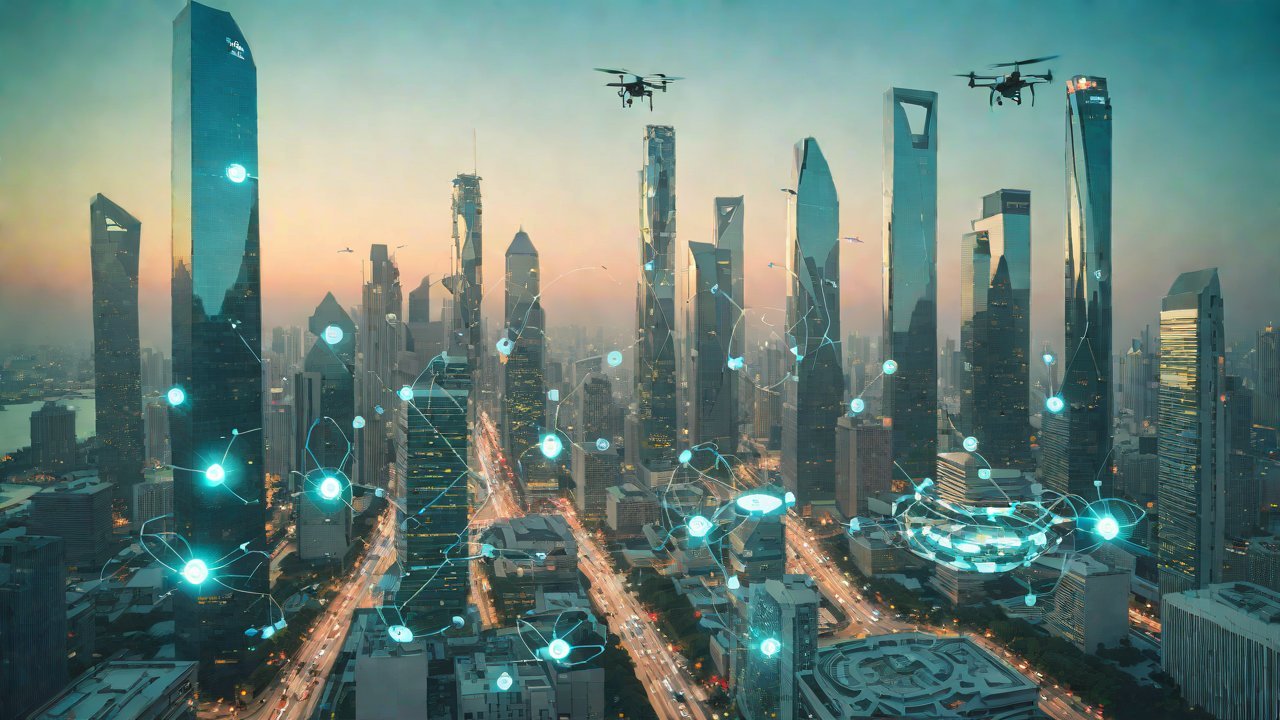
IoT Innovation and Future Outlook in 2027
The Internet of Things (IoT) has revolutionized the way we live, work, and interact with our surroundings. From smart homes to industrial automation, IoT innovations have transformed various aspects of modern life. As we approach 2027, the pace of innovation in the IoT space is expected to accelerate further, driven by advancements in technologies such as Artificial Intelligence (AI), Edge Computing, and 5G connectivity.
The global IoT market is projected to reach $1.2 trillion by 2027, growing at a CAGR of 23% from 2020 to 2027 (Market Research Future). This exponential growth can be attributed to the increasing adoption of IoT solutions across industries, including manufacturing, transportation, healthcare, and energy management.
1. Key Drivers of IoT Innovation
1.1. Artificial Intelligence (AI) Integration
The integration of AI with IoT devices has opened up new avenues for innovation in areas such as predictive maintenance, quality control, and process optimization. AI-powered IoT solutions can analyze vast amounts of data from various sources, enabling real-time decision-making and improving operational efficiency.
| Industry | AI-Powered IoT Applications |
|---|---|
| Manufacturing | Predictive maintenance, quality control, supply chain management |
| Healthcare | Patient monitoring, remote health services, medical imaging analysis |
| Transportation | Autonomous vehicles, route optimization, traffic management |
1.2. Edge Computing and Fog Computing
The rise of Edge Computing and Fog Computing has enabled the processing of IoT data closer to the source, reducing latency and improving real-time decision-making capabilities. These technologies have significant implications for industries such as smart cities, industrial automation, and autonomous vehicles.
| Technology | Characteristics |
|---|---|
| Edge Computing | Processing data at or near the source, reducing latency and improving real-time decision-making |
| Fog Computing | Extending Cloud Computing to the edge of the network, enabling real-time processing and analysis |

2. Emerging Trends in IoT
2.1. 5G Connectivity
The deployment of 5G networks has paved the way for widespread adoption of IoT devices that require high-bandwidth connectivity. With speeds up to 100 Gbps, 5G enables seamless communication between IoT devices, enabling applications such as smart cities, industrial automation, and remote healthcare services.
2.2. Blockchain and IoT
The integration of Blockchain technology with IoT has opened up new possibilities for secure data transmission, device authentication, and supply chain management. Blockchain-based IoT solutions can ensure the integrity and authenticity of data, reducing the risk of cyber threats and improving overall system security.
| Blockchain Application | IoT Benefits |
|---|---|
| Secure Data Transmission | Real-time data encryption and decryption |
| Device Authentication | Secure device registration and authentication |
3. IoT Innovation in Specific Industries
3.1. Smart Homes and Buildings
The demand for smart homes and buildings is expected to grow significantly, driven by the increasing adoption of IoT devices such as thermostats, lighting systems, and security cameras.
| IoT Device | Benefits |
|---|---|
| Smart Thermostat | Energy efficiency, temperature control |
| Smart Lighting System | Energy efficiency, ambiance creation |
| Security Camera | Real-time surveillance, motion detection |

3.2. Industrial Automation
Industrial automation is expected to be one of the key drivers of IoT innovation in 2027, with applications such as predictive maintenance, quality control, and supply chain management.
| IoT Application | Benefits |
|---|---|
| Predictive Maintenance | Reduced downtime, improved equipment lifespan |
| Quality Control | Real-time monitoring, process optimization |
| Supply Chain Management | Improved logistics, reduced costs |
4. Challenges and Opportunities
4.1. Security Risks
The increasing adoption of IoT devices has raised concerns about security risks such as data breaches, device hacking, and cyber threats.
| Security Risk | Mitigation Strategies |
|---|---|
| Data Breaches | Encryption, secure data transmission |
| Device Hacking | Secure device registration, authentication |
| Cyber Threats | Real-time monitoring, incident response |

4.2. Regulatory Framework
The lack of a clear regulatory framework has created uncertainty around IoT innovation and adoption.
| Regulatory Challenge | Opportunities for Innovation |
|---|---|
| Data Protection | Secure data transmission, device authentication |
| Device Regulation | Standardization, interoperability |
5. Conclusion
In conclusion, the future of IoT innovation in 2027 is expected to be shaped by emerging trends such as AI integration, Edge Computing, and 5G connectivity. The increasing adoption of IoT devices across industries has created opportunities for innovation, but also raises concerns about security risks and regulatory challenges. To realize the full potential of IoT innovation, it is essential to address these challenges and develop a clear regulatory framework that supports the growth of this rapidly evolving industry.
As we approach 2027, one thing is certain – the Internet of Things will continue to transform various aspects of modern life, driven by advancements in technologies such as AI, Edge Computing, and 5G connectivity. The future of IoT innovation holds immense promise, but it also requires careful consideration of the challenges and opportunities that lie ahead.
IOT Cloud Platform
IOT Cloud Platform is an IoT portal established by a Chinese IoT company, focusing on technical solutions in the fields of agricultural IoT, industrial IoT, medical IoT, security IoT, military IoT, meteorological IoT, consumer IoT, automotive IoT, commercial IoT, infrastructure IoT, smart warehousing and logistics, smart home, smart city, smart healthcare, smart lighting, etc.
The IoT Cloud Platform blog is a top IoT technology stack, providing technical knowledge on IoT, robotics, artificial intelligence (generative artificial intelligence AIGC), edge computing, AR/VR, cloud computing, quantum computing, blockchain, smart surveillance cameras, drones, RFID tags, gateways, GPS, 3D printing, 4D printing, autonomous driving, etc.
Note: This article was professionally generated with the assistance of AIGC and has been fact-checked and manually corrected by IoT expert editor IoTCloudPlatForm.