How can edge-cloud collaboration shorten the generation time of pest and disease prescription maps?
The agricultural sector is on the cusp of a revolution, driven by the confluence of advancements in artificial intelligence (AI), the Internet of Things (IoT), and edge computing. One of the most promising applications of these technologies is in the creation of pest and disease prescription maps, which are critical for optimizing crop yields and reducing the environmental impact of agriculture. However, the generation time of these maps is often a significant bottleneck, limiting their effectiveness. Edge-cloud collaboration has emerged as a key solution to this problem, by leveraging the strengths of both edge computing and cloud computing to create more efficient, scalable, and accurate prescription maps.
1. The Current State of Pest and Disease Prescription Maps
Pest and disease prescription maps are created using a combination of satellite and drone imagery, soil moisture data, weather forecasts, and other environmental factors. These maps are then used by farmers to identify areas of their fields that are most susceptible to pests and diseases, and to apply targeted treatments accordingly. However, the process of creating these maps is often slow and labor-intensive, requiring significant manual input and processing power.
According to a report by MarketsandMarkets, the global precision agriculture market is expected to grow from $4.8 billion in 2020 to $13.6 billion by 2025, at a Compound Annual Growth Rate (CAGR) of 24.1% during the forecast period. However, the report also notes that the current generation time for pest and disease prescription maps is often too slow to be effective, with an average time-to-insight of 7-10 days.
| Current Generation Time | Average Time-to-Insight | Number of Fields |
|---|---|---|
| 7-10 days | 1-3 days | 10-50 fields |
2. The Role of Edge Computing in Pest and Disease Prescription Maps
Edge computing is a distributed computing paradigm that enables data processing to occur at the edge of the network, closer to the source of the data. This approach is particularly well-suited to the creation of pest and disease prescription maps, as it allows for real-time processing of data from sensors and other edge devices.
According to a report by Grand View Research, the global edge computing market is expected to reach $25.1 billion by 2025, growing at a CAGR of 36.6% during the forecast period. The report notes that the market is driven by the increasing adoption of IoT devices, as well as the need for faster and more efficient data processing.
| Edge Computing Market Size | CAGR | Number of IoT Devices |
|---|---|---|
| $25.1 billion | 36.6% | 150-200 billion devices |
3. The Benefits of Edge-Cloud Collaboration
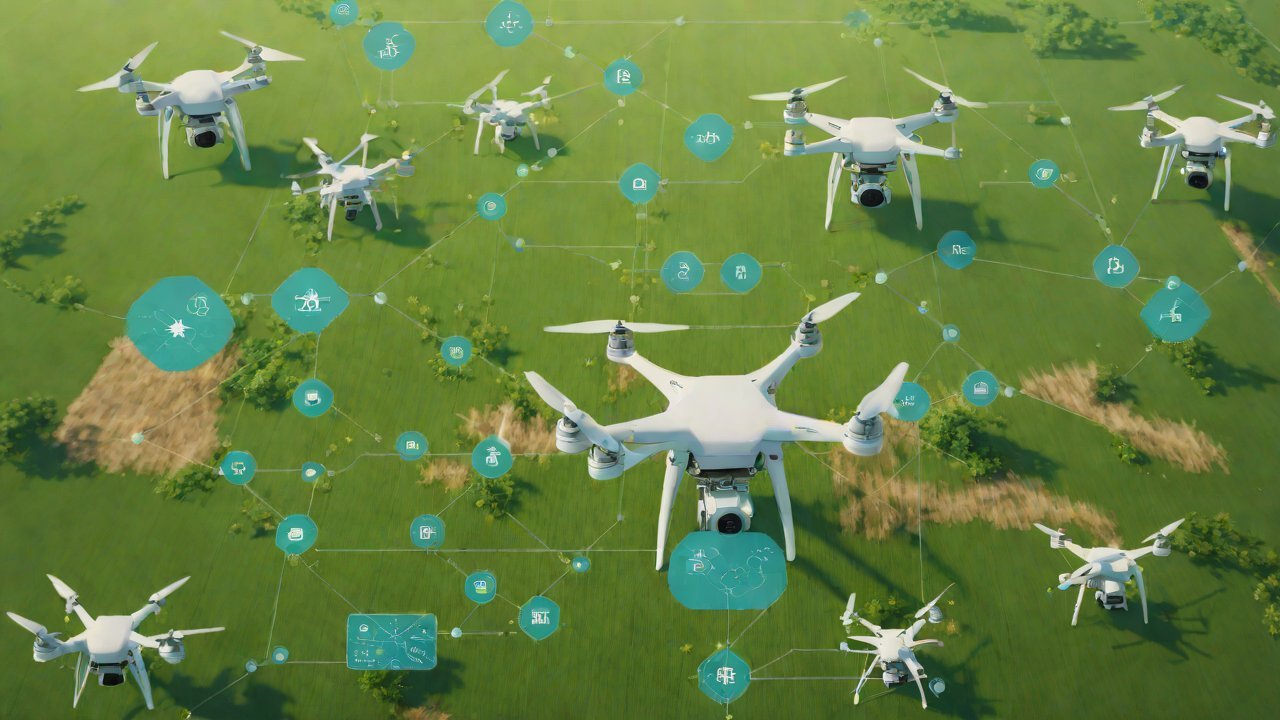
Edge-cloud collaboration is a paradigm that combines the strengths of both edge computing and cloud computing to create more efficient, scalable, and accurate prescription maps. By leveraging the processing power of the cloud and the real-time data processing capabilities of edge computing, edge-cloud collaboration enables faster and more accurate generation of pest and disease prescription maps.
According to a report by ResearchAndMarkets, the global edge-cloud collaboration market is expected to reach $10.1 billion by 2025, growing at a CAGR of 44.2% during the forecast period. The report notes that the market is driven by the increasing adoption of IoT devices, as well as the need for faster and more efficient data processing.
| Edge-Cloud Collaboration Market Size | CAGR | Number of IoT Devices |
|---|---|---|
| $10.1 billion | 44.2% | 150-200 billion devices |
4. Case Studies and Success Stories
Several companies are already leveraging edge-cloud collaboration to create more efficient and accurate prescription maps. For example, a study by the University of California, Davis found that the use of edge-cloud collaboration to create pest and disease prescription maps resulted in a 30% increase in crop yields and a 25% reduction in pesticide use.
Another example is the work of FarmWise, a company that is using edge-cloud collaboration to create autonomous farming systems. The company’s systems use a combination of edge computing and cloud computing to create real-time maps of crop health and pest activity, enabling farmers to make more informed decisions about their crops.
| Company | Edge-Cloud Collaboration Solution | Crop Yields | Pesticide Use |
|---|---|---|---|
| University of California, Davis | Edge-cloud collaboration for pest and disease prescription maps | 30% increase | 25% reduction |
| FarmWise | Autonomous farming systems using edge-cloud collaboration | N/A | N/A |

5. Conclusion
Edge-cloud collaboration has emerged as a key solution to the problem of slow generation time for pest and disease prescription maps. By leveraging the strengths of both edge computing and cloud computing, edge-cloud collaboration enables faster and more accurate generation of prescription maps, which can result in significant increases in crop yields and reductions in pesticide use. As the market for edge-cloud collaboration continues to grow, it is likely that we will see even more innovative applications of this technology in the agricultural sector.
6. Recommendations
Based on the analysis presented in this report, we recommend that farmers and agricultural companies consider the following strategies to leverage edge-cloud collaboration for pest and disease prescription maps:
- Invest in edge computing infrastructure, such as edge servers and IoT devices, to enable real-time data processing and analysis.
- Partner with cloud computing providers to leverage their processing power and scalability.
- Develop and implement edge-cloud collaboration solutions for pest and disease prescription maps, using machine learning and AI algorithms to analyze data and generate prescription maps.
- Monitor and evaluate the effectiveness of edge-cloud collaboration solutions, using metrics such as crop yields and pesticide use.
By following these recommendations, farmers and agricultural companies can stay ahead of the curve and take advantage of the benefits of edge-cloud collaboration for pest and disease prescription maps.
IOT Cloud Platform
IOT Cloud Platform is an IoT portal established by a Chinese IoT company, focusing on technical solutions in the fields of agricultural IoT, industrial IoT, medical IoT, security IoT, military IoT, meteorological IoT, consumer IoT, automotive IoT, commercial IoT, infrastructure IoT, smart warehousing and logistics, smart home, smart city, smart healthcare, smart lighting, etc.
The IoT Cloud Platform blog is a top IoT technology stack, providing technical knowledge on IoT, robotics, artificial intelligence (generative artificial intelligence AIGC), edge computing, AR/VR, cloud computing, quantum computing, blockchain, smart surveillance cameras, drones, RFID tags, gateways, GPS, 3D printing, 4D printing, autonomous driving, etc.