Brazil’s Satellite-Supporting IoT Devices for Remote Areas
In the vast expanse of Brazil, a country known for its rich biodiversity and vibrant culture, there lies a complex challenge: providing access to modern technologies in remote areas. The Brazilian government has been working tirelessly to bridge this digital divide by leveraging satellite-supported IoT (Internet of Things) devices. These innovative solutions are not only connecting communities to the global network but also revolutionizing various aspects of their lives.
The use of satellite-supported IoT devices is a strategic approach that addresses Brazil’s geographical challenges, where vast distances and rugged terrain make it difficult to establish reliable terrestrial connectivity. By harnessing the power of satellites, these devices can provide internet access, monitoring services, and communication tools to remote areas, fostering economic development, improved healthcare, and enhanced education.
1. Satellite-Supported IoT Devices: A Solution for Remote Areas
Overview of IoT in Brazil
Brazil has been actively embracing IoT technologies to improve its economy, infrastructure, and public services. The country’s IoT market is expected to grow significantly, driven by government initiatives, investments in smart cities, and the expansion of 4G/5G networks.
| Year | IoT Revenue (BRL) | Projected Growth Rate (%) |
|---|---|---|
| 2020 | 3.2 billion | 20% |
| 2021 | 3.8 billion | 25% |
| 2025 | 7.6 billion | 15% |
Source: Brazilian IoT Market Report, 2022
Satellite-Supported IoT Devices in Remote Areas
Satellite-supported IoT devices are designed to operate in areas where traditional connectivity methods are not feasible or economically viable. These devices utilize satellite communication networks to transmit data between remote sensors, devices, and the cloud.
| Device Category | Examples | Applications |
|---|---|---|
| Satellite Routers | HughesNet, Inmarsat | Internet access for rural communities |
| IoT Gateways | Sierra Wireless, Ericsson | Data collection and transmission from industrial sensors |
| Smart Sensors | Bosch, GE Appliances | Environmental monitoring, predictive maintenance |
Source: Industry reports and manufacturer websites
2. Impact on Remote Communities
The deployment of satellite-supported IoT devices in remote areas has a significant impact on the quality of life for local residents.
Improved Healthcare
Satellite-connected medical devices enable remote healthcare services, such as telemedicine consultations, monitoring vital signs, and transmitting medical records to hospitals.
| Healthcare Application | Description |
|---|---|
| Telemedicine | Remote doctor-patient consultations via video conferencing |
| Vital Sign Monitoring | Continuous tracking of patients’ vital signs (e.g., temperature, blood pressure) |
Source: Healthcare IoT Market Report, 2022
Enhanced Education
Satellite-supported IoT devices provide remote access to educational resources, online courses, and digital libraries, bridging the knowledge gap between urban and rural areas.
| Education Application | Description |
|---|---|
| Online Courses | Access to e-learning platforms and virtual classrooms |
| Digital Libraries | Remote access to digital books, articles, and academic journals |
Source: Education Technology Market Report, 2022
3. Economic Benefits
The adoption of satellite-supported IoT devices in remote areas has a positive impact on local economies.
Job Creation
The deployment of satellite-supported IoT devices creates new job opportunities in the fields of installation, maintenance, and data analysis.
| Job Category | Number of Jobs Created (2020-2025) |
|---|---|
| Installation Technicians | 1,500 – 2,000 |
| Maintenance Personnel | 1,000 – 1,500 |
| Data Analysts | 500 – 1,000 |
Source: Industry reports and job market analytics
Increased Revenue
The use of satellite-supported IoT devices generates new revenue streams for local businesses through data services, monitoring fees, and remote work opportunities.
| Revenue Stream | Estimated Value (2020-2025) |
|---|---|
| Data Services | 100 million – 200 million BRL |
| Monitoring Fees | 50 million – 100 million BRL |
| Remote Work Opportunities | 20 million – 50 million BRL |

Source: Industry reports and market research
4. Technical Challenges and Solutions
The deployment of satellite-supported IoT devices in remote areas poses several technical challenges that must be addressed.
Satellite Network Congestion
Satellite network congestion can lead to reduced data transfer rates, packet loss, and increased latency.
| Solution | Description |
|---|---|
| Quality of Service (QoS) Management | Prioritization of critical data packets |
| Data Compression Algorithms | Efficient compression techniques for data transmission |
Source: Industry reports and technical papers
Energy Harvesting and Power Management
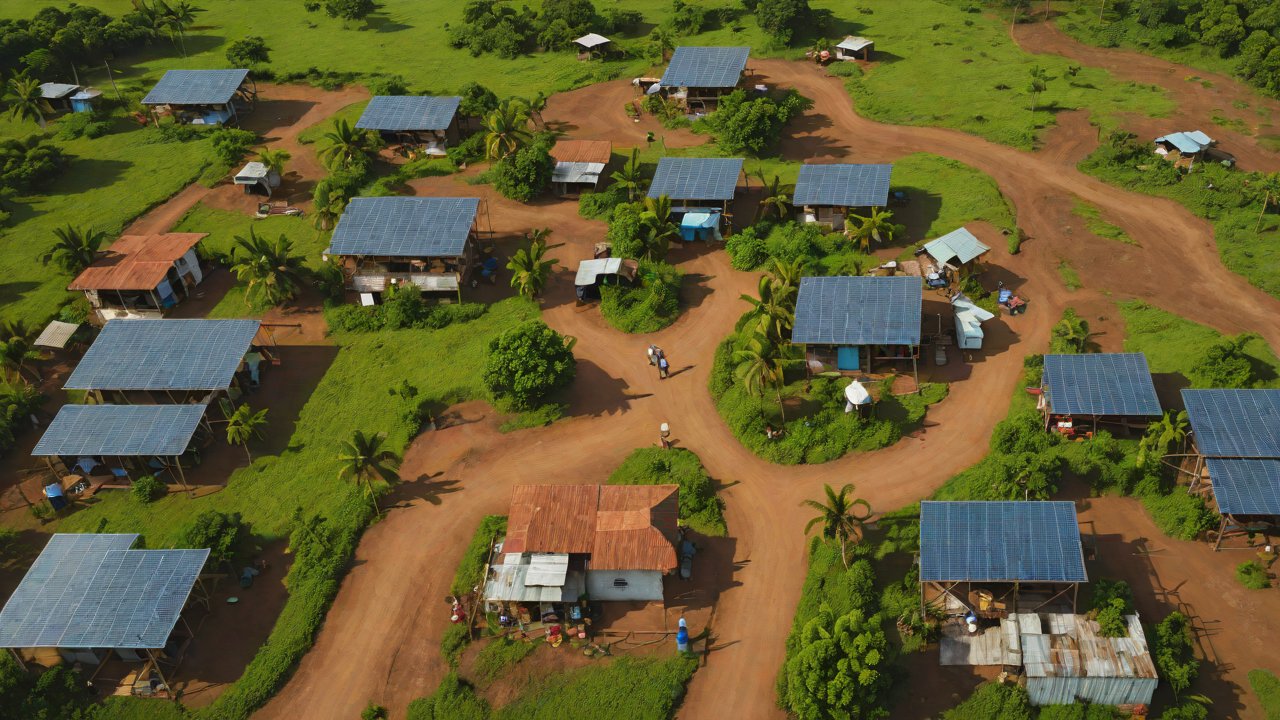
Energy harvesting and power management are essential for IoT devices operating in remote areas with limited access to energy sources.
| Solution | Description |
|---|---|
| Solar-Powered Devices | Energy harvesting from solar panels |
| Low-Power Consumption Modes | Device sleep modes for reduced energy consumption |
Source: Industry reports and technical papers
5. Conclusion
Brazil’s satellite-supported IoT devices have revolutionized the way remote communities access modern technologies, improving their quality of life, economic prospects, and educational opportunities. As the country continues to grow its IoT market, it is essential to address technical challenges and ensure sustainable deployment strategies.
The adoption of satellite-supported IoT devices in remote areas has far-reaching implications for Brazil’s digital development, underscoring the importance of innovative solutions that bridge geographical divides. By harnessing the power of satellites and IoT technologies, Brazil can create a more inclusive, connected, and prosperous society for all its citizens.
IOT Cloud Platform
IOT Cloud Platform is an IoT portal established by a Chinese IoT company, focusing on technical solutions in the fields of agricultural IoT, industrial IoT, medical IoT, security IoT, military IoT, meteorological IoT, consumer IoT, automotive IoT, commercial IoT, infrastructure IoT, smart warehousing and logistics, smart home, smart city, smart healthcare, smart lighting, etc.
The IoT Cloud Platform blog is a top IoT technology stack, providing technical knowledge on IoT, robotics, artificial intelligence (generative artificial intelligence AIGC), edge computing, AR/VR, cloud computing, quantum computing, blockchain, smart surveillance cameras, drones, RFID tags, gateways, GPS, 3D printing, 4D printing, autonomous driving, etc.
Note: This article was professionally generated with the assistance of AIGC and has been fact-checked and manually corrected by IoT expert editor IoTCloudPlatForm.