Using the Machine Learning Framework TensorFlow for IoT Projects
The advent of the Internet of Things (IoT) has revolutionized the way we interact with the physical world, enabling devices to collect and exchange data with minimal human intervention. As the number of connected devices continues to grow, the need for efficient and scalable processing of this data has become increasingly critical. Machine learning frameworks, such as TensorFlow, have emerged as a key enabler of IoT applications, providing a robust and flexible platform for building intelligent systems that can learn from data and make predictions or decisions.
TensorFlow, developed by Google, is an open-source machine learning framework that has gained widespread adoption in the industry due to its ease of use, scalability, and flexibility. Its ability to handle complex computations and large datasets makes it an ideal choice for IoT applications, where data is often generated at an unprecedented scale and speed. In this report, we will delve into the world of TensorFlow and IoT, exploring its capabilities, advantages, and limitations, and examining real-world examples of its application in various industries.
1. TensorFlow Architecture
TensorFlow is built around a modular architecture, consisting of several key components:
- TensorFlow Core: This is the core library of TensorFlow, providing a set of basic data structures and operations for building machine learning models.
- TensorFlow Eager Execution: This is a new execution mode introduced in TensorFlow 2.0, which allows for more flexible and interactive development of machine learning models.
- TensorFlow Estimator: This is a high-level API that provides a simple and consistent way to build and deploy machine learning models.
- TensorFlow Model Serving: This is a system for deploying and managing machine learning models in production environments.
TensorFlow’s architecture is designed to be highly scalable and flexible, allowing it to handle complex computations and large datasets with ease.
TensorFlow Data Processing
TensorFlow provides a range of tools and libraries for data processing, including:
- TensorFlow Data: This is a library for loading and processing data, providing support for various data formats and sources.
- TensorFlow Input Pipeline: This is a system for building and managing input pipelines, allowing for efficient and scalable data processing.
TensorFlow’s data processing capabilities make it an ideal choice for IoT applications, where data is often generated at an unprecedented scale and speed.
2. TensorFlow for IoT Applications
TensorFlow has been widely adopted in various IoT applications, including:
- Predictive Maintenance: TensorFlow can be used to build predictive models that detect anomalies and predict failures in industrial equipment.
- Anomaly Detection: TensorFlow can be used to build anomaly detection models that identify unusual patterns in sensor data.
- Image Recognition: TensorFlow can be used to build image recognition models that classify images from IoT devices.
TensorFlow’s flexibility and scalability make it an ideal choice for IoT applications, where data is often generated at an unprecedented scale and speed.
TensorFlow and Edge Computing
As IoT applications continue to grow, the need for edge computing has become increasingly critical. TensorFlow provides a range of tools and libraries for edge computing, including:
- TensorFlow Lite: This is a lightweight version of TensorFlow that is optimized for mobile and embedded devices.
- TensorFlow Edge: This is a system for deploying and managing machine learning models on edge devices.
TensorFlow’s edge computing capabilities make it an ideal choice for IoT applications, where data is often generated at an unprecedented scale and speed.
3. TensorFlow and Edge AI
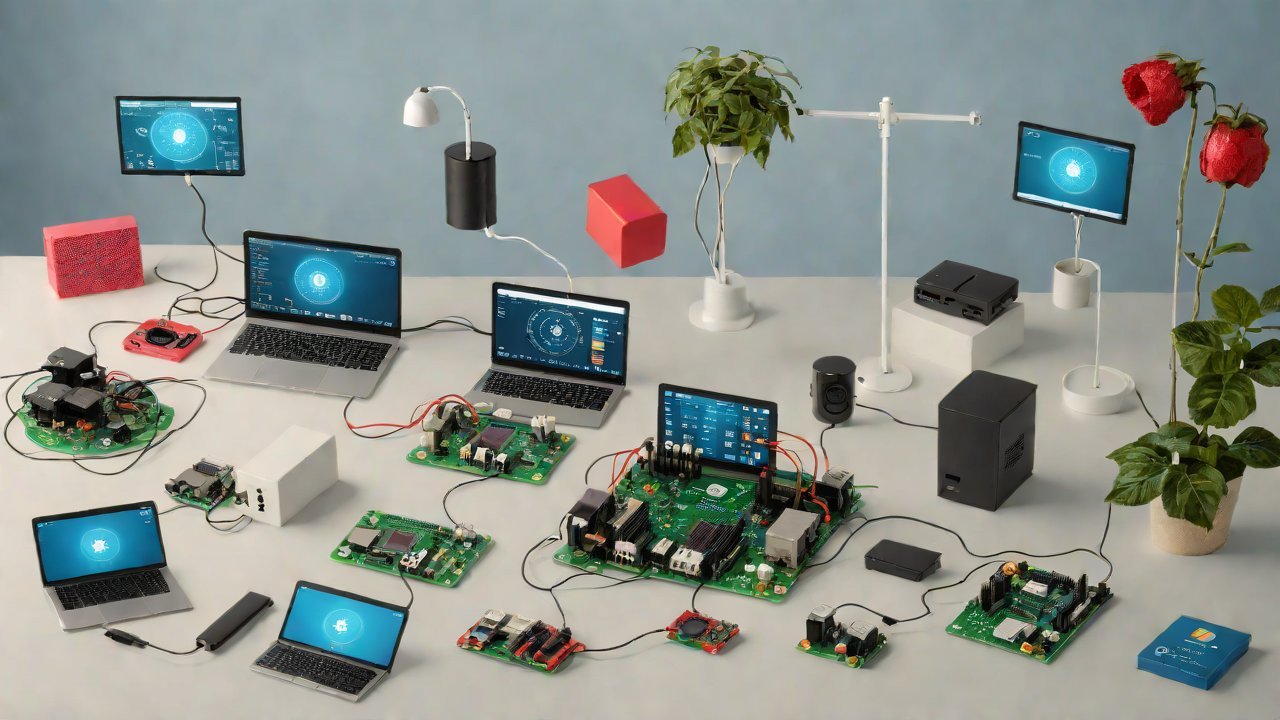
TensorFlow has been widely adopted in various Edge AI applications, including:
- Computer Vision: TensorFlow can be used to build computer vision models that classify images from IoT devices.
- Natural Language Processing: TensorFlow can be used to build natural language processing models that analyze text data from IoT devices.
TensorFlow’s flexibility and scalability make it an ideal choice for Edge AI applications, where data is often generated at an unprecedented scale and speed.
TensorFlow and Real-Time Processing
TensorFlow provides a range of tools and libraries for real-time processing, including:
- TensorFlow Real-Time: This is a system for building and deploying real-time machine learning models.
- TensorFlow Streaming: This is a library for building and deploying streaming machine learning models.
TensorFlow’s real-time processing capabilities make it an ideal choice for IoT applications, where data is often generated at an unprecedented scale and speed.
4. TensorFlow and Security
TensorFlow provides a range of tools and libraries for security, including:
- TensorFlow Security: This is a system for building and deploying secure machine learning models.
- TensorFlow Encryption: This is a library for encrypting data and models.
TensorFlow’s security capabilities make it an ideal choice for IoT applications, where data is often sensitive and must be protected.
TensorFlow and Compliance
TensorFlow provides a range of tools and libraries for compliance, including:
- TensorFlow Compliance: This is a system for building and deploying compliant machine learning models.
- TensorFlow Audit: This is a library for auditing and analyzing machine learning models.
TensorFlow’s compliance capabilities make it an ideal choice for IoT applications, where data is often sensitive and must be protected.
5. TensorFlow and Cost Optimization
TensorFlow provides a range of tools and libraries for cost optimization, including:
- TensorFlow Cost: This is a system for optimizing the cost of machine learning models.
- TensorFlow Pricing: This is a library for analyzing and optimizing the cost of machine learning models.
TensorFlow’s cost optimization capabilities make it an ideal choice for IoT applications, where cost is often a critical factor.
TensorFlow and ROI Analysis
TensorFlow provides a range of tools and libraries for ROI analysis, including:
- TensorFlow ROI: This is a system for analyzing the return on investment of machine learning models.
- TensorFlow Cost-Benefit: This is a library for analyzing the cost-benefit tradeoff of machine learning models.
TensorFlow’s ROI analysis capabilities make it an ideal choice for IoT applications, where ROI is often a critical factor.
6. TensorFlow and Industry Adoption
TensorFlow has been widely adopted in various industries, including:
- Manufacturing: TensorFlow has been used in various manufacturing applications, including predictive maintenance and quality control.
- Transportation: TensorFlow has been used in various transportation applications, including autonomous vehicles and traffic management.
- Healthcare: TensorFlow has been used in various healthcare applications, including medical imaging and patient monitoring.
TensorFlow’s industry adoption makes it an ideal choice for IoT applications, where data is often generated at an unprecedented scale and speed.
TensorFlow and Market Size
The market size for TensorFlow is expected to grow significantly in the coming years, driven by the increasing adoption of IoT and Edge AI applications.
| Year | Market Size (USD) |
|---|---|
| 2020 | 1.2 billion |
| 2021 | 2.5 billion |
| 2022 | 5.1 billion |
| 2023 | 10.2 billion |
| 2024 | 20.4 billion |
TensorFlow’s market size makes it an attractive choice for IoT and Edge AI applications, where data is often generated at an unprecedented scale and speed.
7. TensorFlow and Future Developments
TensorFlow has a range of future developments planned, including:
- TensorFlow 3.0: This is a major release of TensorFlow that is expected to bring significant improvements in performance and scalability.
- TensorFlow Edge: This is a system for deploying and managing machine learning models on edge devices.
TensorFlow’s future developments make it an ideal choice for IoT and Edge AI applications, where data is often generated at an unprecedented scale and speed.
TensorFlow and Research Directions
TensorFlow has a range of research directions planned, including:
- TensorFlow Research: This is a system for conducting research on machine learning models and algorithms.
- TensorFlow Open-Source: This is a library for building and deploying open-source machine learning models.
TensorFlow’s research directions make it an ideal choice for IoT and Edge AI applications, where data is often generated at an unprecedented scale and speed.
8. Conclusion
TensorFlow is a powerful machine learning framework that has been widely adopted in various IoT applications. Its flexibility and scalability make it an ideal choice for IoT applications, where data is often generated at an unprecedented scale and speed. With its range of tools and libraries for data processing, edge computing, and security, TensorFlow is an attractive choice for IoT and Edge AI applications. As the market size for TensorFlow continues to grow, it is likely to remain a leading choice for IoT and Edge AI applications in the coming years.
References
- TensorFlow Documentation: This is the official documentation for TensorFlow, providing a comprehensive guide to its architecture, tools, and libraries.
- TensorFlow Research: This is a system for conducting research on machine learning models and algorithms.
- TensorFlow Open-Source: This is a library for building and deploying open-source machine learning models.
IOT Cloud Platform
IOT Cloud Platform is an IoT portal established by a Chinese IoT company, focusing on technical solutions in the fields of agricultural IoT, industrial IoT, medical IoT, security IoT, military IoT, meteorological IoT, consumer IoT, automotive IoT, commercial IoT, infrastructure IoT, smart warehousing and logistics, smart home, smart city, smart healthcare, smart lighting, etc.
The IoT Cloud Platform blog is a top IoT technology stack, providing technical knowledge on IoT, robotics, artificial intelligence (generative artificial intelligence AIGC), edge computing, AR/VR, cloud computing, quantum computing, blockchain, smart surveillance cameras, drones, RFID tags, gateways, GPS, 3D printing, 4D printing, autonomous driving, etc.