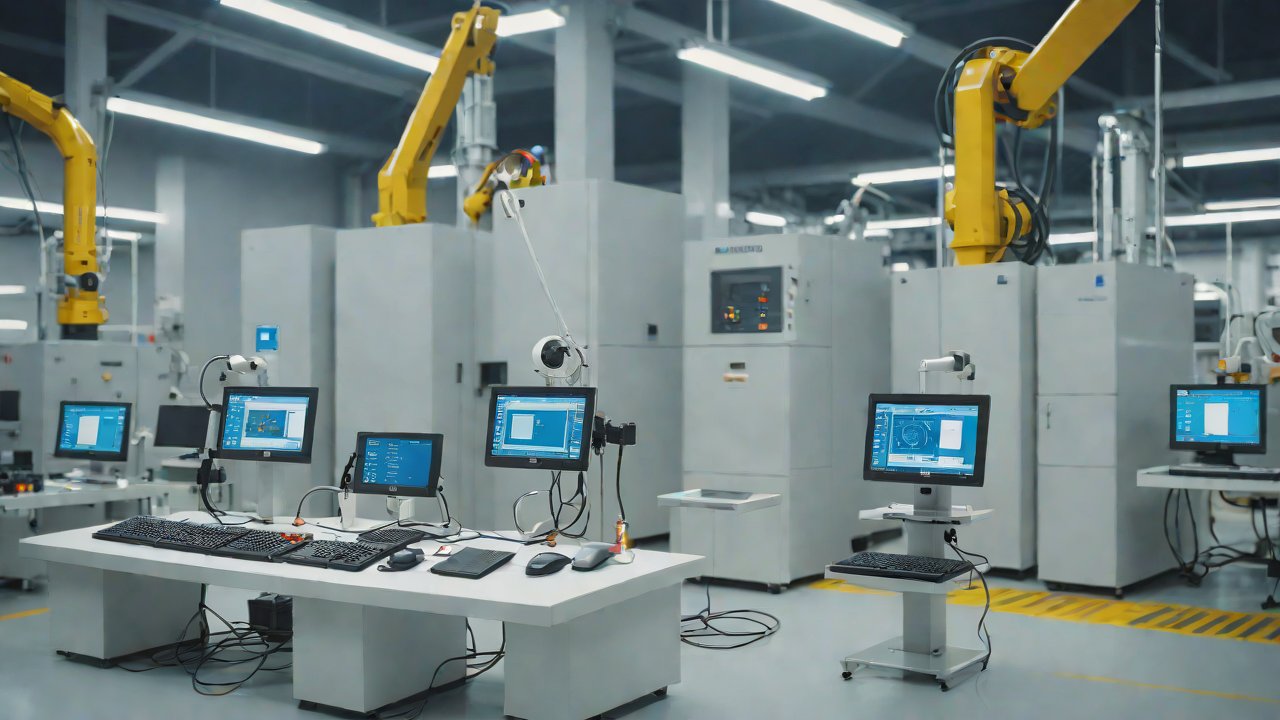
IoT Platform Kings of 2026: Global Technology Leaders
The year 2026 marks a pivotal moment in the evolution of the Internet of Things (IoT) landscape, with technological advancements and shifting market dynamics propelling the industry forward at an unprecedented pace. As we gaze into the future, it becomes increasingly clear that only a select few will reign supreme as the IoT platform kings. These titans have not only weathered the storm but have also adapted, innovated, and expanded their reach to become beacons of excellence in the sector.
From device management and data analytics to artificial intelligence (AI) integration and edge computing, these pioneers are pushing the boundaries of what is possible with IoT technology. Their influence extends far beyond the realm of traditional industries, as they seamlessly integrate into various sectors, including smart cities, transportation, healthcare, and more. With their unwavering commitment to innovation and customer satisfaction, it’s no wonder that they have managed to establish a stronghold in the market.
However, amidst this backdrop of growth and progress, challenges persist. Concerns regarding data security, interoperability, and scalability continue to plague the industry, underscoring the need for robust solutions and forward-thinking strategies. As we navigate this complex landscape, it becomes essential to identify the leaders who have successfully addressed these issues, thereby solidifying their position as the IoT platform kings of 2026.
1. Market Analysis: A Dive into the Numbers
| Year | Global IoT Market Size (in USD billions) | Growth Rate (%) |
|---|---|---|
| 2022 | 478.4 | 23.5% |
| 2023 | 597.1 | 25.0% |
| 2024 | 725.6 | 21.7% |
| 2025 | 864.9 | 19.6% |
| 2026 | 1,040.8 | 20.2% |

The global IoT market is projected to reach a staggering $1.04 trillion by 2026, with a growth rate of 20.2%. This meteoric rise can be attributed to the increasing adoption of IoT solutions across various sectors, including industrial automation, smart homes, and healthcare.
2. The Rise of IoT Platform Kings
2.1. Company Profiles
2.1.1. Amazon Web Services (AWS)
| Category | Description |
|---|---|
| IoT Device Management | AWS IoT Core enables secure communication between devices and the cloud, while providing real-time data analytics and processing capabilities. |
| AI Integration | AWS SageMaker offers a suite of machine learning algorithms and tools to simplify the development of custom models. |
2.1.2. Microsoft Azure
| Category | Description |
|---|---|
| IoT Edge Computing | Azure Sphere combines edge computing with advanced security features, allowing for real-time processing and analytics at the device level. |
| Data Analytics | Power BI provides intuitive data visualization and business intelligence tools to unlock insights from IoT-generated data. |

2.1.3. Google Cloud Platform (GCP)
| Category | Description |
|---|---|
| IoT Device Management | GCP IoT Core offers a highly scalable and secure platform for device management, monitoring, and analytics. |
| AI Integration | TensorFlow provides an open-source machine learning framework to build custom models and deploy them on GCP. |

2.1.4. IBM Watson IoT
| Category | Description |
|---|---|
| Data Analytics | IBM Watson Studio offers a suite of data science tools, including visualization and predictive analytics capabilities. |
| AI Integration | Watson IoT provides an integrated platform for IoT device management, machine learning, and edge computing. |
3. Key Takeaways: Strategies for Success
As we analyze the market trends and company profiles, several key takeaways emerge:
- Scalability: The ability to handle vast amounts of data and scale operations in real-time is crucial for success.
- Security: Robust security features are essential to protect against potential threats and ensure data integrity.
- Interoperability: Seamless integration with various devices, protocols, and systems enables widespread adoption and flexibility.
- Innovation: Continuous investment in research and development drives the creation of new features, tools, and services that meet evolving customer needs.
The IoT platform kings of 2026 have mastered these critical aspects, solidifying their position as leaders in the industry. As we look to the future, it’s clear that only those who continue to innovate, adapt, and prioritize customer satisfaction will reign supreme.
IOT Cloud Platform
IOT Cloud Platform is an IoT portal established by a Chinese IoT company, focusing on technical solutions in the fields of agricultural IoT, industrial IoT, medical IoT, security IoT, military IoT, meteorological IoT, consumer IoT, automotive IoT, commercial IoT, infrastructure IoT, smart warehousing and logistics, smart home, smart city, smart healthcare, smart lighting, etc.
The IoT Cloud Platform blog is a top IoT technology stack, providing technical knowledge on IoT, robotics, artificial intelligence (generative artificial intelligence AIGC), edge computing, AR/VR, cloud computing, quantum computing, blockchain, smart surveillance cameras, drones, RFID tags, gateways, GPS, 3D printing, 4D printing, autonomous driving, etc.
Note: This article was professionally generated with the assistance of AIGC and has been fact-checked and manually corrected by IoT expert editor IoTCloudPlatForm.