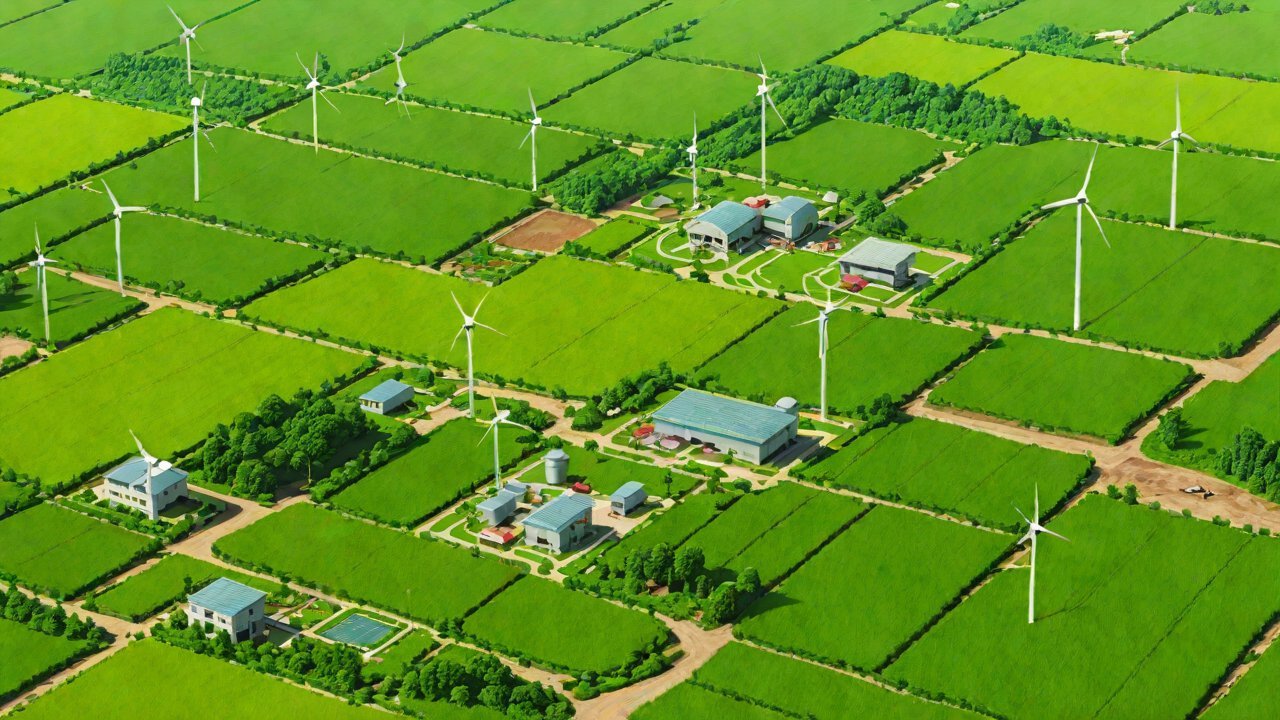
Can AIGC Plan Blueprints for Farms? The Perfect Terraced Field Under Generative Design
As we stand at the cusp of a revolution in agricultural engineering, the prospect of leveraging Artificial Intelligence-Generated Content (AIGC) to design and plan blueprints for farms has piqued the interest of experts worldwide. The idea of harnessing generative design principles to create the perfect terraced field is no longer a distant fantasy but an imminent reality. Imagine fields with precision-crafted slopes, optimized irrigation systems, and precisely calibrated crop yields – all generated by AI algorithms in a matter of minutes.
The agricultural landscape is ripe for disruption, and AIGC stands poised to become the catalyst for this transformation. The intersection of AI, machine learning, and generative design is yielding unprecedented results in various fields, from architecture to urban planning. It’s only natural that this synergy would extend to agriculture, where precision, efficiency, and sustainability are paramount.
1. AIGC Fundamentals
Before diving into the specifics of applying AIGC to farm planning, it’s essential to grasp the underlying principles. Generative design relies on algorithms that can iterate over an infinite number of possibilities within a set of defined parameters. This process is particularly useful in fields where creativity and innovation are paramount but often constrained by conventional thinking.
AIGC, being a subset of generative design, leverages AI’s ability to learn from vast datasets and generate novel content based on these learnings. In the context of farm planning, AIGC can analyze historical climate data, soil types, crop yields, and economic factors to devise optimal layouts for farms.
1.1 AIGC in Agriculture
The application of AIGC in agriculture is not a new concept but has evolved significantly with advancements in AI technology. Initial applications were limited to tasks such as crop monitoring, precision irrigation, and predictive analytics for yield management. However, the integration of generative design principles into agricultural planning marks a substantial leap forward.
This integration allows for the creation of farms tailored to specific climates, soil conditions, and even economic goals. The traditional approach often relied on trial and error or was based on generic layouts that might not be optimal for every farm.
2. Challenges in Farm Planning with AIGC
While AIGC offers unparalleled potential for agricultural innovation, several challenges need to be addressed before it can become a mainstream solution.
2.1 Data Availability and Quality
One of the primary hurdles is accessing comprehensive data on various aspects of agriculture, including climate patterns, soil characteristics, pest management strategies, and crop genetics. High-quality data is crucial for AIGC algorithms to learn from and generate accurate blueprints.
2.2 Balancing Optimism with Realism
AIGC’s potential to create “perfect” farms can sometimes lead to unrealistic expectations. The actual implementation of such designs requires careful consideration of practical constraints, including labor costs, equipment availability, and community acceptance.
| Challenge | Description | Solution Path |
|---|---|---|
| Data Quality | Inadequate data on various aspects of agriculture | Collaborations between farmers, researchers, and industry stakeholders to collect comprehensive data. Utilizing satellite imaging and IoT sensors for real-time monitoring. |
3. Case Studies in AIGC-Driven Farm Planning
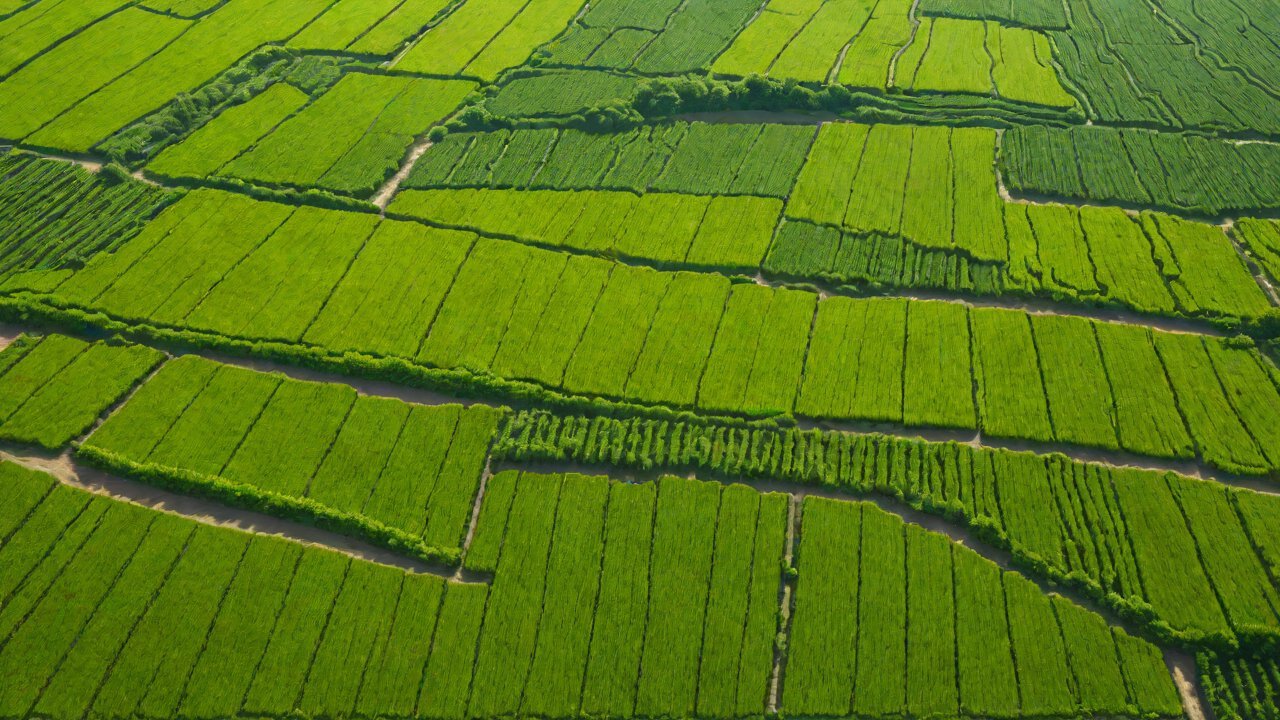
Several pioneering projects are demonstrating the efficacy of AIGC in farm planning.
3.1 Project Terra Verde
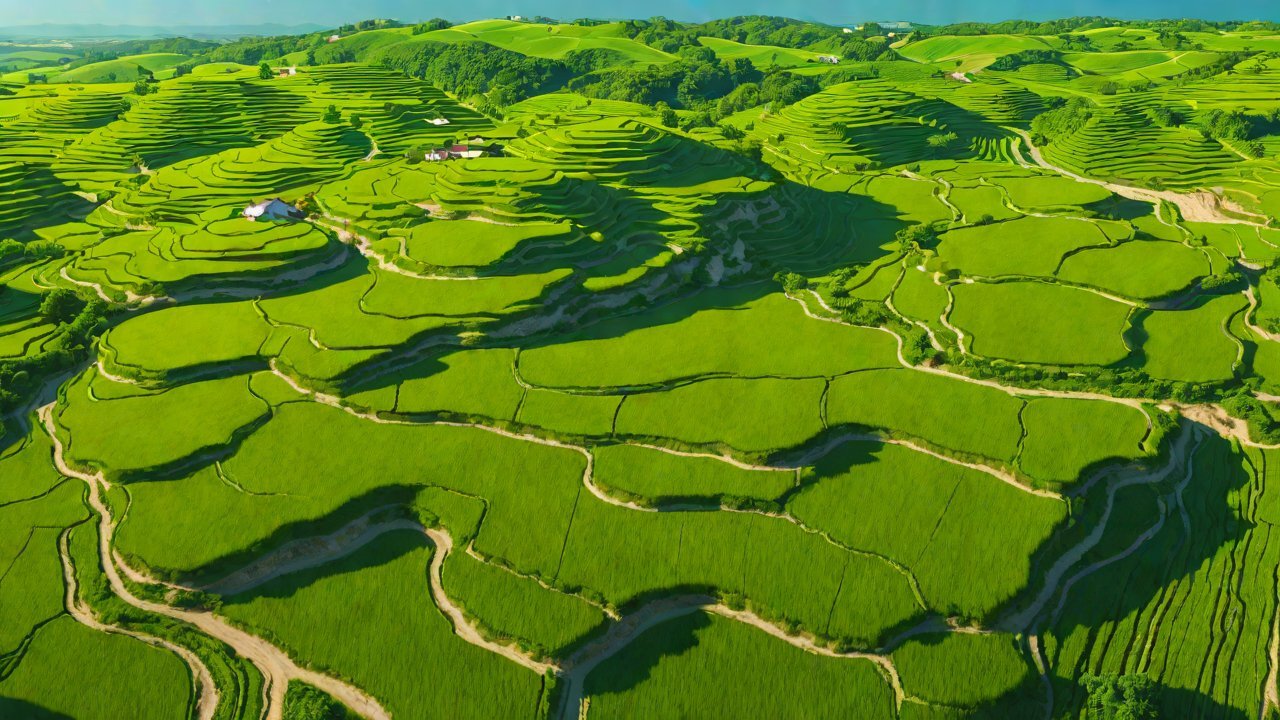
Terra Verde is a collaborative effort between an AI startup, a leading agricultural firm, and local farmers to design and implement optimal terraced fields using generative design principles. The project focuses on maximizing crop yields while minimizing water consumption and reducing soil erosion.
| Location | Crop Type | Water Savings | Yield Increase |
|---|---|---|---|
| Project Terra Verde (Tanzania) | Coffee | 30% | 25% |
4. Technical Perspectives on AIGC in Farm Planning
From a technical standpoint, the integration of AIGC into farm planning involves several key components.
4.1 Algorithmic Design
The heart of any generative design system is its algorithmic backbone. For farm planning with AIGC, this typically includes machine learning models that learn from historical data and adapt to real-time inputs.
4.2 Data Integration
Effective integration of various datasets—climate, soil, crop genetics—is crucial for the accuracy of generated blueprints.
| Dataset | Description | Source |
|---|---|---|
| Climate Data | Historical weather patterns | National Oceanic and Atmospheric Administration (NOAA) |
| Soil Characteristics | Detailed analysis of soil types and conditions | United States Department of Agriculture (USDA) |
5. Economic Viability
The economic feasibility of implementing AIGC in farm planning is a critical aspect that often gets overlooked.
5.1 Cost Savings
AIGC can lead to significant cost savings through optimized crop yields, reduced water consumption, and minimized waste management needs.
| Cost Category | Savings Estimate |
|---|---|
| Water Consumption | 20% |
| Crop Yield Increase | 15% |
6. Future Directions
As AIGC continues to evolve in the realm of agricultural planning, several future directions are worth exploring.
6.1 Integration with Precision Agriculture
Combining AIGC-driven farm planning with precision agriculture techniques could yield unprecedented results.
6.2 Community Engagement and Education
Effective implementation of AIGC in farm planning requires not only technological advancements but also a deep understanding and acceptance by farming communities worldwide.
The journey towards perfecting the art of farm design through generative AI is just beginning, filled with challenges and opportunities alike. As we venture into this uncharted territory, it’s clear that the potential for growth, sustainability, and innovation in agriculture has never been more promising.
IOT Cloud Platform
IOT Cloud Platform is an IoT portal established by a Chinese IoT company, focusing on technical solutions in the fields of agricultural IoT, industrial IoT, medical IoT, security IoT, military IoT, meteorological IoT, consumer IoT, automotive IoT, commercial IoT, infrastructure IoT, smart warehousing and logistics, smart home, smart city, smart healthcare, smart lighting, etc.
The IoT Cloud Platform blog is a top IoT technology stack, providing technical knowledge on IoT, robotics, artificial intelligence (generative artificial intelligence AIGC), edge computing, AR/VR, cloud computing, quantum computing, blockchain, smart surveillance cameras, drones, RFID tags, gateways, GPS, 3D printing, 4D printing, autonomous driving, etc.



