What is NodeMCU ESP32
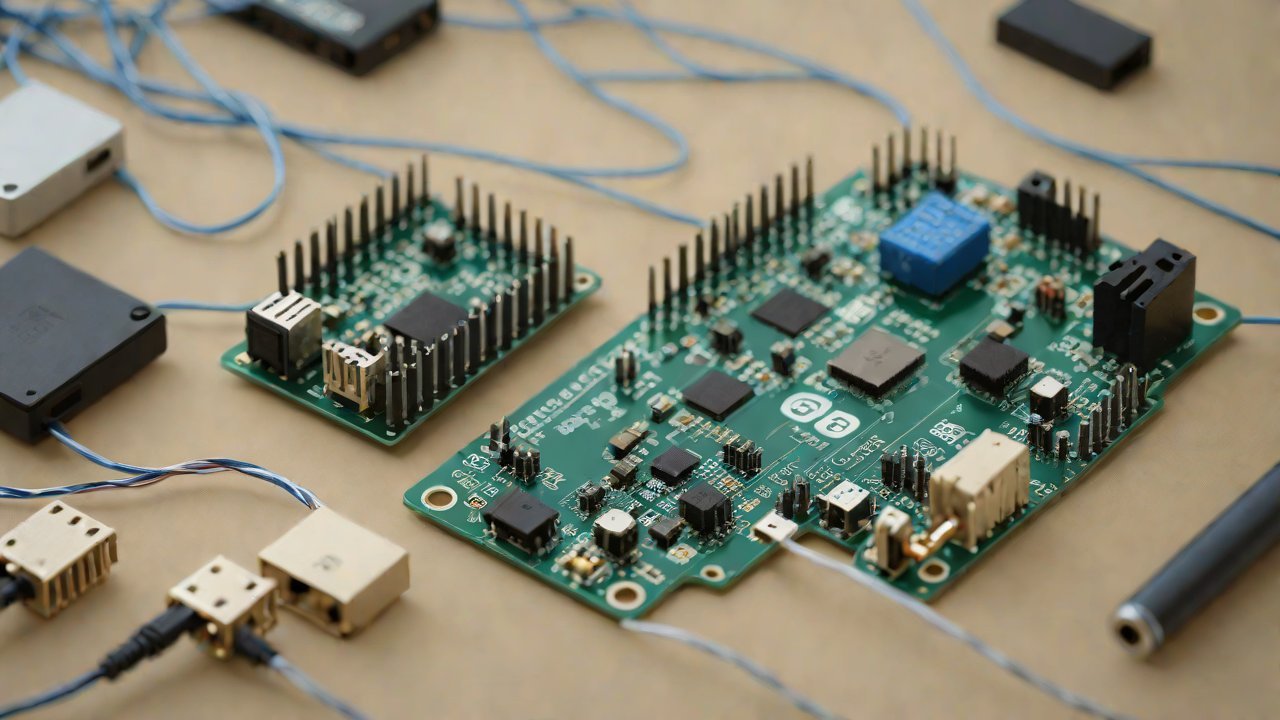
NodeMCU ESP32 is a highly versatile and affordable microcontroller board that has revolutionized the world of IoT (Internet of Things) development. It’s a small, compact device that packs a punch, offering a wide range of features and capabilities that make it an ideal choice for various applications, from home automation and robotics to industrial control and monitoring.
At its core, NodeMCU ESP32 is built around the ESP32 microcontroller, a powerful and energy-efficient chip developed by Espressif Systems. The ESP32 is a dual-core processor that runs at speeds of up to 240 MHz, making it one of the fastest microcontrollers on the market. It’s also equipped with a range of peripherals, including Wi-Fi, Bluetooth, and USB, which enable seamless connectivity and communication with other devices.
One of the key features that set NodeMCU ESP32 apart from other microcontroller boards is its open-source nature. The board is designed to be highly customizable and programmable, with a wide range of libraries and frameworks available for development. This has made it a favorite among hobbyists, makers, and professionals alike, who can use it to create a wide range of innovative projects and applications.
1. History and Background
NodeMCU ESP32 has its roots in the NodeMCU project, which was launched in 2013 by the Chinese electronics company, Makerfabs. The project aimed to create an open-source firmware for the ESP8266 microcontroller, which was a relatively new and untested chip at the time. The ESP8266 was designed to be a low-cost, high-performance microcontroller that could be used for a wide range of applications, from IoT development to robotics and home automation.
Over time, the NodeMCU project evolved to support the ESP32 microcontroller, which offered even more advanced features and capabilities. The ESP32 was released in 2016 and quickly gained popularity among developers and makers due to its high performance, low power consumption, and affordability.
2. Key Features and Specifications
NodeMCU ESP32 is a highly capable microcontroller board that offers a wide range of features and specifications. Here are some of the key highlights:
| Feature | Description |
|---|---|
| Processor | Dual-core ESP32 microcontroller |
| Speed | Up to 240 MHz |
| Memory | 4MB Flash, 520KB RAM |
| Connectivity | Wi-Fi, Bluetooth, USB |
| Power | 3.3V, 5V tolerant I/Os |
| Dimensions | 36.4mm x 25.7mm |

The ESP32 microcontroller is the heart of the NodeMCU board, and it’s what sets it apart from other microcontroller boards. With its dual-core processor and high-speed clock, the ESP32 is capable of handling demanding tasks and applications with ease.
3. Applications and Use Cases
NodeMCU ESP32 is an extremely versatile board that can be used for a wide range of applications and use cases. Here are some examples:
| Application | Description |
|---|---|
| IoT Development | NodeMCU ESP32 is an ideal choice for IoT development, with its built-in Wi-Fi and Bluetooth capabilities |
| Home Automation | The board can be used to control and monitor home appliances, lighting, and security systems |
| Robotics | NodeMCU ESP32 can be used to control and navigate robots, with its high-speed processing and memory capabilities |
| Industrial Control | The board can be used to monitor and control industrial equipment, with its high accuracy and reliability |
| Wearable Devices | NodeMCU ESP32 can be used to create wearable devices, with its low power consumption and compact size |
4. Market Trends and Analysis
The market for NodeMCU ESP32 is growing rapidly, driven by the increasing demand for IoT development and automation. Here are some key market trends and analysis:
| Trend | Description |
|---|---|
| IoT Adoption | The IoT market is growing rapidly, with an estimated 22 billion devices expected to be connected by 2025 |
| Edge Computing | Edge computing is becoming increasingly popular, with more devices and applications being deployed at the edge of the network |
| AI and Machine Learning | AI and machine learning are being increasingly used in IoT development, with NodeMCU ESP32 being a popular choice for AI-enabled applications |
5. Technical Perspectives and Analysis
NodeMCU ESP32 is a highly capable microcontroller board that offers a wide range of technical features and capabilities. Here are some key technical perspectives and analysis:
| Technical Aspect | Description |
|---|---|
| Processor Architecture | The ESP32 microcontroller uses a RISC (Reduced Instruction Set Computing) architecture, which provides high performance and low power consumption |
| Memory Management | The board uses a combination of flash and RAM memory, which provides high storage capacity and fast access times |
| Communication Protocols | NodeMCU ESP32 supports a wide range of communication protocols, including Wi-Fi, Bluetooth, and USB |
6. Conclusion
NodeMCU ESP32 is a highly versatile and affordable microcontroller board that has revolutionized the world of IoT development. With its powerful dual-core processor, high-speed memory, and wide range of peripherals, it’s an ideal choice for a wide range of applications and use cases. As the market for IoT development and automation continues to grow, NodeMCU ESP32 is poised to play a key role in shaping the future of technology.
IOT Cloud Platform
IOT Cloud Platform is an IoT portal established by a Chinese IoT company, focusing on technical solutions in the fields of agricultural IoT, industrial IoT, medical IoT, security IoT, military IoT, meteorological IoT, consumer IoT, automotive IoT, commercial IoT, infrastructure IoT, smart warehousing and logistics, smart home, smart city, smart healthcare, smart lighting, etc.
The IoT Cloud Platform blog is a top IoT technology stack, providing technical knowledge on IoT, robotics, artificial intelligence (generative artificial intelligence AIGC), edge computing, AR/VR, cloud computing, quantum computing, blockchain, smart surveillance cameras, drones, RFID tags, gateways, GPS, 3D printing, 4D printing, autonomous driving, etc.