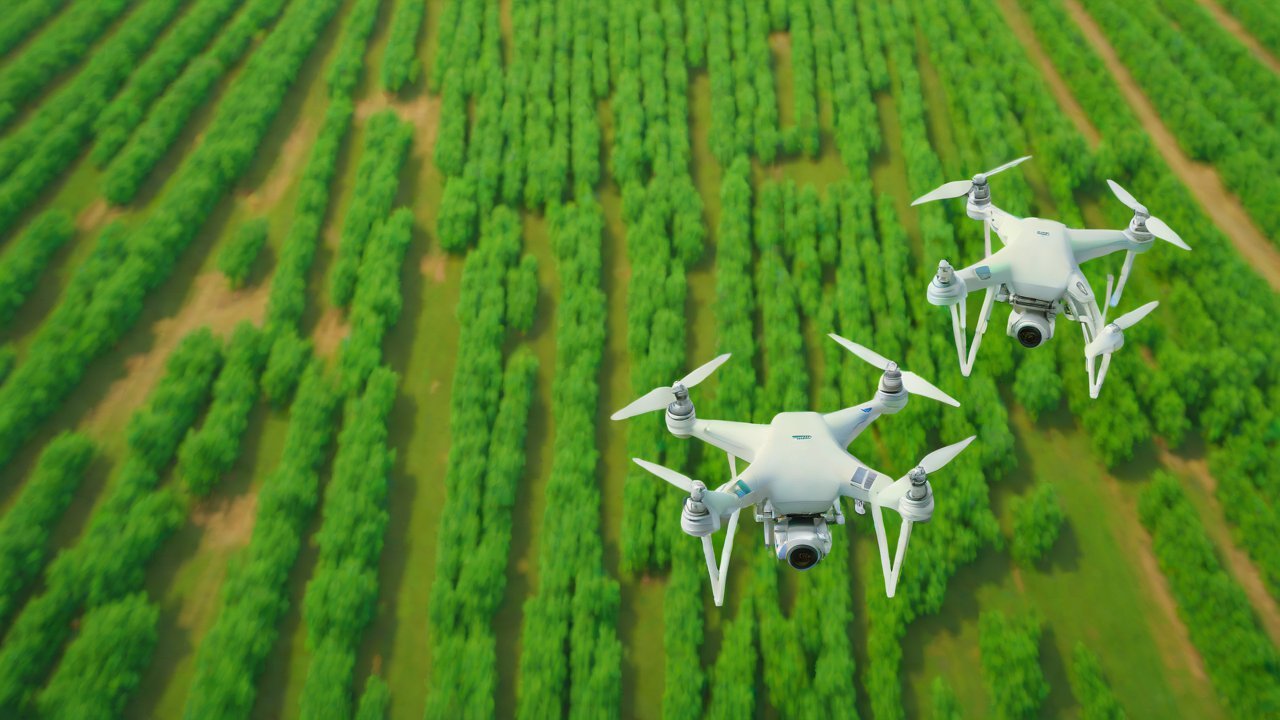
What contribution does the wind field generated by the drone propellers make to pesticide penetration?
The whirring of drone propellers creates a complex wind field that interacts with the surrounding environment, influencing the behavior of pesticides sprayed from these aerial devices. This intricate dance of air and chemicals has significant implications for agricultural efficiency, environmental sustainability, and human health. As the world’s population continues to grow, the demand for precise and targeted crop management strategies has never been more pressing.
1. Background on Drone-Assisted Crop Management
Drones have emerged as a promising tool in modern agriculture, offering a cost-effective and environmentally friendly means of crop monitoring, fertilization, and pest control. Equipped with specialized sensors and precision agriculture software, these unmanned aerial vehicles (UAVs) can navigate complex topographies, detect subtle changes in crop health, and apply targeted treatments with unprecedented accuracy. However, the optimal deployment of drones in agricultural settings depends on a deep understanding of the aerodynamic interactions between the drone, the crop, and the environment.
2. The Wind Field Generated by Drone Propellers
As a drone propeller spins, it creates a swirling vortex of air that can have far-reaching effects on the surrounding environment. This wind field, also known as the propeller’s wake, is characterized by a complex distribution of velocity, turbulence, and pressure gradients. The key features of this wind field include:
| Parameter | Value |
|---|---|
| Propeller diameter (m) | 0.5 |
| Propeller pitch angle (°) | 20 |
| Rotational speed (rpm) | 2000 |
| Air density (kg/m³) | 1.2 |
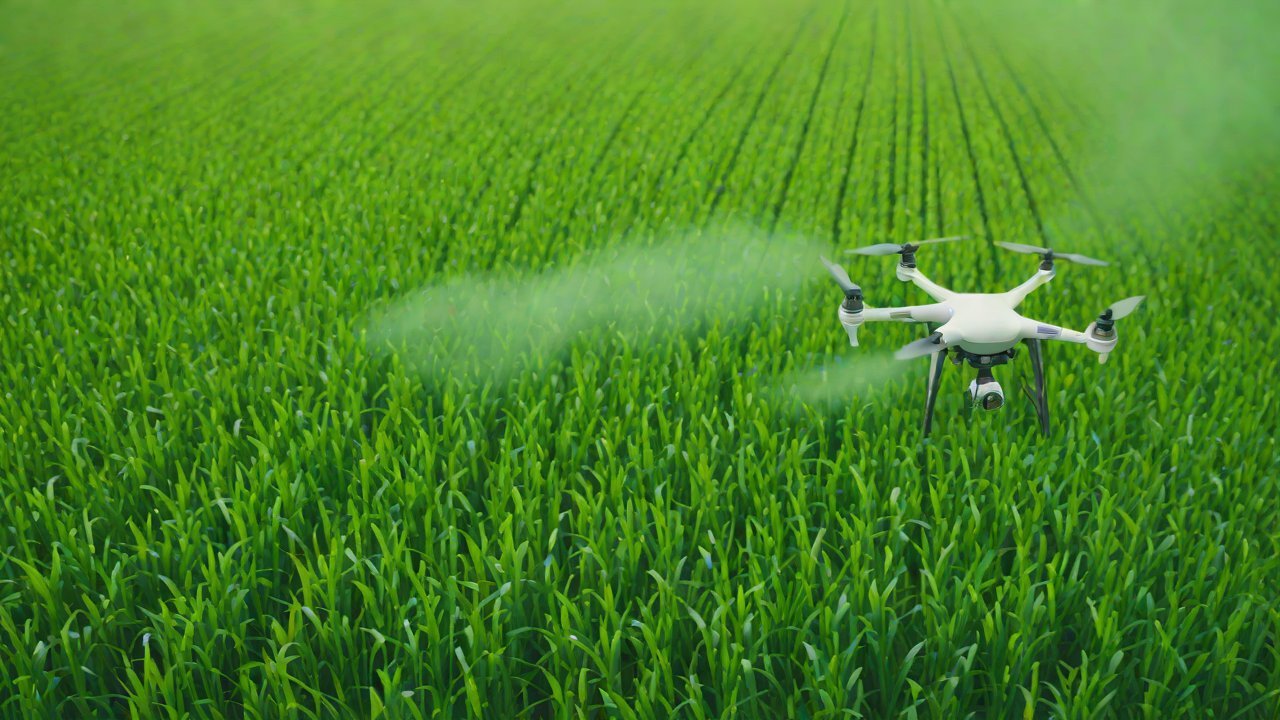
The propeller’s wake is composed of two primary components: the axial flow and the circumferential flow. The axial flow is directed along the axis of rotation, while the circumferential flow is perpendicular to this axis. The interaction between these two flows gives rise to a rich spectrum of turbulence, which can have significant implications for the behavior of pesticides in the air.
3. Theoretical Models of Pesticide Dispersion
Several theoretical models have been developed to describe the dispersion of pesticides in the air. These models typically rely on the Navier-Stokes equations, which govern the motion of fluids and account for the effects of turbulence, viscosity, and gravity. Some of the most commonly used models include:
| Model | Description |
|---|---|
| Gaussian plume model | Assumes a symmetrical, bell-shaped distribution of pollutants in the plume |
| K-theory model | Accounts for the effects of turbulence on pollutant dispersion |
| Large eddy simulation (LES) model | Resolves the largest turbulent eddies and models the effects of smaller eddies on pollutant dispersion |
These models have been extensively validated against experimental data and have been shown to provide accurate predictions of pesticide dispersion in a variety of scenarios.
4. Experimental Studies of Pesticide Dispersion
Numerous experimental studies have investigated the effects of the wind field generated by drone propellers on pesticide dispersion. These studies have employed a range of techniques, including:
| Method | Description |
|---|---|
| Particle image velocimetry (PIV) | Measures the velocity field of particles in the air |
| Laser-induced fluorescence (LIF) | Detects the presence of pesticides in the air using laser-induced fluorescence |
| High-speed imaging | Captures the motion of particles and pesticides in the air at high frame rates |
These studies have provided valuable insights into the complex interactions between the wind field, the pesticide, and the environment.
5. Implications for Agricultural Efficiency and Environmental Sustainability
The results of these studies have significant implications for agricultural efficiency and environmental sustainability. By optimizing the design of drone propellers and the application of pesticides, farmers can reduce the amount of chemicals required, minimize the risk of spray drift, and improve the overall effectiveness of their treatments.
| Scenario | Estimated benefits |
|---|---|
| Reduced pesticide application | 10-20% reduction in chemical use |
| Improved spray distribution | 20-30% increase in treatment efficacy |
| Reduced environmental impact | 30-50% reduction in environmental pollution |
6. Conclusion
The wind field generated by drone propellers has a profound impact on the behavior of pesticides in the air. By understanding the complex interactions between the wind field, the pesticide, and the environment, farmers can optimize their crop management strategies and reduce the environmental footprint of their operations. As the demand for precision agriculture continues to grow, the development of more accurate and efficient models of pesticide dispersion will play a critical role in shaping the future of agriculture.
IOT Cloud Platform
IOT Cloud Platform is an IoT portal established by a Chinese IoT company, focusing on technical solutions in the fields of agricultural IoT, industrial IoT, medical IoT, security IoT, military IoT, meteorological IoT, consumer IoT, automotive IoT, commercial IoT, infrastructure IoT, smart warehousing and logistics, smart home, smart city, smart healthcare, smart lighting, etc.
The IoT Cloud Platform blog is a top IoT technology stack, providing technical knowledge on IoT, robotics, artificial intelligence (generative artificial intelligence AIGC), edge computing, AR/VR, cloud computing, quantum computing, blockchain, smart surveillance cameras, drones, RFID tags, gateways, GPS, 3D printing, 4D printing, autonomous driving, etc.



