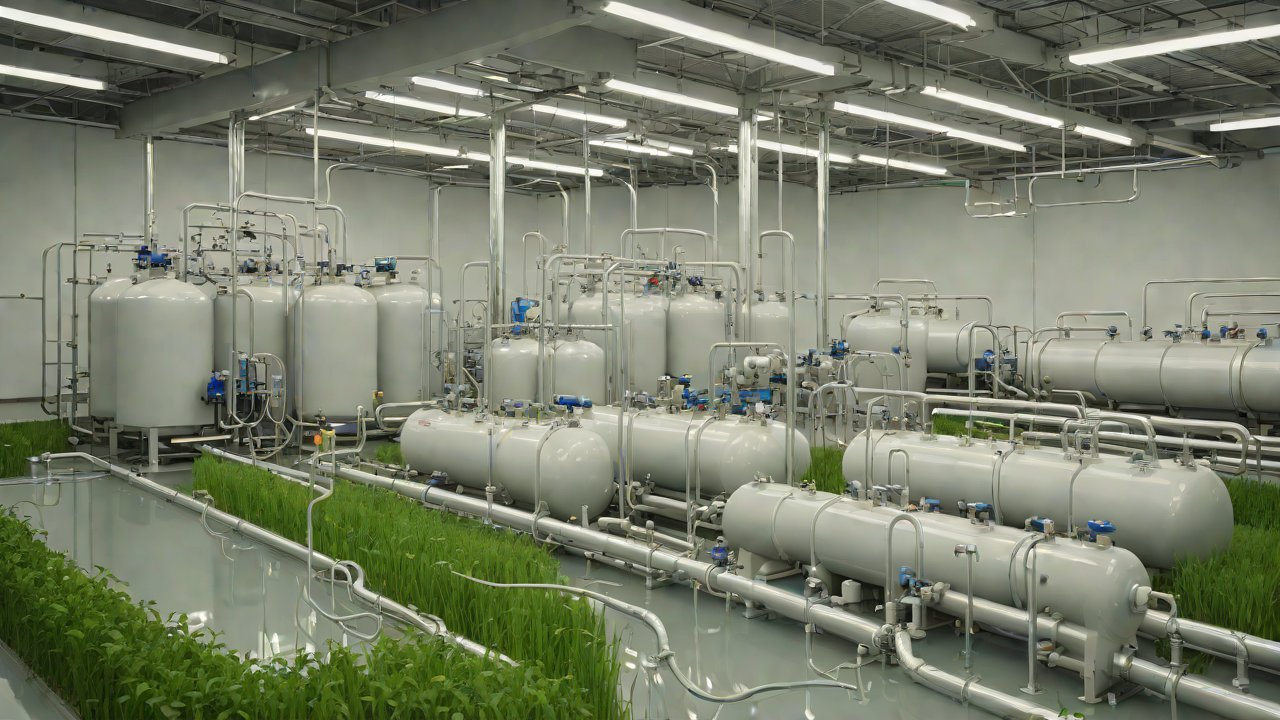
Water Quality Traceability System: Is Every Drop of Water from Field to Table Safe?
As we stand at the cusp of a new era in global sustainability, the imperatives of ensuring water quality have become increasingly pressing. The world’s freshwater resources are dwindling at an alarming rate, and the consequences of poor water management practices are being felt across the globe. From rural communities to urban metropolises, access to clean drinking water has emerged as a critical issue that demands attention from policymakers, industry stakeholders, and consumers alike.
The notion of every drop of water being safe from field to table is increasingly becoming a distant reality. Water quality issues have been on the rise in recent years, with contaminants ranging from agricultural runoff and industrial pollutants to pharmaceuticals and microplastics finding their way into our drinking water supplies. In this context, the concept of a water quality traceability system has gained significant traction as a potential solution to ensure the safety and accountability of every drop of water that reaches our tables.
1. Water Quality Challenges
The global water crisis is multifaceted, with various factors contributing to its severity. Some of the key challenges include:
| Water Quality Issue | Prevalence | Impact on Human Health |
|---|---|---|
| Agricultural runoff (pesticides, fertilizers) | High | Potential carcinogens, reproductive issues |
| Industrial pollutants (heavy metals, chemicals) | Moderate | Neurological damage, cancer risks |
| Pharmaceuticals and personal care products (PPCPs) | Increasing | Hormonal imbalances, antibiotic resistance |
| Microplastics | Widespread | Unknown health impacts |

The consequences of poor water quality are far-reaching, affecting not only human health but also the environment. Contaminated water sources can lead to the spread of waterborne diseases, while also impacting aquatic ecosystems and biodiversity.
2. Water Quality Traceability System: An Overview
A water quality traceability system is designed to track the journey of every drop of water from its source to the point of consumption. This involves monitoring water quality parameters such as pH, turbidity, and bacterial contaminants at various stages of treatment and distribution. The system relies on advanced technologies like sensors, IoT devices, and data analytics to provide real-time insights into water quality.
Some of the key components of a water quality traceability system include:
| Component | Description |
|---|---|
| Water sampling and testing | Regular collection and analysis of water samples at various stages |
| Sensor-based monitoring | Real-time monitoring of water quality parameters using sensors and IoT devices |
| Data analytics and visualization | Advanced data analysis and visualization tools to identify trends and patterns |
| Alert and response system | Automated alerts and response protocols for water quality breaches |
3. Market Trends and Opportunities
The market for water quality traceability systems is expected to experience significant growth in the coming years, driven by increasing concerns over water safety and regulatory pressures. Some of the key market trends and opportunities include:
| Market Trend | Description |
|---|---|
| Growing demand for real-time monitoring | Increased adoption of IoT-based sensors and data analytics tools |
| Integration with existing infrastructure | Compatibility with existing SCADA systems and other infrastructure |
| Focus on emerging contaminants | Monitoring for PPCPs, microplastics, and other emerging pollutants |
4. Technical Perspectives
From a technical standpoint, water quality traceability systems rely on advanced technologies to provide real-time insights into water quality. Some of the key technical considerations include:
- Sensor accuracy: Ensuring that sensors accurately detect water quality parameters
- Data security: Protecting sensitive data from unauthorized access or tampering
- Scalability: Scaling up the system to accommodate large-scale water distribution networks
5. Case Studies and Best Practices
Several case studies and best practices have emerged in recent years, highlighting the effectiveness of water quality traceability systems in ensuring safe drinking water. Some examples include:
| Case Study | Description |
|---|---|
| City of New York’s Water Quality Monitoring System | Real-time monitoring of water quality parameters using IoT sensors |
| California’s Drought-Resistant Water Management System | Advanced data analytics and visualization tools to optimize water use |
6. Conclusion
Ensuring the safety and accountability of every drop of water from field to table is a critical challenge that demands attention from policymakers, industry stakeholders, and consumers alike. The concept of a water quality traceability system has emerged as a potential solution to address this issue, leveraging advanced technologies like sensors, IoT devices, and data analytics to provide real-time insights into water quality.
As we move forward in addressing the global water crisis, it is essential that we prioritize investment in water quality infrastructure, promote public awareness and education on water safety, and encourage regulatory reforms to ensure accountability for every drop of water that reaches our tables.
IOT Cloud Platform
IOT Cloud Platform is an IoT portal established by a Chinese IoT company, focusing on technical solutions in the fields of agricultural IoT, industrial IoT, medical IoT, security IoT, military IoT, meteorological IoT, consumer IoT, automotive IoT, commercial IoT, infrastructure IoT, smart warehousing and logistics, smart home, smart city, smart healthcare, smart lighting, etc.
The IoT Cloud Platform blog is a top IoT technology stack, providing technical knowledge on IoT, robotics, artificial intelligence (generative artificial intelligence AIGC), edge computing, AR/VR, cloud computing, quantum computing, blockchain, smart surveillance cameras, drones, RFID tags, gateways, GPS, 3D printing, 4D printing, autonomous driving, etc.