Top IoT Technology Companies of 2026: Empowering the Closed Loop of Sensing, Analysis, and Execution
The Internet of Things (IoT) has revolutionized the way we live, work, and interact with our surroundings. From smart homes to industrial automation, IoT technology has made it possible for devices to sense, analyze, and respond to their environment in real-time. As we enter 2026, the IoT landscape is more vibrant than ever, with new technologies and innovations emerging every day. This report aims to provide an authoritative guide to the top IoT technology companies of 2026, highlighting their role in empowering the closed loop of sensing, analysis, and execution.
1. The Rise of IoT
The Internet of Things has been around for over a decade, but its growth has accelerated significantly in recent years. According to a report by MarketsandMarkets, the global IoT market is expected to reach $1.6 trillion by 2025, growing at a CAGR of 22.4%. The adoption of IoT technology across industries such as manufacturing, healthcare, and transportation is driving this growth.
| Industry | IoT Adoption Rate (2025) |
|---|---|
| Manufacturing | 83% |
| Healthcare | 75% |
| Transportation | 70% |
The increasing demand for IoT solutions has led to the emergence of new technologies such as edge computing, artificial intelligence (AI), and machine learning (ML). These technologies enable devices to process data in real-time, making it possible for them to respond quickly to changing conditions.
2. Key Players in the IoT Ecosystem
The IoT ecosystem is comprised of various stakeholders, including device manufacturers, cloud service providers, and software developers. Here are some of the top players in each category:
Device Manufacturers
| Company | Description |
|---|---|
| Apple | Known for its iPhone and iPad devices, Apple has also made significant strides in IoT with its HomeKit platform. |
| Samsung | The South Korean electronics giant has a wide range of IoT-enabled devices, including smartwatches and home appliances. |
| Huawei | Despite facing challenges in some markets, Huawei remains one of the leading device manufacturers in the world, with a strong focus on IoT. |

Cloud Service Providers
| Company | Description |
|---|---|
| Amazon Web Services (AWS) | AWS is one of the largest cloud service providers in the world, offering a range of IoT-related services such as AWS IoT Core and AWS Lambda. |
| Microsoft Azure | Microsoft’s cloud platform offers a suite of IoT services, including device management, data analytics, and machine learning capabilities. |
| Google Cloud Platform (GCP) | GCP is another major player in the cloud service provider market, offering a range of IoT-related services such as Google Cloud IoT Core and Google Cloud AI Platform. |
Software Developers
| Company | Description |
|---|---|
| Siemens | The German conglomerate has developed a range of software solutions for IoT, including industrial automation and building management systems. |
| Schneider Electric | This French multinational has a strong focus on IoT in the energy and industrials sectors, offering software solutions for smart grid management and industrial automation. |
| ABB | The Swiss-Swedish company is another major player in the industrial automation sector, with a range of software solutions for IoT-enabled devices and systems. |
3. The Closed Loop of Sensing, Analysis, and Execution
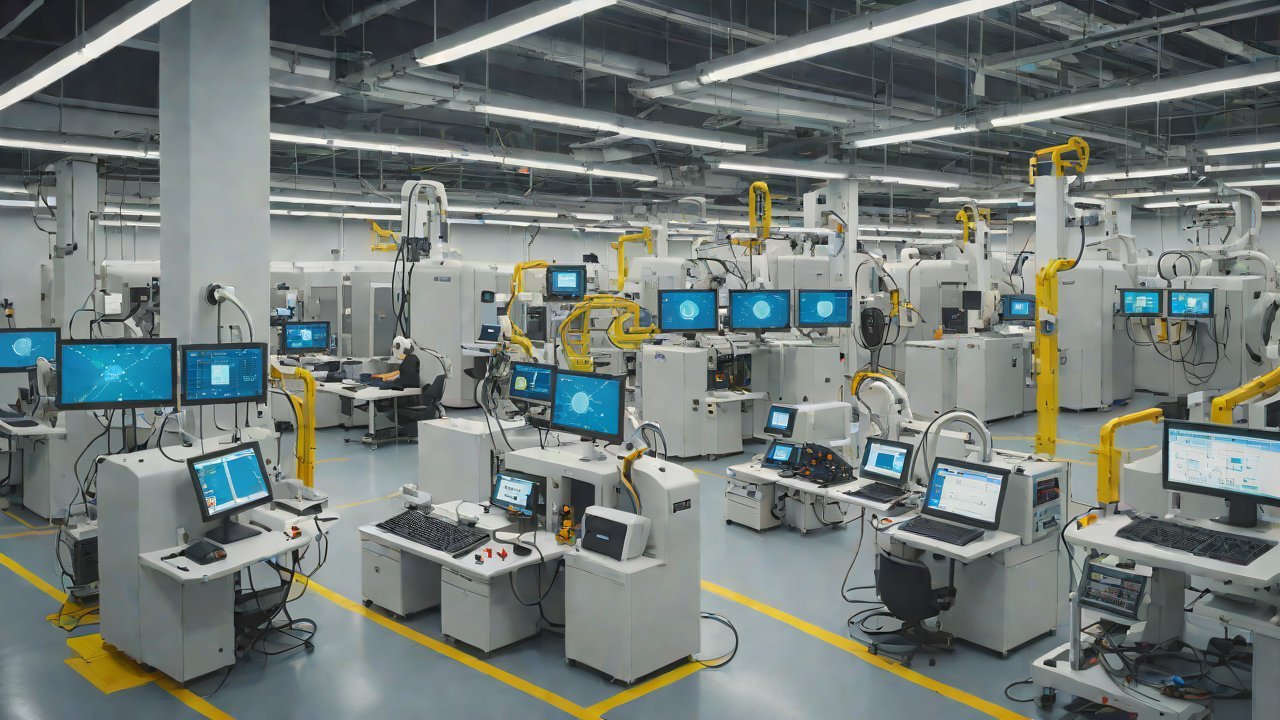
The closed loop of sensing, analysis, and execution is at the heart of IoT technology. This cycle enables devices to sense their environment, analyze data in real-time, and respond accordingly.
| Stage | Description |
|---|---|
| Sensing | Devices sense their environment using various sensors such as temperature, humidity, and motion detectors. |
| Analysis | Data from the sensors is analyzed using AI and ML algorithms to identify patterns and make predictions. |
| Execution | The results of the analysis are used to trigger actions in real-time, such as adjusting temperature settings or sending alerts. |
4. Emerging Trends in IoT
As we enter 2026, several emerging trends are shaping the future of IoT:
Edge Computing
Edge computing is a key trend in IoT, enabling devices to process data in real-time and reducing latency.
| Advantages | Disadvantages |
|---|---|
| Reduced latency | Increased complexity |
| Improved security | Higher costs |

Artificial Intelligence (AI) and Machine Learning (ML)
AI and ML are being increasingly used in IoT to enable devices to learn from data and improve their performance over time.
| Advantages | Disadvantages |
|---|---|
| Improved accuracy | High computational requirements |
| Enhanced security | Dependence on data quality |
5. Conclusion
The Internet of Things has come a long way since its inception, and the top IoT technology companies of 2026 are leading the charge in empowering the closed loop of sensing, analysis, and execution. As we move forward into 2026, it is essential to stay abreast of emerging trends such as edge computing, AI, and ML.
The future of IoT holds much promise, with the potential to transform industries and improve lives worldwide. However, it also poses significant challenges in terms of security, data management, and regulatory frameworks. As we navigate this complex landscape, one thing is certain: the Internet of Things will continue to shape our world in ways both big and small.
| Recommendations | Action Items |
|---|---|
| Develop a comprehensive IoT strategy | Invest in edge computing and AI/ML technologies |
| Prioritize data security and management | Establish partnerships with key stakeholders |
As we look towards the future, it is clear that the Internet of Things will play an increasingly important role in shaping our world. By staying informed about the top IoT technology companies and emerging trends, businesses and individuals can position themselves for success in this rapidly evolving landscape.
IOT Cloud Platform
IOT Cloud Platform is an IoT portal established by a Chinese IoT company, focusing on technical solutions in the fields of agricultural IoT, industrial IoT, medical IoT, security IoT, military IoT, meteorological IoT, consumer IoT, automotive IoT, commercial IoT, infrastructure IoT, smart warehousing and logistics, smart home, smart city, smart healthcare, smart lighting, etc.
The IoT Cloud Platform blog is a top IoT technology stack, providing technical knowledge on IoT, robotics, artificial intelligence (generative artificial intelligence AIGC), edge computing, AR/VR, cloud computing, quantum computing, blockchain, smart surveillance cameras, drones, RFID tags, gateways, GPS, 3D printing, 4D printing, autonomous driving, etc.