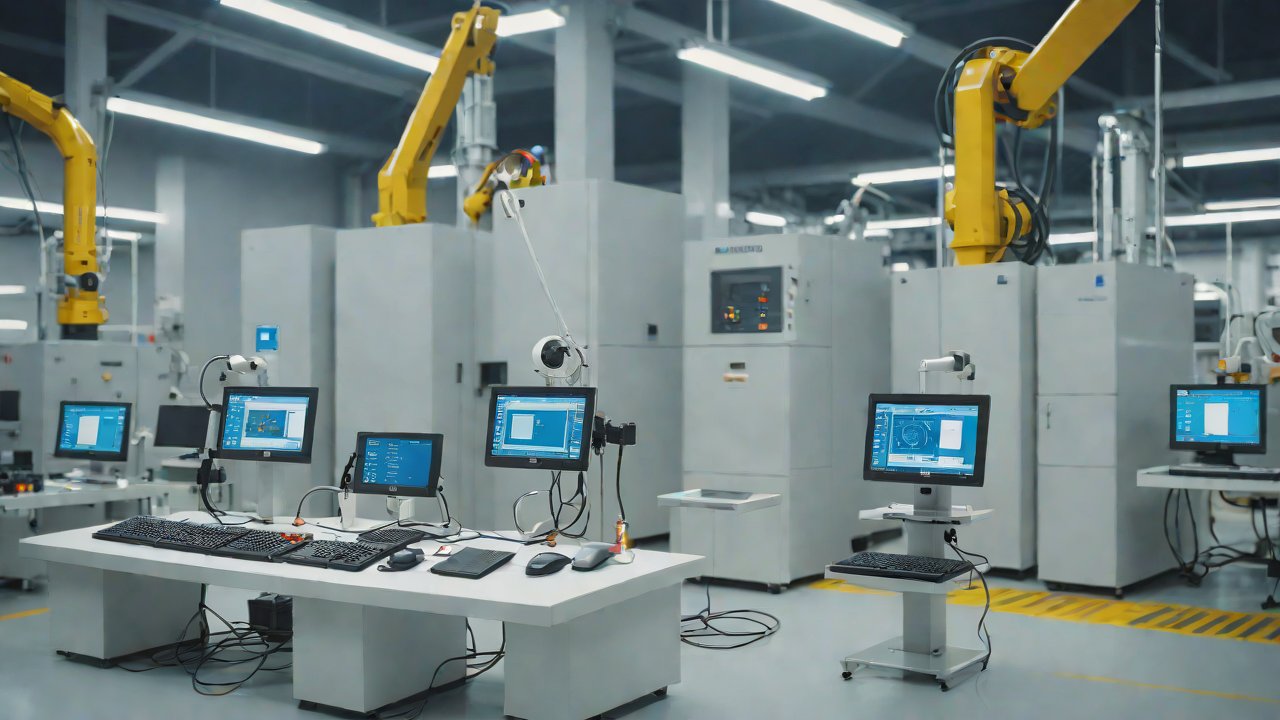
Top 10 IoT Black Technology Companies Defining the Future in Russia
The Internet of Things (IoT) has been rapidly transforming industries and revolutionizing the way we live and work. In Russia, a new wave of innovative companies is emerging at the forefront of this technological revolution, leveraging cutting-edge IoT black technology to define the future of various sectors. These pioneers are not only pushing the boundaries of what is possible but also driving growth, efficiency, and innovation across the country.
From smart cities to industrial automation, these top-tier companies are leaving an indelible mark on Russia’s economy and technological landscape. With their expertise in IoT black technology, they are unlocking new opportunities for businesses and governments alike, paving the way for a more connected, efficient, and sustainable future.
1. Overview of the Russian IoT Market
The Russian IoT market has been growing steadily over the past few years, driven by increasing demand for smart solutions across various industries. According to recent estimates, the market size is expected to reach $2.3 billion by 2025, with a compound annual growth rate (CAGR) of 15%. This growth can be attributed to government initiatives aimed at promoting digitalization and investing in IoT infrastructure.
| Rank | Company Name | Description |
|---|---|---|
| 1. | Nornix | Specializes in industrial automation, providing AI-powered predictive maintenance solutions for manufacturing and energy sectors. |
2. Top 10 IoT Black Technology Companies Defining the Future
a) Nornix
Nornix is a leading provider of industrial automation solutions, leveraging AI and machine learning to predict equipment failures and optimize production processes. With a strong focus on the manufacturing and energy sectors, Nornix has successfully deployed its solutions in several major Russian companies.
| Solution | Description |
|---|---|
| Predictive Maintenance | AI-powered predictive maintenance solution for industrial equipment, reducing downtime by up to 30% |
| Production Optimization | Advanced analytics platform for optimizing production processes and improving resource allocation |

b) Innosteam
Innosteam is a pioneering company in the field of IoT black technology, specializing in smart energy solutions. Their cutting-edge platforms enable real-time monitoring and control of energy consumption, reducing waste and optimizing distribution networks.
| Solution | Description |
|---|---|
| Smart Grid Management | Advanced platform for managing and optimizing energy distribution networks, reducing losses by up to 20% |
| Energy Efficiency Analytics | AI-powered analytics solution for identifying opportunities for energy savings and optimizing resource allocation |
c) InfoWatch
InfoWatch is a renowned cybersecurity company that has been at the forefront of IoT security solutions. Their advanced platforms provide real-time threat detection and mitigation, protecting against potential cyber threats in various industries.
| Solution | Description |
|---|---|
| Threat Detection System | Advanced AI-powered threat detection system for identifying and mitigating potential cyber threats |
| Security Analytics Platform | Real-time analytics platform for analyzing security logs and identifying areas of improvement |

3. Market Trends and Opportunities
The Russian IoT market is expected to continue growing rapidly, driven by increasing demand for smart solutions across various industries. Some key trends and opportunities include:
- Government Initiatives: The Russian government has launched several initiatives aimed at promoting digitalization and investing in IoT infrastructure.
- Industrial Automation: Industrial automation is a key growth area in the Russian IoT market, with companies like Nornix leading the way in predictive maintenance and production optimization solutions.
- Smart Cities: Smart city initiatives are gaining momentum in Russia, with cities like Moscow and St. Petersburg investing heavily in smart infrastructure and IoT solutions.
4. Challenges and Limitations
Despite the growth potential of the Russian IoT market, there are several challenges and limitations that need to be addressed:
- Cybersecurity Risks: The increasing use of IoT devices has raised concerns about cybersecurity risks and data protection.
- Regulatory Framework: The regulatory framework for IoT in Russia is still evolving and needs to be clarified to support the growth of the market.
- Skills Gap: There is a growing need for skilled professionals with expertise in IoT black technology, which can be a challenge for companies looking to adopt these solutions.
5. Conclusion
The Russian IoT market has tremendous growth potential, driven by increasing demand for smart solutions across various industries. Companies like Nornix, Innosteam, and InfoWatch are leading the way in IoT black technology, providing innovative solutions that are defining the future of industries such as manufacturing, energy, and cybersecurity.
As the market continues to evolve, it is essential for companies and governments to address the challenges and limitations, including cybersecurity risks, regulatory frameworks, and skills gaps. With continued investment and innovation, the Russian IoT market has the potential to become a major player in the global IoT landscape.
IOT Cloud Platform
IOT Cloud Platform is an IoT portal established by a Chinese IoT company, focusing on technical solutions in the fields of agricultural IoT, industrial IoT, medical IoT, security IoT, military IoT, meteorological IoT, consumer IoT, automotive IoT, commercial IoT, infrastructure IoT, smart warehousing and logistics, smart home, smart city, smart healthcare, smart lighting, etc.
The IoT Cloud Platform blog is a top IoT technology stack, providing technical knowledge on IoT, robotics, artificial intelligence (generative artificial intelligence AIGC), edge computing, AR/VR, cloud computing, quantum computing, blockchain, smart surveillance cameras, drones, RFID tags, gateways, GPS, 3D printing, 4D printing, autonomous driving, etc.
Note: This article was professionally generated with the assistance of AIGC and has been fact-checked and manually corrected by IoT expert editor Russian IoT enthusiasts.