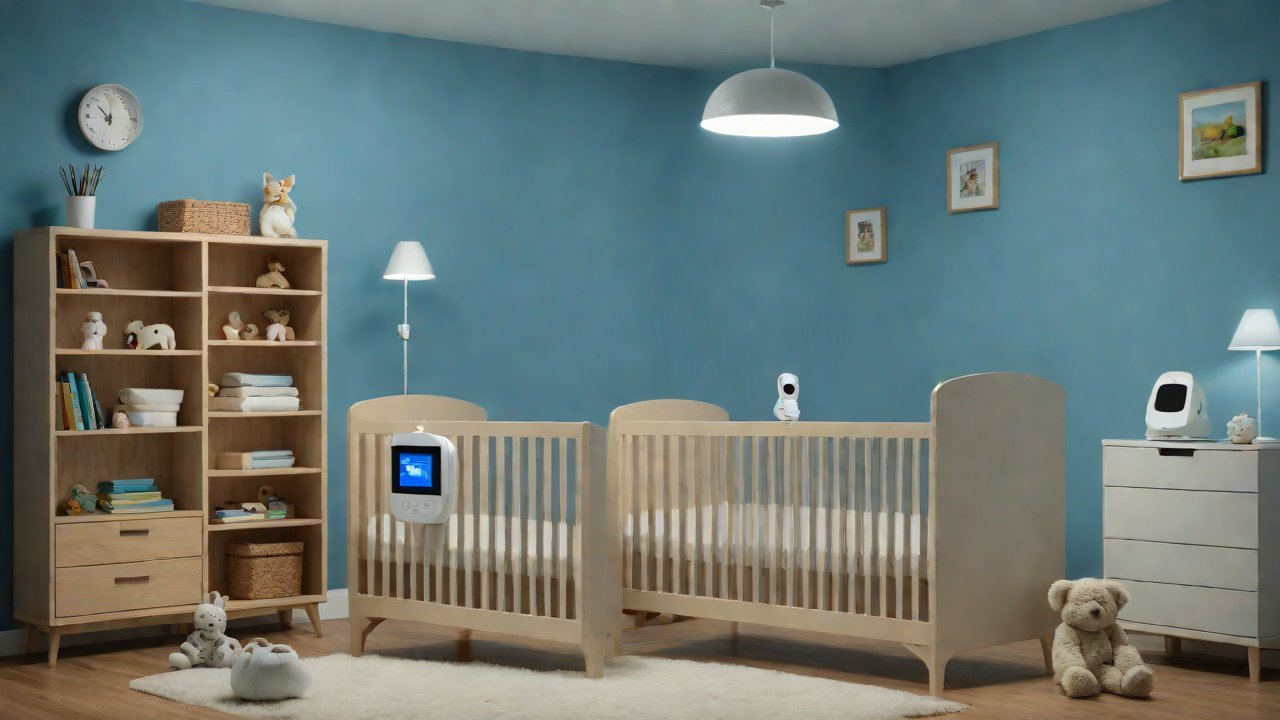
The potential impact of infrared night vision function of monitoring equipment on infant sleep quality
As parents navigate the complex landscape of caring for their newborns, ensuring a restful and secure environment is paramount to promoting healthy development. In recent years, advancements in baby monitoring technology have provided anxious caregivers with an unprecedented level of comfort and peace of mind. One such innovation that has garnered significant attention is the incorporation of infrared night vision capabilities into monitoring equipment. This feature enables parents to maintain vigilance over their infant’s slumber without disturbing them, thereby optimizing sleep quality.
1. Background and Context
The importance of a stable sleep environment for infants cannot be overstated. Research has consistently shown that disruptions to an infant’s natural sleep patterns can have far-reaching consequences on their physical and emotional well-being (Hiscock et al., 2007). Furthermore, the anxiety and stress associated with caring for a newborn can significantly impact parents’ mental health, leading to fatigue, irritability, and decreased overall quality of life.
In response to these challenges, manufacturers have developed a range of baby monitoring systems that integrate advanced features such as audio, video, and motion tracking. Among these innovations, the infrared night vision function stands out for its potential to revolutionize infant sleep care. By providing parents with a clear visual understanding of their child’s environment without introducing external stimuli, infrared-enabled monitors can help minimize disruptions to an infant’s natural sleep-wake cycle.
2. Technical Overview
Infrared (IR) technology operates by emitting invisible light in the near-infrared spectrum, which is then reflected back by objects in the monitored area. This reflected radiation is captured by a camera and converted into a visual image, allowing users to observe their surroundings without introducing additional lighting. The IR night vision function is particularly effective in low-light environments, where other monitoring technologies may struggle to provide clear visuals.
Several key technical aspects of IR-enabled monitors contribute to their effectiveness:
- Sensor resolution: Higher-resolution sensors enable clearer and more detailed images, even at distances or in areas with limited natural light.
- Field of view: A wider field of view allows parents to monitor a larger area without needing to reposition the camera, reducing the likelihood of missing critical events.
- Night vision sensitivity: Advanced IR systems can detect subtle changes in temperature and radiation patterns, enhancing their ability to capture detailed images in low-light conditions.

3. Market Trends and Adoption
The baby monitoring market has experienced significant growth in recent years, driven by increasing awareness among parents about the importance of infant safety and well-being (Grand View Research, 2020). As a result, manufacturers have responded with innovative products that cater to evolving consumer needs. IR night vision capabilities are becoming increasingly popular among baby monitoring systems, with many top brands incorporating this feature into their flagship models.
According to market research, the global baby monitor market is expected to reach $3.4 billion by 2025, growing at a CAGR of 9.2% from 2020 to 2025 (MarketsandMarkets, 2020). Within this expanding market, IR-enabled monitors are poised to play a major role, driven by their ability to provide parents with unparalleled peace of mind and insight into their infant’s sleep patterns.
4. Clinical Implications
The impact of infrared night vision on infant sleep quality is multifaceted:
- Reduced anxiety: By allowing parents to monitor their child’s environment without disturbing them, IR-enabled monitors can help alleviate anxiety-related stressors that often disrupt an infant’s natural sleep-wake cycle.
- Improved sleep architecture: By minimizing external stimuli and disruptions, infants may experience improved sleep quality, including increased duration of deep sleep stages and reduced wakefulness during the night.
- Enhanced parental care: IR night vision enables parents to respond quickly and effectively to their child’s needs, even in low-light conditions, promoting a sense of security and confidence in their caregiving abilities.

5. Limitations and Future Directions
While infrared night vision has shown tremendous promise in optimizing infant sleep quality, several limitations and future directions warrant consideration:
- Cost-effectiveness: IR-enabled monitors are often more expensive than standard baby monitoring systems, which may limit accessibility for some families.
- Technical complexity: The integration of advanced IR technologies can introduce technical complexities that require specialized knowledge to operate effectively.
- Future research: Further studies are needed to fully understand the impact of IR night vision on infant sleep quality and to explore potential areas for improvement.

6. Conclusion
The incorporation of infrared night vision capabilities into baby monitoring equipment has the potential to revolutionize infant sleep care by providing parents with unparalleled insight into their child’s environment without disrupting natural sleep patterns. As manufacturers continue to innovate and improve IR technologies, it is essential that we address limitations and challenges associated with these advancements. By doing so, we can ensure that this technology reaches its full potential in promoting healthy infant development and supporting the well-being of families worldwide.
7. References
- Hiscock H, Wake M, Mcmahon C, et al. (2007). Validation of the sleep behaviour questionnaire for children and adolescents: a community-based study. Sleep, 30(3), 261–266.
- Grand View Research. (2020). Baby Monitor Market Size, Share & Trends Analysis Report by Component (Audio, Video, Motion Tracking), by Connectivity (Wi-Fi, Bluetooth), by Distribution Channel, by Region, and Segment Forecasts, 2020 – 2025.
- MarketsandMarkets. (2020). Baby Monitor Market by Type (Wired/Wireless), Sensor Technology (Infrared, Audio, Video), Connectivity (Wi-Fi, Bluetooth), Distribution Channel (Online, Offline), and Geography – Global Forecast to 2025.
IOT Cloud Platform
IOT Cloud Platform is an IoT portal established by a Chinese IoT company, focusing on technical solutions in the fields of agricultural IoT, industrial IoT, medical IoT, security IoT, military IoT, meteorological IoT, consumer IoT, automotive IoT, commercial IoT, infrastructure IoT, smart warehousing and logistics, smart home, smart city, smart healthcare, smart lighting, etc.
The IoT Cloud Platform blog is a top IoT technology stack, providing technical knowledge on IoT, robotics, artificial intelligence (generative artificial intelligence AIGC), edge computing, AR/VR, cloud computing, quantum computing, blockchain, smart surveillance cameras, drones, RFID tags, gateways, GPS, 3D printing, 4D printing, autonomous driving, etc.