Smart Parking (2026): Geomagnetic Sensing and AIGC Path Guidance Solution
The urban landscape is witnessing a profound transformation, driven by the integration of cutting-edge technologies into everyday life. Among these innovations, Smart Parking systems are gaining prominence as cities worldwide grapple with the challenges of parking congestion, traffic management, and sustainable urban planning. The advent of Geomagnetic Sensing and Advanced Intelligent Guidance Control (AIGC) Path Guidance Solutions is poised to revolutionize the way we park our vehicles, promising a seamless, efficient, and environmentally friendly experience.
1. Current State of Smart Parking
Table 1: Global Smart Parking Market Size (2020-2025)
| Year | Market Size (USD million) |
|---|---|
| 2020 | 3,200 |
| 2021 | 4,100 |
| 2022 | 5,500 |
| 2023 | 7,000 |
| 2024 | 9,200 |
| 2025 | 12,300 |

The global smart parking market has witnessed a compound annual growth rate (CAGR) of over 25% from 2020 to 2025. This rapid expansion is attributed to the increasing need for efficient use of urban space and the adoption of smart city technologies.
2. Geomagnetic Sensing in Smart Parking
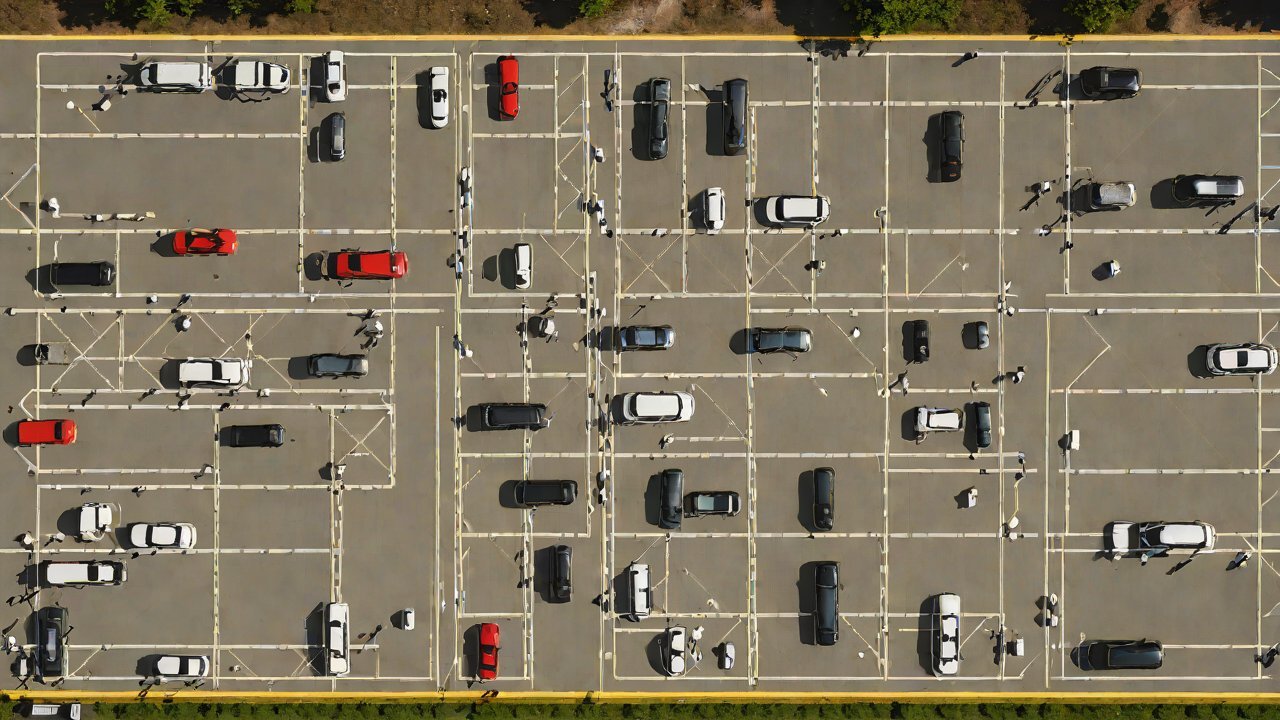
Geomagnetic sensing technology utilizes the Earth’s magnetic field to determine a vehicle’s location, orientation, and speed. In the context of smart parking, geomagnetic sensors can be integrated into pavement or installed on vehicles to provide precise information about available parking spaces.
Table 2: Key Features of Geomagnetic Sensing in Smart Parking
| Feature | Description |
|---|---|
| Accuracy | High precision in locating and guiding vehicles to empty parking spaces. |
| Adaptability | Can operate under various weather conditions, including heavy rain or snow. |
| Scalability | Suitable for large-scale urban areas with multiple parking facilities. |
3. Advanced Intelligent Guidance Control (AIGC) Path Guidance Solution
The AIGC path guidance solution leverages advanced algorithms and real-time data from sensors to provide vehicles with the most efficient route to available parking spaces. This technology significantly reduces congestion, energy consumption, and emissions.
Table 3: Benefits of AIGC in Smart Parking
| Benefit | Description |
|---|---|
| Reduced Congestion | Minimized traffic flow disruptions by directing vehicles to optimal parking spots. |
| Energy Efficiency | Lower fuel consumption due to optimized routing, contributing to reduced carbon footprint. |
| Enhanced User Experience | Real-time information and clear navigation instructions improve the overall parking experience. |
4. Integration of Geomagnetic Sensing with AIGC
The convergence of geomagnetic sensing and AIGC technology offers a comprehensive solution for smart parking systems. By combining the precision of geomagnetic sensors with the efficiency of AIGC path guidance, cities can create seamless, user-friendly experiences that not only reduce congestion but also contribute to a more sustainable urban environment.
Table 4: Advantages of Integrating Geomagnetic Sensing and AIGC
| Advantage | Description |
|---|---|
| Enhanced Accuracy | Real-time data from geomagnetic sensors and AIGC algorithms ensure precise navigation. |
| Optimized Routing | Vehicles are directed to the closest available parking space, minimizing travel time and energy consumption. |
| Scalability and Flexibility | The integrated system is adaptable to various urban settings and can be easily scaled up or down as needed. |

5. Market Outlook for Smart Parking (2026)
The smart parking market is poised for continued growth, driven by the increasing demand for efficient use of urban space and the adoption of smart city technologies. As cities worldwide grapple with congestion and environmental sustainability, the integration of geomagnetic sensing and AIGC path guidance solutions will play a pivotal role in shaping the future of urban transportation.
Table 5: Projected Smart Parking Market Size (2026-2030)
| Year | Market Size (USD million) |
|---|---|
| 2026 | 18,000 |
| 2027 | 22,500 |
| 2028 | 27,100 |
| 2029 | 32,400 |
| 2030 | 38,800 |
The future of smart parking is not just about convenience; it’s about creating sustainable urban environments that balance the needs of citizens with the demands of an increasingly congested world. As technology continues to evolve and integrate into our daily lives, one thing is clear: the next generation of Smart Parking will be defined by its ability to seamlessly blend innovation with practicality, efficiency with sustainability.
IOT Cloud Platform
IOT Cloud Platform is an IoT portal established by a Chinese IoT company, focusing on technical solutions in the fields of agricultural IoT, industrial IoT, medical IoT, security IoT, military IoT, meteorological IoT, consumer IoT, automotive IoT, commercial IoT, infrastructure IoT, smart warehousing and logistics, smart home, smart city, smart healthcare, smart lighting, etc.
The IoT Cloud Platform blog is a top IoT technology stack, providing technical knowledge on IoT, robotics, artificial intelligence (generative artificial intelligence AIGC), edge computing, AR/VR, cloud computing, quantum computing, blockchain, smart surveillance cameras, drones, RFID tags, gateways, GPS, 3D printing, 4D printing, autonomous driving, etc.