Sensors Every IoT Expert Needs to Know
In the realm of IoT, sensors are the unsung heroes that enable devices to perceive, interact, and adapt to their environments. They convert physical parameters into digital signals, allowing for real-time monitoring, control, and automation of various processes. As the IoT landscape continues to expand, the demand for sophisticated sensor technologies has never been greater.
The proliferation of smart cities, industrial automation, and wearable devices has created a multibillion-dollar market for sensors that can detect and respond to an array of environmental factors. From temperature and humidity to pressure and vibration, the types of sensors in use today are astonishingly diverse. However, with so many options available, it’s easy to get lost in the sea of acronyms and technical jargon.
In this report, we’ll delve into the world of IoT sensors, exploring their various categories, applications, and market trends. We’ll also examine some of the key players driving innovation in the space and provide an analysis of the technologies that will shape the future of sensing.
1. Sensor Categories
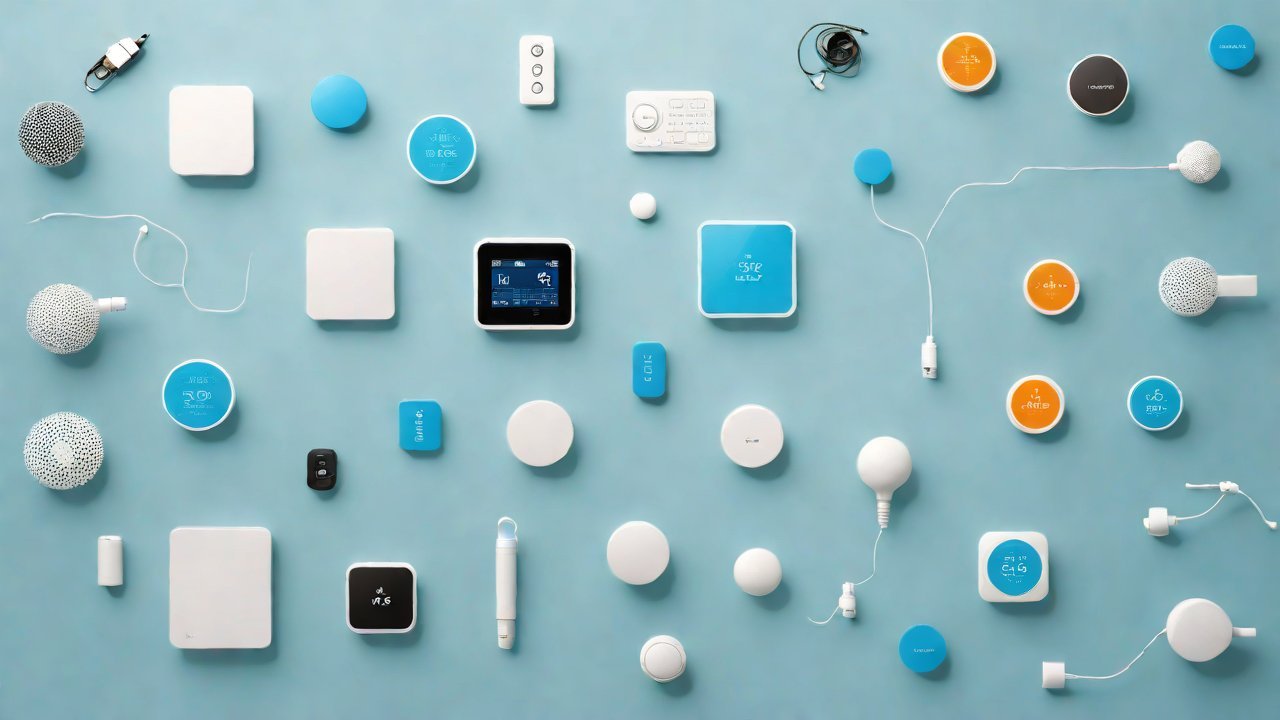
Sensors can be broadly categorized based on their functionality and application domains. Here are some of the most common types:
| Sensor Type | Description |
|---|---|
| Temperature Sensors | Measure temperature, often used in industrial automation, HVAC systems, and smart homes. |
| Humidity Sensors | Monitor humidity levels, essential for climate control, agriculture, and weather forecasting. |
| Pressure Sensors | Detect pressure variations, used in industrial processes, wearable devices, and aircraft navigation. |
| Proximity Sensors | Sense the presence or absence of objects, commonly employed in robotics, automotive safety systems, and smart home automation. |
| Motion Sensors | Track movement and activity, utilized in fitness tracking, security surveillance, and gaming applications. |
| Acoustic Sensors | Detect sound waves, used in audio processing, non-destructive testing, and environmental monitoring. |
| Optical Sensors | Measure light intensity, spectral composition, or other optical properties, applied in spectroscopy, material analysis, and machine vision. |
2. Sensor Applications
Sensors are ubiquitous in various industries and applications:
Industrial Automation
- Predictive maintenance: sensors monitor equipment health, reducing downtime and increasing productivity.
- Process control: sensors adjust parameters like temperature, pressure, and flow rate to optimize production.
Smart Cities
- Traffic management: sensors track traffic congestion, pedestrian flow, and air quality.
- Public safety: sensors detect emergency situations, such as fires or accidents.
Wearable Devices
- Fitness tracking: sensors monitor vital signs, activity levels, and sleep patterns.
- Health monitoring: sensors track blood pressure, glucose levels, and other health metrics.

3. Emerging Trends in Sensor Technology
Several trends are shaping the future of sensor innovation:
Miniaturization
Advances in nanotechnology have led to smaller, more energy-efficient sensors with improved accuracy.
Integration
Increasingly, sensors are being integrated into multi-sensor systems, enabling more comprehensive data collection and analysis.
Wireless Communication
Wireless communication protocols like Wi-Fi, Bluetooth, and LoRaWAN facilitate seamless data transfer between sensors and the cloud or other devices.
4. Market Size and Growth Projections
The global sensor market is projected to reach $243 billion by 2025, growing at a CAGR of 8.1% from 2020 to 2025 (Source: MarketsandMarkets).
| Market Segment | 2020 Revenue ($B) | 2025 Revenue ($B) | CAGR (%) |
|---|---|---|---|
| Industrial Sensors | $43.6 | $64.3 | 7.2% |
| Consumer Electronics | $34.1 | $54.8 | 9.5% |
| Automotive | $23.4 | $37.3 | 8.5% |
| Healthcare | $12.9 | $22.1 | 10.3% |

5. Key Players in the Sensor Market
Some of the leading companies driving innovation in sensor technology include:
- STMicroelectronics (STM)
- Texas Instruments (TXN)
- Analog Devices (ADI)
- NXP Semiconductors (NXPI)
- Infineon Technologies (IFNNY)
These companies are investing heavily in research and development, expanding their product portfolios to cater to emerging applications.
6. Conclusion
The world of IoT sensors is vast and complex, with a wide range of technologies and applications. As the demand for connected devices continues to grow, sensor innovation will play a crucial role in shaping the future of industries like industrial automation, smart cities, and healthcare.
By understanding the various types of sensors, their applications, and emerging trends, IoT experts can make informed decisions about which technologies to invest in and how to integrate them into existing systems. As we move forward, it’s essential to stay up-to-date with market developments and advancements in sensor technology to unlock new possibilities for innovation and growth.
In the next section of this report, we’ll delve deeper into the technical aspects of sensor design and implementation, exploring topics like signal processing, data fusion, and sensor networking.
IOT Cloud Platform
IOT Cloud Platform is an IoT portal established by a Chinese IoT company, focusing on technical solutions in the fields of agricultural IoT, industrial IoT, medical IoT, security IoT, military IoT, meteorological IoT, consumer IoT, automotive IoT, commercial IoT, infrastructure IoT, smart warehousing and logistics, smart home, smart city, smart healthcare, smart lighting, etc.
The IoT Cloud Platform blog is a top IoT technology stack, providing technical knowledge on IoT, robotics, artificial intelligence (generative artificial intelligence AIGC), edge computing, AR/VR, cloud computing, quantum computing, blockchain, smart surveillance cameras, drones, RFID tags, gateways, GPS, 3D printing, 4D printing, autonomous driving, etc.