
Multimodal Fusion: Fault Diagnosis Combining Audio and Vibration
A Symphony of Sensors: Unlocking Hidden Insights through Multimodal Fusion in Fault Diagnosis
The industrial sector has witnessed a significant shift towards predictive maintenance, driven by the increasing need to reduce downtime, lower operational costs, and enhance overall efficiency. At the forefront of this movement lies the concept of multimodal fusion – the synergistic combination of multiple sensing modalities to extract richer insights than any single modality could provide on its own. In the context of fault diagnosis, particularly for machinery and equipment, the integration of audio and vibration signals has emerged as a powerful approach. By tapping into these disparate data streams, engineers can uncover subtle patterns indicative of impending failures, thereby enabling proactive interventions that prevent catastrophic breakdowns.
1. Background
Industrial environments are characterized by an array of complex systems, including engines, gearboxes, pumps, and turbines, each with its unique operational dynamics and failure modes. Traditional condition monitoring approaches often rely on a single modality, such as vibration analysis or acoustic emission testing. However, these methods have limitations – they can only detect certain types of anomalies and may not capture the full spectrum of potential issues.
The emergence of multimodal fusion techniques has opened up new avenues for more comprehensive fault diagnosis. By integrating data from multiple sources, including audio signals captured by microphones and vibration data recorded by accelerometers or other sensors, engineers can build a more complete picture of system health. This holistic approach enables the detection of faults that might otherwise go unnoticed, leading to improved reliability and reduced maintenance costs.
2. Multimodal Fusion Techniques
Several methodologies have been developed for multimodal fusion in fault diagnosis, each with its strengths and weaknesses:
2.1 Feature-Level Fusion
This method involves extracting features from individual modalities (e.g., spectral power density from vibration signals and spectrogram features from audio signals) and then combining them using techniques such as weighted averaging or principal component analysis (PCA).
| Method | Description |
|---|---|
| Weighted Averaging | Assigns weights to each modality based on its reliability or accuracy. |
| PCA | Transforms data into a new space where features are decorrelated, allowing for more efficient fusion. |
2.2 Decision-Level Fusion
In this approach, the results from individual modalities are combined at the decision level. Techniques include majority voting and support vector machines (SVMs).
| Method | Description |
|---|---|
| Majority Voting | Chooses the class label that appears most frequently among all modalities. |
| SVM | Uses a kernel function to map data into a higher-dimensional space where it becomes linearly separable, enabling more accurate classification. |
2.3 Hybrid Fusion
Hybrid approaches combine feature-level and decision-level fusion techniques to leverage their complementary strengths.
3. Applications in Industrial Settings
The integration of audio and vibration signals has been successfully applied in various industrial contexts:
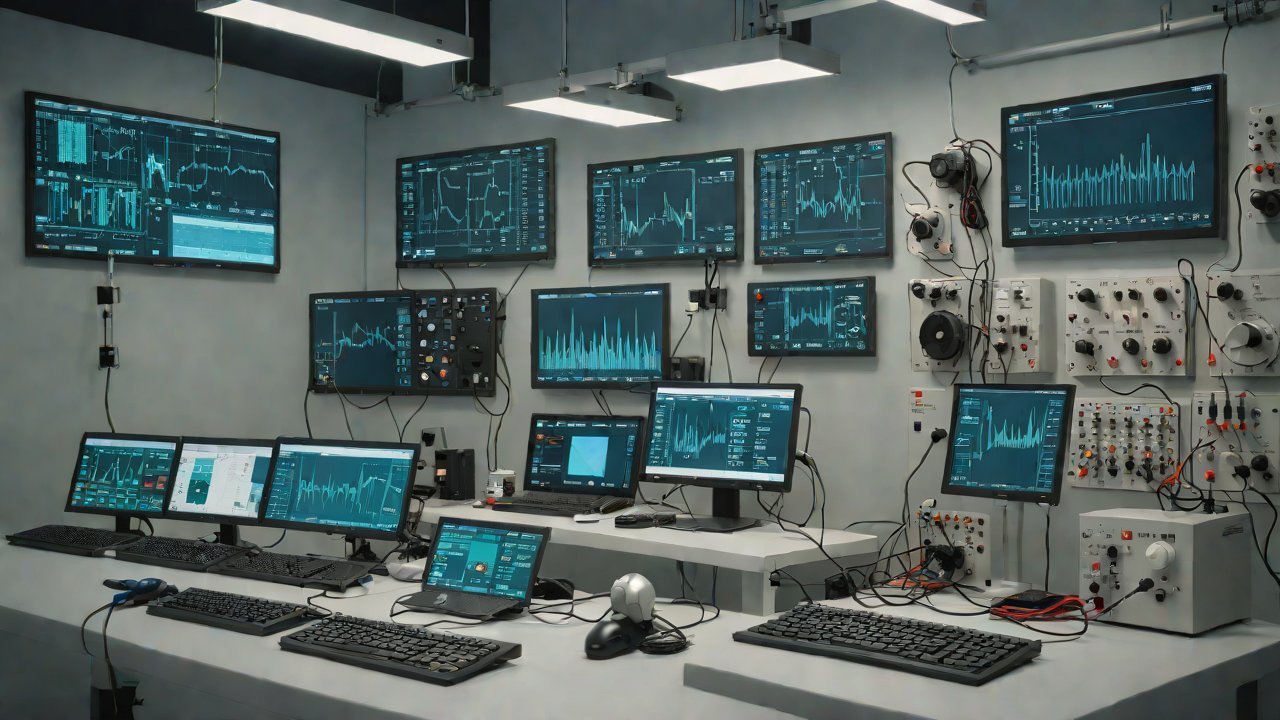
- Condition Monitoring: Multimodal fusion enables the detection of anomalies indicative of potential failures, such as bearing faults or misalignment in rotating machinery.
- Predictive Maintenance: By identifying early warning signs through multimodal analysis, maintenance teams can schedule repairs during planned downtime, minimizing the risk of unexpected shutdowns and reducing operational costs.
- Quality Control: The method has been applied to quality control processes, allowing for the detection of defects or irregularities in manufactured products.
4. Technical Challenges
While multimodal fusion offers significant potential benefits, several technical challenges must be addressed:
4.1 Data Quality and Synchronization
Ensuring that data from different modalities is synchronized and of sufficient quality poses a significant challenge. This includes addressing issues such as sampling rate mismatch, noise contamination, and sensor calibration.
4.2 Feature Extraction and Selection
Choosing the most relevant features for fusion can be complex due to differences in signal characteristics between modalities. Advanced feature extraction techniques and dimensionality reduction methods are necessary to address this issue.
5. Future Directions
The field of multimodal fusion is rapidly evolving, with ongoing research focusing on:
- Deep Learning Architectures: The development of deep learning models capable of effectively combining multiple data streams.
- Transfer Learning: Exploring the potential for leveraging pre-trained models and adapting them to specific industrial applications.
- Edge Computing: Implementing real-time processing and decision-making at the edge, reducing latency and enhancing system responsiveness.
6. Conclusion
The integration of audio and vibration signals through multimodal fusion represents a significant advancement in fault diagnosis technologies. By unlocking hidden insights from these disparate data streams, engineers can enhance predictive maintenance strategies, reduce downtime, and lower operational costs. As research continues to push the boundaries of this technology, its potential applications are expected to expand across various industrial sectors, driving further innovation and efficiency gains.
7. Recommendations
To maximize the benefits of multimodal fusion in fault diagnosis:
- Invest in Advanced Sensor Technologies: High-quality sensors capable of capturing detailed audio and vibration data are essential for effective fusion.
- Develop Customized Feature Extraction Methods: Tailor feature extraction techniques to specific industrial applications, taking into account unique signal characteristics.
- Implement Real-Time Processing Capabilities: Leverage edge computing or cloud-based services to enable real-time processing and decision-making.
By embracing multimodal fusion and addressing the associated technical challenges, industries can unlock new levels of operational efficiency, reliability, and competitiveness in today’s fast-paced global market.
IOT Cloud Platform
IOT Cloud Platform is an IoT portal established by a Chinese IoT company, focusing on technical solutions in the fields of agricultural IoT, industrial IoT, medical IoT, security IoT, military IoT, meteorological IoT, consumer IoT, automotive IoT, commercial IoT, infrastructure IoT, smart warehousing and logistics, smart home, smart city, smart healthcare, smart lighting, etc.
The IoT Cloud Platform blog is a top IoT technology stack, providing technical knowledge on IoT, robotics, artificial intelligence (generative artificial intelligence AIGC), edge computing, AR/VR, cloud computing, quantum computing, blockchain, smart surveillance cameras, drones, RFID tags, gateways, GPS, 3D printing, 4D printing, autonomous driving, etc.
Note: This article was professionally generated with the assistance of AIGC and has been fact-checked and manually corrected by IoT expert editor IoTCloudPlatForm.