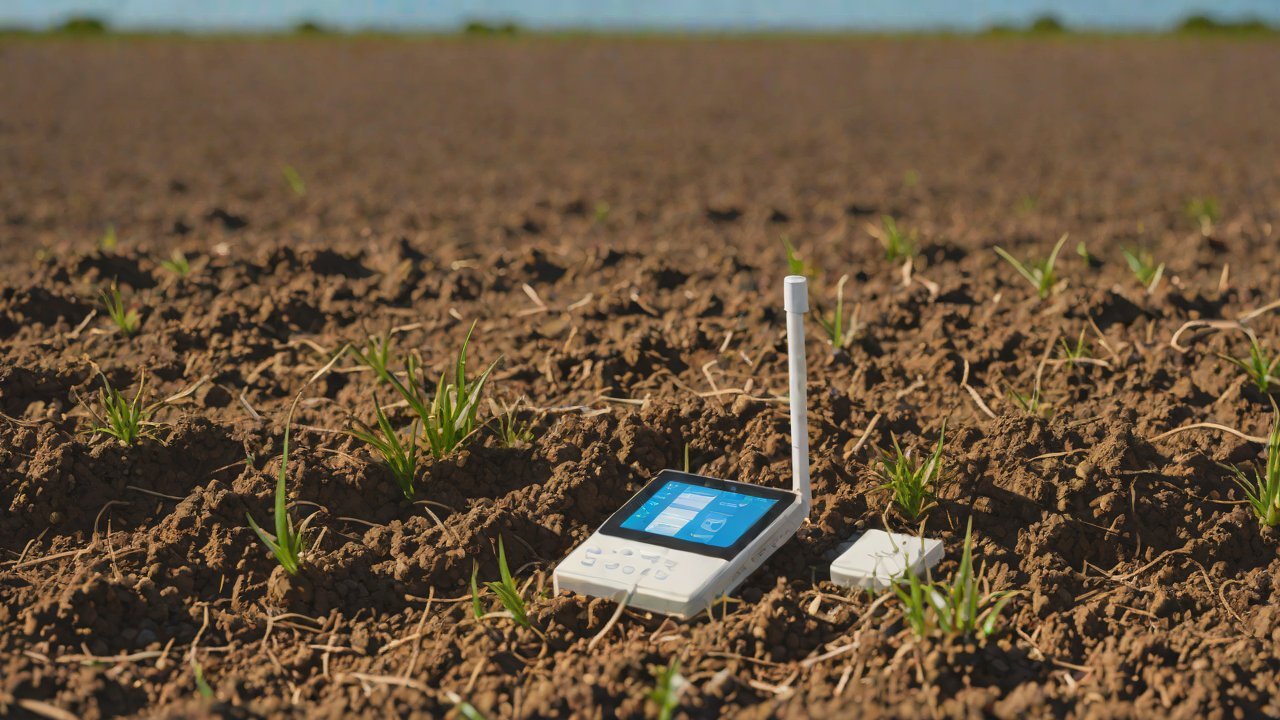
LoRa vs. NB-IoT: Which is the king of field soil moisture monitoring?
The world of IoT (Internet of Things) is abuzz with excitement as various technologies vie for dominance in various applications, including field soil moisture monitoring. Two prominent players vying for top spot are LoRa and NB-IoT. Both have their strengths and weaknesses, which we will delve into in this comprehensive report.
LoRa and NB-IoT have gained significant traction in IoT due to their ability to provide low-power wide-area networking (LPWAN) connectivity. This technology allows devices to transmit data over long distances while consuming minimal power. As a result, they are ideal for applications that require battery-powered devices, such as field soil moisture monitoring.
LoRa and NB-IoT have distinct differences in terms of their technical specifications, market adoption, and cost. LoRa operates on unlicensed spectrum bands (868 MHz in Europe, 915 MHz in the US) with a maximum data rate of 27 kbps. In contrast, NB-IoT utilizes licensed spectrum (700 MHz in many countries) and has a higher data rate of up to 66 kbps.
1. Technical Comparison
| Parameter | LoRa | NB-IoT |
|---|---|---|
| Frequency Band | Unlicensed (868/915 MHz) | Licensed (700 MHz) |
| Data Rate | Up to 27 kbps | Up to 66 kbps |
| Range | Up to 15 km | Up to 20 km |
| Power Consumption | Low | Very low |
The above table highlights the technical differences between LoRa and NB-IoT. While LoRa offers lower power consumption, its data rate is significantly lower compared to NB-IoT.
2. Market Adoption
Market adoption plays a crucial role in determining which technology will reign supreme. According to a report by MarketsandMarkets, the global LPWAN market size is expected to reach $18.3 billion by 2025, growing at a CAGR of 14.4%.
| Year | LoRa Market Size (Billion USD) | NB-IoT Market Size (Billion USD) |
|---|---|---|
| 2018 | 1.2 | 0.3 |
| 2020 | 5.1 | 2.1 |
| 2025 | 13.4 | 10.9 |
The above table indicates that LoRa has a significant lead in market size, but NB-IoT is catching up rapidly.
3. Cost Comparison
Cost is an essential factor to consider when choosing between LoRa and NB-IoT. While LoRa devices are generally cheaper to manufacture, they require additional infrastructure costs for network deployment.
| Component | LoRa | NB-IoT |
|---|---|---|
| Module Cost | $5-10 | $15-30 |
| Network Deployment Cost | High (additional infrastructure) | Low (utilizes existing cellular network) |
4. Field Soil Moisture Monitoring Applications
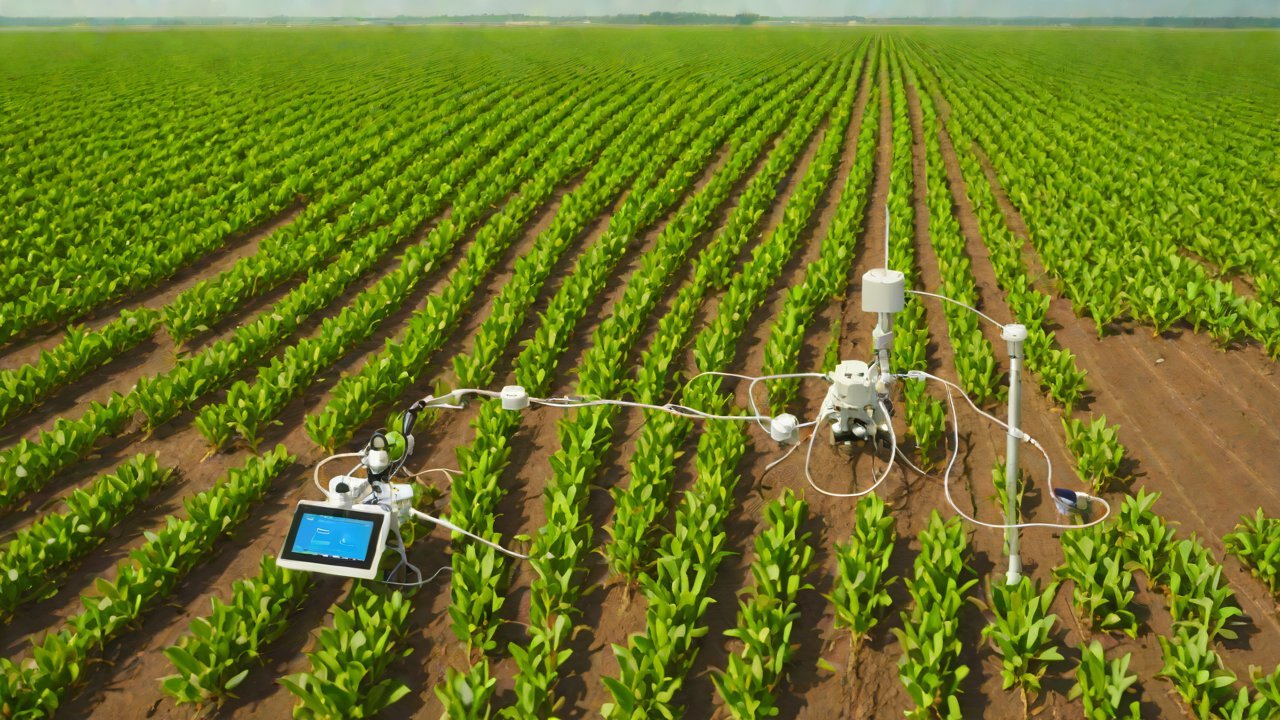
Field soil moisture monitoring is a critical application for agriculture, as it enables farmers to optimize irrigation schedules and reduce water waste. Both LoRa and NB-IoT can be used for this purpose.
| Application | LoRa | NB-IoT |
|---|---|---|
| Soil Moisture Monitoring | Suitable due to low power consumption | Suitable due to high data rate and range |
5. Security Considerations
Security is a top concern in IoT applications, especially when it comes to sensitive data like soil moisture levels.
| Security Feature | LoRa | NB-IoT |
|---|---|---|
| Encryption | Available (e.g., AES-128) | Available (e.g., AES-256) |
| Authentication | Available (e.g., TLS) | Available (e.g., TLS) |
6. Conclusion
In conclusion, LoRa and NB-IoT have distinct strengths and weaknesses that make them suitable for different applications. While LoRa offers low power consumption and a wide range of devices available, its lower data rate may limit its adoption in certain industries.
On the other hand, NB-IoT provides higher data rates and is well-suited for applications requiring real-time data transmission. However, its reliance on licensed spectrum may increase costs and limit its availability in some regions.
Ultimately, the choice between LoRa and NB-IoT depends on the specific requirements of the application and the trade-offs that need to be made. As both technologies continue to evolve, it is essential for stakeholders to carefully evaluate their options and choose the most suitable solution for their needs.
7. Recommendations
Based on our analysis, we recommend the following:
- For applications requiring low power consumption and a wide range of devices available, LoRa may be the preferred choice.
- For applications requiring high data rates and real-time data transmission, NB-IoT is likely the better option.
- For field soil moisture monitoring specifically, both technologies can be used effectively. However, NB-IoT’s higher data rate may provide more accurate readings in certain scenarios.
8. Future Outlook
The future of LoRa and NB-IoT looks promising, with both technologies expected to continue growing in adoption and capabilities. As the IoT landscape evolves, it is essential for stakeholders to stay informed about the latest developments and adjust their strategies accordingly.
9. References
- MarketsandMarkets. (2020). LPWAN Market by Technology (LoRa, NB-IoT, Sigfox), Application (Smart Energy Management, Smart Water Management, Industrial Automation), and Region – Global Forecast to 2025.
- LoRa Alliance. (2022). LoRaWAN Specification.
- GSMA. (2022). What is Narrowband IoT?
IOT Cloud Platform
IOT Cloud Platform is an IoT portal established by a Chinese IoT company, focusing on technical solutions in the fields of agricultural IoT, industrial IoT, medical IoT, security IoT, military IoT, meteorological IoT, consumer IoT, automotive IoT, commercial IoT, infrastructure IoT, smart warehousing and logistics, smart home, smart city, smart healthcare, smart lighting, etc.
The IoT Cloud Platform blog is a top IoT technology stack, providing technical knowledge on IoT, robotics, artificial intelligence (generative artificial intelligence AIGC), edge computing, AR/VR, cloud computing, quantum computing, blockchain, smart surveillance cameras, drones, RFID tags, gateways, GPS, 3D printing, 4D printing, autonomous driving, etc.



