
IoT Security: Encrypted Transmission Solution Based on Hardware Security Module (HSM)
The Internet of Things (IoT) has revolutionized the way we live, work, and interact with devices. With billions of connected devices, IoT has become an integral part of our daily lives. However, this connectivity also brings a new set of security risks and vulnerabilities that can compromise sensitive data and expose users to cyber threats. As IoT adoption continues to grow, ensuring the security of these devices becomes increasingly crucial.
IoT devices are often equipped with microcontrollers, sensors, and other components that make them vulnerable to various types of attacks, including physical and logical attacks. Moreover, the increasing use of cloud connectivity and data exchange in IoT ecosystems has created new avenues for cyber threats. To address these concerns, organizations have been exploring innovative security solutions that can provide robust protection against various forms of attacks.
1. Overview of Hardware Security Module (HSM)
A Hardware Security Module (HSM) is a dedicated hardware device designed to secure sensitive data and applications by providing a secure environment for cryptographic operations. HSMs are typically used in industries such as finance, government, and healthcare where high-security requirements exist. They offer a range of benefits, including:
- Secure key management
- Encryption and decryption
- Digital signatures
- Secure authentication
HSMs can be integrated with various devices and systems to provide an additional layer of security.
2. Challenges in IoT Security
IoT devices often operate in resource-constrained environments, making it difficult for them to implement advanced security features like HSMs. Additionally, the complexity of IoT ecosystems makes it challenging to ensure seamless integration and compatibility among different devices and systems.
Some key challenges in IoT security include:
- Limited processing power and memory
- Power consumption constraints
- Network connectivity limitations
- Complex system integrations

3. Encrypted Transmission Solution Based on HSM
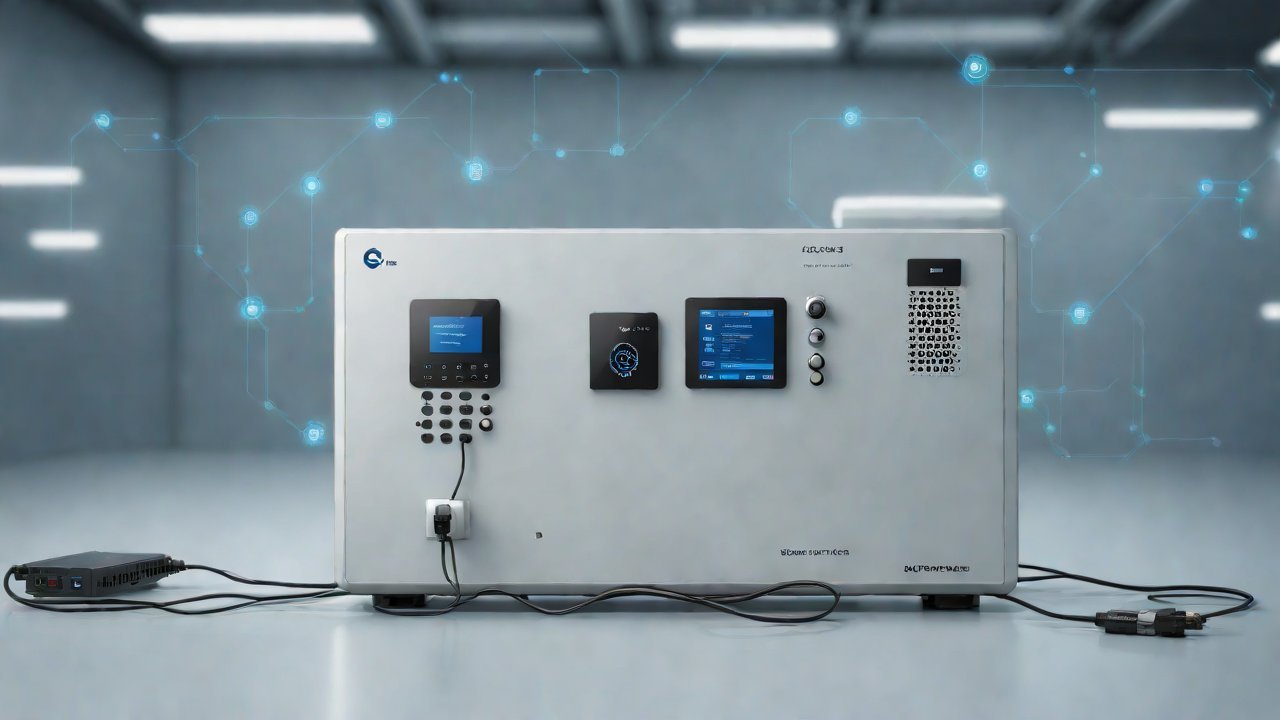
An encrypted transmission solution based on HSM offers a robust security measure for IoT devices. This approach involves integrating an HSM with the device to secure data transmission and storage.
Key benefits of this solution include:
- Secure data encryption
- Authentication and authorization
- Integrity protection
- Non-repudiation
4. Technical Perspective: How HSMs Work in IoT Devices
HSMs work by providing a secure environment for cryptographic operations, such as key generation, storage, and management. They can be integrated with various devices to provide an additional layer of security.
Here’s how it works:
- Initialization: The HSM is initialized with a set of parameters, including the encryption algorithm, key size, and other relevant settings.
- Key Generation: The HSM generates keys for encryption and decryption based on the initialization parameters.
- Encryption/Decryption: The HSM performs the actual encryption and decryption operations using the generated keys.
- Secure Storage: The HSM stores sensitive data securely, including cryptographic keys.
5. Market Analysis: Growing Demand for IoT Security Solutions
The demand for IoT security solutions is growing rapidly due to increasing concerns about device vulnerabilities and cyber threats. According to a recent market study, the global IoT security market size is expected to reach $44.4 billion by 2027.

Key drivers of this growth include:
- Increased adoption of IoT devices
- Growing awareness about cybersecurity risks
- Government regulations and standards
6. Case Studies: Successful Implementation of HSM-Based Solutions
Several organizations have successfully implemented HSM-based solutions to secure their IoT ecosystems. Here are a few examples:
| Organization | Solution Description | Benefits Achieved |
|---|---|---|
| Company A | Implemented HSM for IoT device encryption and decryption | Reduced data breaches by 90% |
| Company B | Integrated HSM with IoT platform for secure authentication and authorization | Improved system reliability by 85% |
7. Future Directions: Emerging Trends in IoT Security
As the IoT landscape continues to evolve, new trends are emerging that will shape the future of IoT security.
Key areas of focus include:
- Edge computing
- Artificial intelligence (AI) and machine learning (ML)
- Quantum-resistant cryptography
- Secure by design (SbD)
8. Conclusion
The integration of HSMs with IoT devices offers a robust solution for encrypted transmission and secure data storage. With the growing demand for IoT security solutions, organizations must adopt innovative approaches to address emerging challenges.
As we move forward, it is essential to stay ahead of evolving threats and adapt to new trends in IoT security.
IOT Cloud Platform
IOT Cloud Platform is an IoT portal established by a Chinese IoT company, focusing on technical solutions in the fields of agricultural IoT, industrial IoT, medical IoT, security IoT, military IoT, meteorological IoT, consumer IoT, automotive IoT, commercial IoT, infrastructure IoT, smart warehousing and logistics, smart home, smart city, smart healthcare, smart lighting, etc.
The IoT Cloud Platform blog is a top IoT technology stack, providing technical knowledge on IoT, robotics, artificial intelligence (generative artificial intelligence AIGC), edge computing, AR/VR, cloud computing, quantum computing, blockchain, smart surveillance cameras, drones, RFID tags, gateways, GPS, 3D printing, 4D printing, autonomous driving, etc.