Independently Design Your Own IoT Hardware Circuit
The landscape of IoT hardware design is evolving rapidly, with an increasing number of developers, makers, and engineers seeking to create their own custom-built circuits. Gone are the days when one had to rely on pre-fabricated boards or modules to bring their IoT projects to life. With the advent of affordable and accessible design tools, such as FPGAs, microcontrollers, and system-on-chip (SoC) devices, it is now possible for anyone to design, prototype, and manufacture their own IoT hardware.
The benefits of designing your own IoT hardware circuit are numerous. By doing so, you can tailor the design to meet the specific requirements of your project, ensuring optimal performance, power efficiency, and cost-effectiveness. Moreover, custom-built circuits can be designed to integrate proprietary technologies, reducing the need for external components and minimizing the risk of intellectual property infringement. This approach also enables developers to create highly specialized and differentiated products, setting them apart from mass-market offerings.
However, designing your own IoT hardware circuit can be a daunting task, requiring a deep understanding of electronic design automation (EDA) tools, analog and digital circuit design, and firmware development. Furthermore, navigating the complex landscape of component selection, board layout, and manufacturing processes can be overwhelming for those without prior experience.
1. Choosing the Right Design Tools
To embark on the journey of designing your own IoT hardware circuit, you’ll need to select the right design tools. The following are some of the most popular and widely used tools in the industry:
| Tool | Description | Target Audience |
|---|---|---|
| Altium Designer | A professional-grade PCB design tool with advanced features and a user-friendly interface. | Experienced designers and engineers |
| Autodesk Eagle | A popular and feature-rich PCB design tool with a wide range of features and a user-friendly interface. | Hobbyists, makers, and professionals |
| KiCad | A free and open-source PCB design tool with a wide range of features and a user-friendly interface. | Hobbyists, makers, and professionals |
| Xilinx Vivado | A high-end FPGA design tool with advanced features and a user-friendly interface. | Experienced designers and engineers |
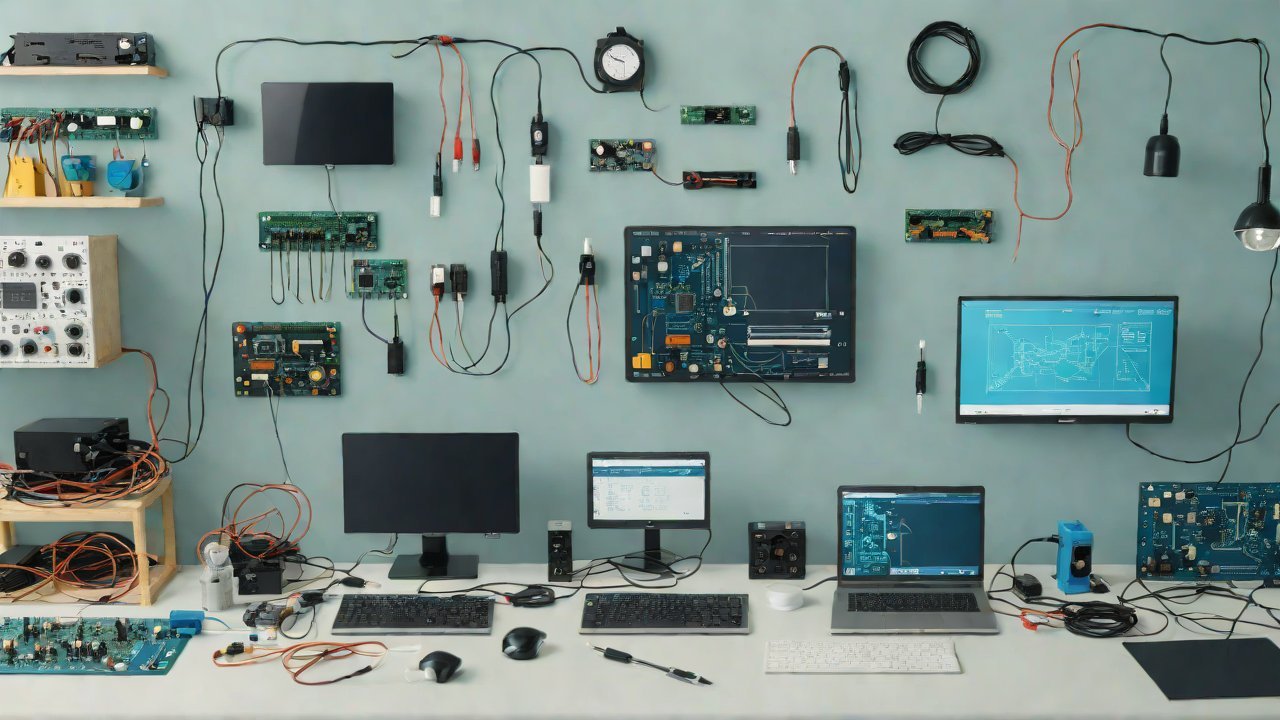
Each of these tools has its own strengths and weaknesses, and the choice of tool will depend on your specific needs and requirements.
2. Understanding Analog and Digital Circuit Design
Analog and digital circuit design are the building blocks of any IoT hardware circuit. Analog circuits are used to process and condition signals, while digital circuits are used to perform computations and control the flow of data. Understanding the principles of analog and digital circuit design is essential for designing a reliable and efficient IoT hardware circuit.
Analog circuits are used to process and condition signals, and are typically used in applications such as:
- Signal filtering and amplification
- Voltage regulation and power management
- Temperature and pressure sensing
Digital circuits, on the other hand, are used to perform computations and control the flow of data, and are typically used in applications such as:
- Microcontroller programming
- Digital signal processing
- Communication protocols and interfaces
3. Component Selection and Board Layout
Component selection and board layout are critical steps in the design process. The choice of components will depend on the specific requirements of your project, including factors such as performance, power consumption, and cost.
Some of the most commonly used components in IoT hardware design include:
| Component | Description | Typical Applications |
|---|---|---|
| Microcontrollers | Small computers that can run firmware and control the flow of data. | IoT devices, automation, and robotics |
| FPGAs | Reconfigurable integrated circuits that can be programmed to perform a wide range of functions. | High-speed data processing, encryption, and authentication |
| SoCs | Integrated circuits that combine multiple components, such as CPUs, memory, and I/O interfaces. | IoT devices, smartphones, and tablets |
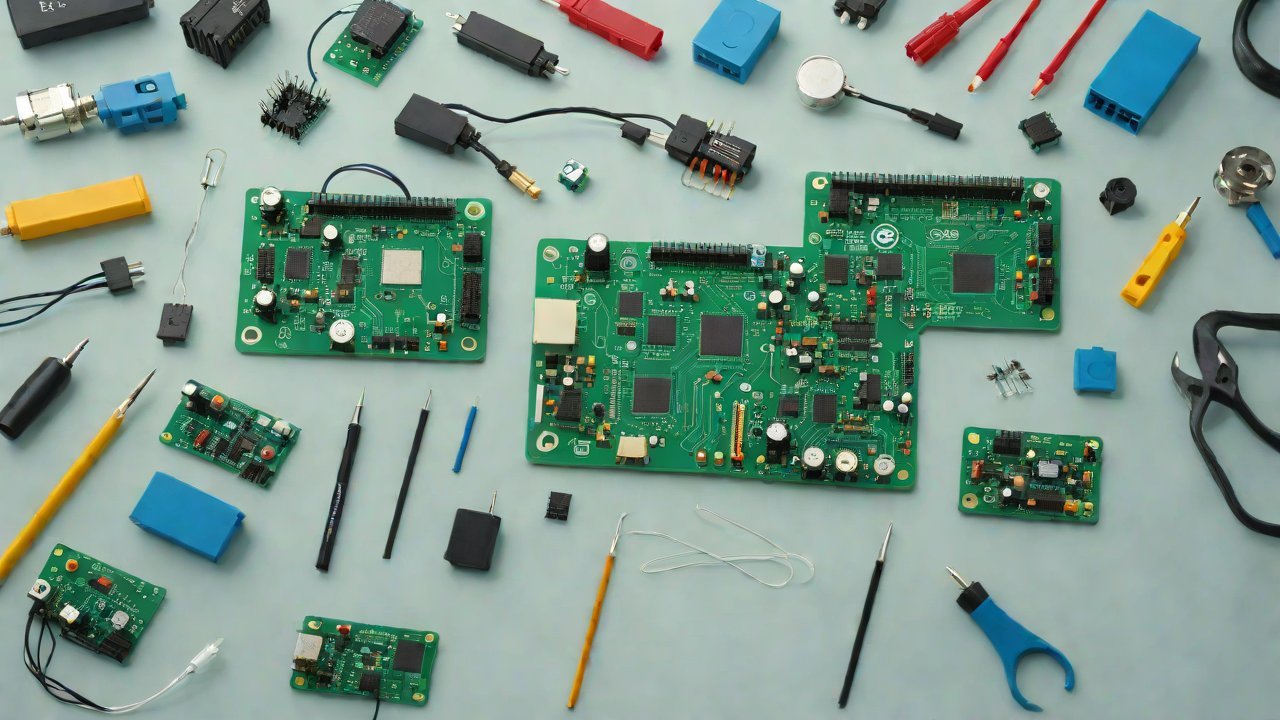
Board layout is the process of arranging components on a PCB to ensure optimal performance and reliability. This includes considerations such as:
- Component placement and routing
- Signal integrity and noise reduction
- Thermal management and cooling
4. Firmware Development and Programming
Firmware development and programming are critical steps in the design process. Firmware is the software that runs on the microcontroller or SoC, and is responsible for controlling the flow of data and performing computations.
Some of the most commonly used programming languages for IoT firmware development include:
| Language | Description | Typical Applications |
|---|---|---|
| C | A general-purpose programming language used for embedded systems and IoT devices. | Microcontrollers, SoCs, and FPGAs |
| C++ | A high-performance programming language used for complex systems and applications. | High-speed data processing, encryption, and authentication |
| Python | A high-level programming language used for rapid prototyping and development. | IoT devices, automation, and robotics |
5. Manufacturing and Testing
Manufacturing and testing are the final steps in the design process. The choice of manufacturing process will depend on the specific requirements of your project, including factors such as cost, quality, and lead time.
Some of the most commonly used manufacturing processes for IoT hardware include:
| Process | Description | Typical Applications |
|---|---|---|
| PCB assembly | The process of assembling components on a PCB. | IoT devices, automation, and robotics |
| Surface mount technology (SMT) | The process of mounting components on a PCB using surface mount technology. | High-speed data processing, encryption, and authentication |
| System-in-package (SiP) | The process of integrating multiple components into a single package. | IoT devices, smartphones, and tablets |
In conclusion, designing your own IoT hardware circuit requires a deep understanding of electronic design automation tools, analog and digital circuit design, firmware development, and manufacturing processes. By choosing the right design tools, understanding the principles of analog and digital circuit design, selecting the right components, and developing the necessary firmware, you can create a reliable and efficient IoT hardware circuit that meets the specific requirements of your project.
IOT Cloud Platform
IOT Cloud Platform is an IoT portal established by a Chinese IoT company, focusing on technical solutions in the fields of agricultural IoT, industrial IoT, medical IoT, security IoT, military IoT, meteorological IoT, consumer IoT, automotive IoT, commercial IoT, infrastructure IoT, smart warehousing and logistics, smart home, smart city, smart healthcare, smart lighting, etc.
The IoT Cloud Platform blog is a top IoT technology stack, providing technical knowledge on IoT, robotics, artificial intelligence (generative artificial intelligence AIGC), edge computing, AR/VR, cloud computing, quantum computing, blockchain, smart surveillance cameras, drones, RFID tags, gateways, GPS, 3D printing, 4D printing, autonomous driving, etc.