If a sensor probe breaks in the soil, can it self-repair like bone?
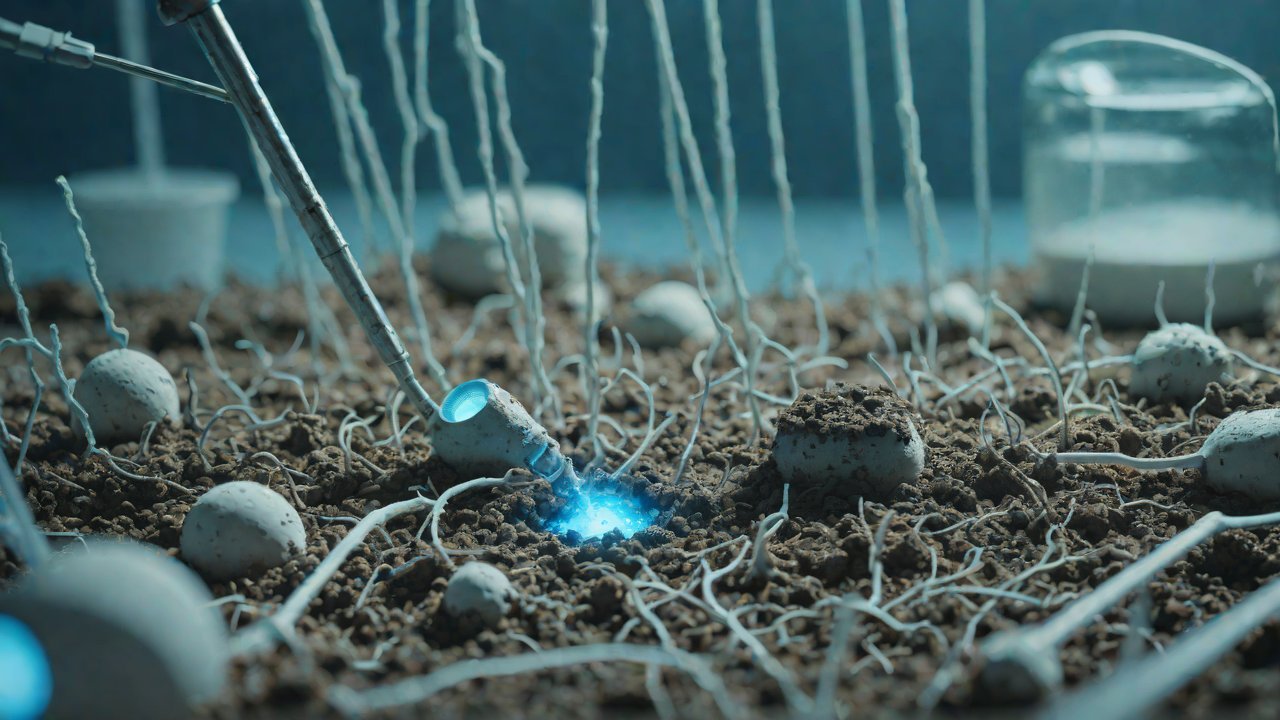
As we venture further into the uncharted territories of artificial intelligence and robotics, the notion of self-repairing devices has piqued the interest of researchers worldwide. Inspired by nature’s own repair mechanisms, scientists have been exploring ways to develop materials that can heal themselves, much like our bodies’ remarkable ability to mend wounds. One such concept is the idea of a sensor probe breaking in the soil and subsequently self-repairing, akin to bone regeneration.
1. The Science Behind Self-Healing Materials
Self-healing materials are designed to recover their original properties after being damaged by external factors such as scratches, cracks, or even chemical attacks. This concept is rooted in the study of natural materials that exhibit exceptional repair capabilities, like the human body’s skin and bones. Researchers have been inspired by these biological systems to develop synthetic materials with similar healing abilities.
To understand how self-healing occurs in nature, let’s take a closer look at the structure of bone tissue. Bone is composed of cells called osteoblasts and osteoclasts, which work together to repair damaged areas through a process involving collagen synthesis, calcium mineralization, and cellular differentiation. This intricate mechanism has been emulated in various synthetic materials, including polymers and hydrogels.
2. Existing Self-Healing Materials and Their Limitations
Several self-healing materials have been developed using different approaches:
| Material | Healing Mechanism |
|---|---|
| Shape-Memory Alloys (SMAs) | Phase transition |
| Hydrogels | Cross-linking |
| Polymers | Microcapsule rupture |
| Concrete | Microbial-induced healing |

While these materials exhibit promising self-healing properties, they often come with limitations. For instance:
- SMAs can only recover their original shape under specific temperature conditions.
- Hydrogels require external stimuli to initiate cross-linking.
- Polymer-based self-healing systems are prone to degradation over time.
These constraints highlight the need for further research into more efficient and effective self-healing mechanisms.
3. Sensor Probe Self-Healing in Soil
The idea of a sensor probe breaking in soil and self-repairing is an intriguing concept, but it poses significant technical challenges:
- Soil Conditions: The soil environment is characterized by varying pH levels, moisture content, and temperature fluctuations, which can affect the performance of any self-healing material.
- Mechanical Stress: Soil compaction and erosion can exert significant mechanical stress on a buried sensor probe, making self-repair a daunting task.
Despite these challenges, researchers have proposed potential solutions:
| Self-Healing Mechanism | Description |
|---|---|
| Microcapsule-based self-healing | Encapsulated healing agents release upon damage |
| Shape-memory alloy (SMA) integration | SMAs can recover their shape under specific conditions |

However, the feasibility of these approaches in a soil environment is still unclear.
4. Market and Technological Trends
The self-healing materials market is expected to grow significantly over the next decade, driven by applications in:
- Aerospace: Self-healing coatings for aircraft can reduce maintenance costs.
- Automotive: Self-repairing paints can extend vehicle lifespan.
- Biomedical: Self-healing implants can improve patient outcomes.
Key players in the self-healing materials market include:
| Company | Product/Service |
|---|---|
| Corning Inc. | Self-healing glass |
| DuPont | Shape-memory alloy-based products |
| 3M | Microcapsule-based self-healing solutions |

5. Future Directions and Challenges
While significant progress has been made in developing self-healing materials, several challenges remain:
- Scalability: Currently, most self-healing materials are limited to small-scale applications.
- Efficiency: Self-healing mechanisms often require external stimuli or energy inputs.
To overcome these hurdles, researchers must focus on:
- Understanding the underlying chemistry and physics of self-healing processes
- Developing more efficient and scalable self-healing mechanisms
- Integrating self-healing materials into existing technologies
The development of self-repairing sensor probes for soil applications is an ambitious goal that requires careful consideration of both material properties and environmental conditions. While significant technical challenges exist, the potential benefits of such a technology are substantial, making it an exciting area of research for the future.
6. Conclusion
The concept of self-healing materials has garnered significant attention in recent years, driven by the promise of developing devices that can repair themselves after damage. The idea of a sensor probe breaking in soil and self-repairing like bone is an intriguing application of this technology, but it poses complex technical challenges.
As researchers continue to explore new self-healing mechanisms and materials, they must consider both the underlying chemistry and physics as well as scalability and efficiency. The future of self-healing technologies holds great promise for various industries, including aerospace, automotive, and biomedical applications.
In conclusion, while significant progress has been made in developing self-healing materials, much work remains to be done before these technologies can be integrated into real-world applications.
IOT Cloud Platform
IOT Cloud Platform is an IoT portal established by a Chinese IoT company, focusing on technical solutions in the fields of agricultural IoT, industrial IoT, medical IoT, security IoT, military IoT, meteorological IoT, consumer IoT, automotive IoT, commercial IoT, infrastructure IoT, smart warehousing and logistics, smart home, smart city, smart healthcare, smart lighting, etc.
The IoT Cloud Platform blog is a top IoT technology stack, providing technical knowledge on IoT, robotics, artificial intelligence (generative artificial intelligence AIGC), edge computing, AR/VR, cloud computing, quantum computing, blockchain, smart surveillance cameras, drones, RFID tags, gateways, GPS, 3D printing, 4D printing, autonomous driving, etc.