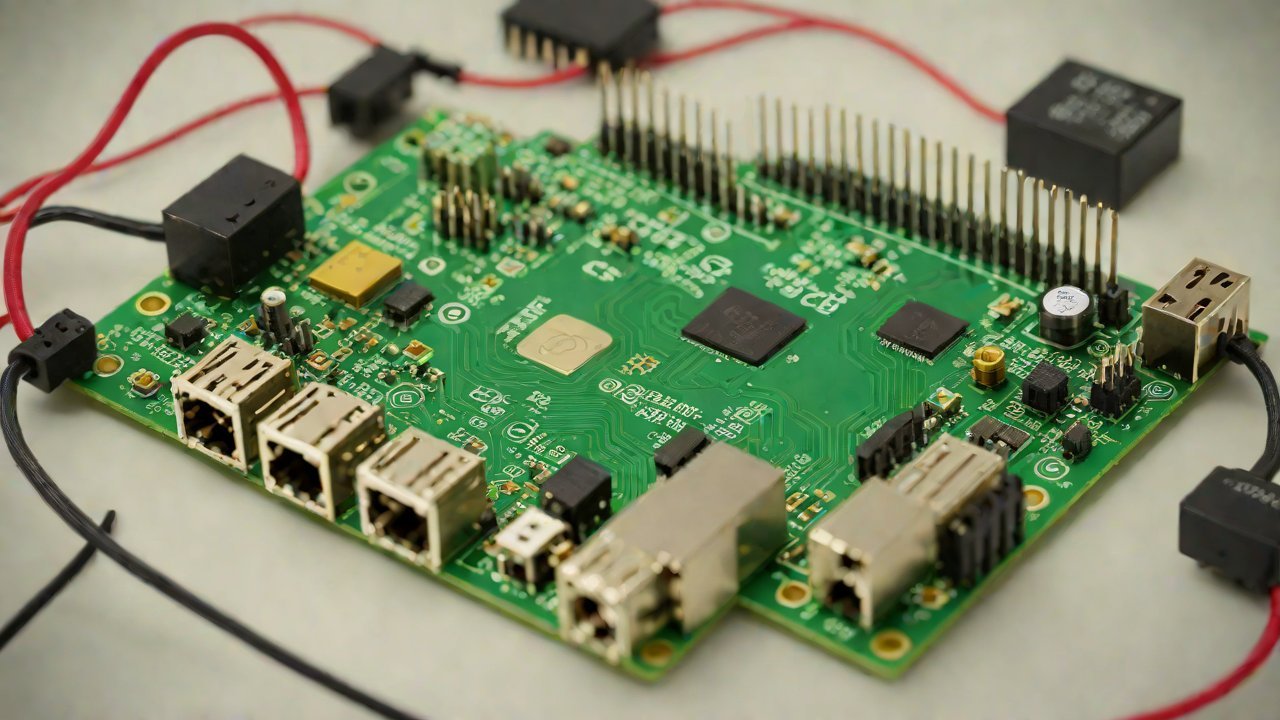
How to Solve the Electromagnetic Interference Problem Caused by Inductive Loads in Raspberry Pi GPIO Interfaces?
The electromagnetic interference (EMI) problem caused by inductive loads in Raspberry Pi GPIO interfaces is a complex issue that has puzzled many developers and engineers working with embedded systems. The widespread adoption of IoT devices, industrial automation, and other applications relying on microcontrollers like Raspberry Pi has led to an increased demand for robust and reliable solutions. However, the presence of inductive loads, such as relays, solenoids, or motors, can cause significant electromagnetic interference (EMI) that compromises the integrity of the system.
Inductive loads are a common source of EMI due to the changing magnetic fields they generate. These changing fields induce voltages and currents in nearby conductors, including the GPIO lines of microcontrollers like Raspberry Pi. The resulting electromagnetic interference can manifest as noise on digital signals, causing errors, data corruption, or even complete system failure.
The severity of the problem is further exacerbated by the increasing complexity of modern systems, which often involve multiple high-speed interfaces, wireless communication protocols, and sensitive analog circuits. In such environments, even a small amount of EMI can have catastrophic consequences.
1. Understanding Electromagnetic Interference (EMI)
EMI is the disturbance that occurs when an electromagnetic field from one device affects another device’s operation. It can be caused by various sources, including inductive loads, radiated fields, and conducted noise. In the context of Raspberry Pi GPIO interfaces, EMI can manifest as a range of problems, including:
- Noise on digital signals
- Data corruption or errors
- System crashes or failures
- Interference with wireless communication protocols
The severity of EMI depends on several factors, including:
- The strength and frequency of the electromagnetic field
- The proximity of the inductive load to the GPIO interface
- The type and sensitivity of the components involved
- The presence of shielding, grounding, or other mitigating measures
2. Causes of Electromagnetic Interference (EMI) from Inductive Loads
Inductive loads are a significant source of EMI due to their inherent properties:
- Magnetic field generation: Changing magnetic fields induce voltages and currents in nearby conductors.
- Frequency dependence: The frequency of the electromagnetic field affects its ability to penetrate or interact with other components.
- Proximity effects: The closer an inductive load is to a GPIO interface, the greater the likelihood of EMI.
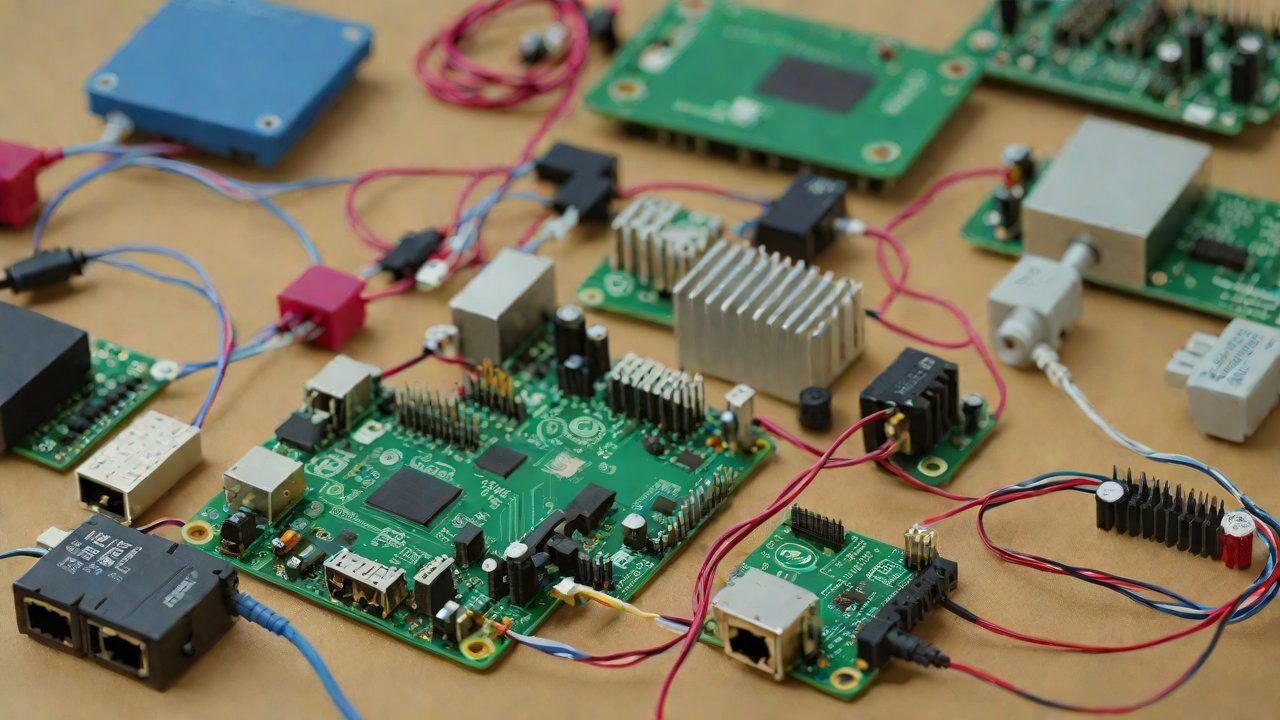
Common inductive loads that contribute to EMI include:
| Load Type | Description |
|---|---|
| Relays | Electromagnetic switches used for switching circuits on/off. |
| Solenoids | Electrical devices that convert electrical energy into mechanical motion. |
| Motors | Devices that convert electrical energy into rotational or linear motion. |
3. Effects of EMI on Raspberry Pi GPIO Interfaces
EMI can have severe consequences on the operation of Raspberry Pi GPIO interfaces:
- Digital signal degradation: Noise and interference can corrupt digital signals, leading to errors or data loss.
- System crashes: Severe EMI can cause system-wide failures, including crashes or complete shutdowns.
- Interference with wireless protocols: EMI can disrupt wireless communication protocols, such as Bluetooth, Wi-Fi, or Zigbee.
4. Mitigation Strategies for EMI from Inductive Loads
To address the EMI problem caused by inductive loads in Raspberry Pi GPIO interfaces, several mitigation strategies can be employed:
Shielding and Grounding
- Shielded cables: Use shielded cables to reduce electromagnetic field penetration.
- Grounding: Ensure proper grounding of all components to prevent voltage buildup.
Filtering and Decoupling
- EMI filters: Implement EMI filters on the GPIO interface to suppress high-frequency noise.
- Decoupling capacitors: Use decoupling capacitors to filter out high-frequency signals.
Layout and Routing
- Component placement: Place inductive loads at a safe distance from GPIO interfaces.
- Routing: Route cables and wires carefully to minimize electromagnetic field interaction.
5. Practical Solutions for EMI Mitigation
Several practical solutions can be implemented to mitigate EMI from inductive loads:
- Use of opto-isolators: Opto-isolators can provide electrical isolation between the GPIO interface and the inductive load.
- Application of ferrite beads: Ferrite beads can filter out high-frequency signals on cables and wires.
- Employment of noise-reducing materials: Noise-reducing materials, such as mu-metal or ferrite, can be used to shield components from electromagnetic fields.
6. Conclusion
The EMI problem caused by inductive loads in Raspberry Pi GPIO interfaces is a complex issue that requires careful consideration and mitigation strategies. By understanding the causes of EMI, implementing practical solutions, and employing best practices for layout and routing, developers and engineers can ensure robust and reliable operation of their systems.
7. Recommendations
Based on this analysis, we recommend:
- Conduct thorough electromagnetic compatibility (EMC) testing to identify potential EMI issues.
- Implement shielding and grounding measures to reduce electromagnetic field penetration.
- Use filtering and decoupling techniques to suppress high-frequency noise.
- Employ practical solutions, such as opto-isolators or ferrite beads, to mitigate EMI.
IOT Cloud Platform
IOT Cloud Platform is an IoT portal established by a Chinese IoT company, focusing on technical solutions in the fields of agricultural IoT, industrial IoT, medical IoT, security IoT, military IoT, meteorological IoT, consumer IoT, automotive IoT, commercial IoT, infrastructure IoT, smart warehousing and logistics, smart home, smart city, smart healthcare, smart lighting, etc.
The IoT Cloud Platform blog is a top IoT technology stack, providing technical knowledge on IoT, robotics, artificial intelligence (generative artificial intelligence AIGC), edge computing, AR/VR, cloud computing, quantum computing, blockchain, smart surveillance cameras, drones, RFID tags, gateways, GPS, 3D printing, 4D printing, autonomous driving, etc.