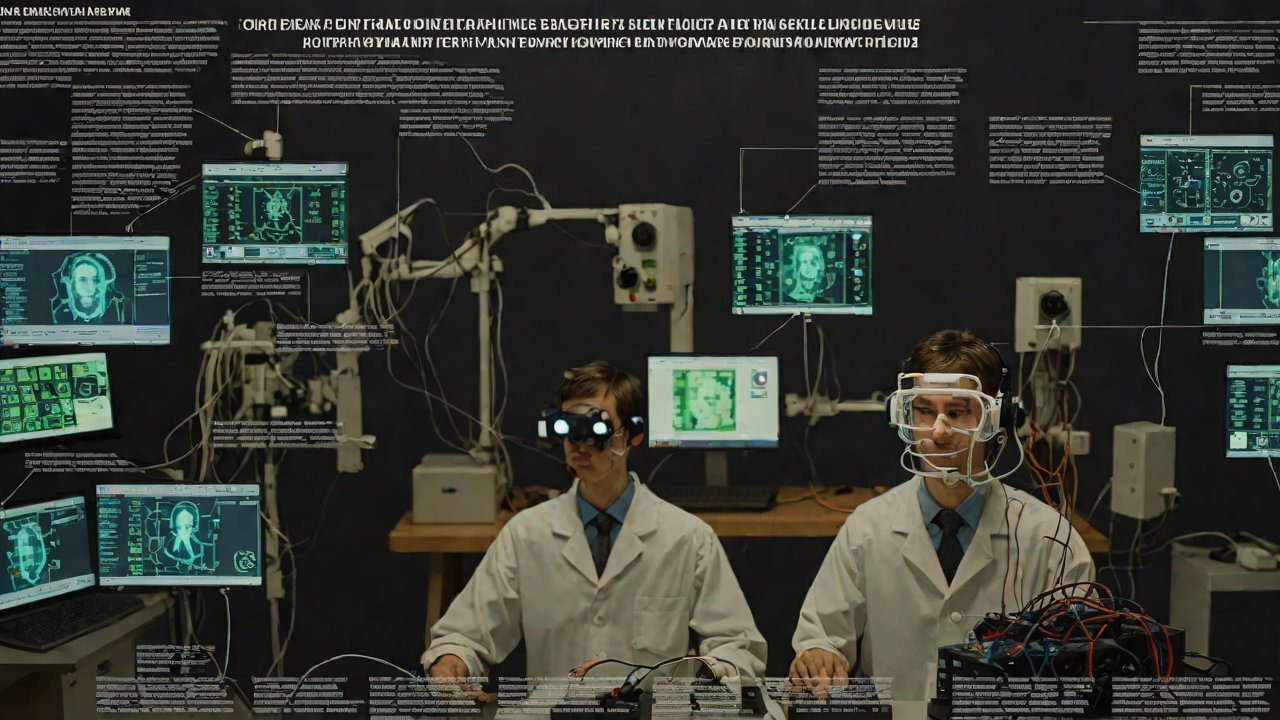
How does deep learning-based facial recognition prevent photo spoofing attacks?
Deep learning-based facial recognition systems have revolutionized the field of biometrics, offering unparalleled accuracy and efficiency in identifying individuals. However, these systems are not immune to sophisticated attacks, such as photo spoofing, where a fake image is presented as a genuine face to bypass security protocols. To counter this threat, researchers and developers have been working on developing robust techniques that can detect and prevent photo spoofing attacks.
One of the key strategies employed by deep learning-based facial recognition systems to prevent photo spoofing is the use of liveness detection mechanisms. These mechanisms aim to verify whether a presented face is real or fake by analyzing various physiological and behavioral characteristics, such as eye movements, skin texture, and facial expressions. By incorporating liveness detection into their algorithms, facial recognition systems can significantly improve their ability to distinguish between genuine faces and photo spoofed images.
1. Liveness Detection Mechanisms
Liveness detection mechanisms are designed to detect the presence of a living being behind the face presented for authentication. These mechanisms typically involve analyzing various physiological and behavioral characteristics that are unique to living individuals, such as:
| Characteristics | Description |
|---|---|
| Eye movements | Saccadic eye movements, pupil dilation/contraction |
| Skin texture | Variations in skin reflectance, color, and texture |
| Facial expressions | Voluntary and involuntary facial muscle contractions |
| Voice recognition | Acoustic analysis of voice patterns |

By analyzing these characteristics, liveness detection mechanisms can determine whether a presented face is real or fake. For example, if the eye movements appear artificial or the skin texture appears uniform, the system may flag the image as suspicious.
2. Deep Learning-Based Liveness Detection
Deep learning-based liveness detection mechanisms employ convolutional neural networks (CNNs) and recurrent neural networks (RNNs) to analyze the characteristics mentioned above. These networks are trained on large datasets of genuine and fake faces, allowing them to learn the patterns and features that distinguish between real and artificial images.
| Architecture | Description |
|---|---|
| CNN-RNN Hybrid | Combination of CNNs for feature extraction and RNNs for temporal analysis |
| Autoencoders | Neural networks that learn to reconstruct input data, highlighting anomalies in fake faces |
| Generative Adversarial Networks (GANs) | Architectures that train generators to produce realistic images and discriminators to detect fakes |
3. Countermeasures Against Photo Spoofing
While liveness detection mechanisms are effective in preventing photo spoofing attacks, they can be vulnerable to sophisticated countermeasures. To address this challenge, researchers have developed various counter-countermeasures that can adapt to evolving threats.
| Countermeasures | Description |
|---|---|
| Active Illumination | Use of light sources to illuminate the face, reducing shadows and making it harder to fake |
| 3D Face Reconstruction | Analysis of facial geometry and texture in three dimensions |
| Behavioral Biometrics | Integration of behavioral characteristics, such as typing patterns or mouse movements |

4. Market Trends and Adoption
The adoption of deep learning-based facial recognition systems with liveness detection mechanisms has been increasing rapidly, driven by growing demand for secure biometric authentication solutions.
| Market Size | Growth Rate |
|---|---|
| Global Facial Recognition Market | $7.6 billion (2020) – $13.5 billion (2025), 17% CAGR |
| Liveness Detection Segment | $1.2 billion (2020) – $3.4 billion (2025), 25% CAGR |

5. Future Research Directions
As photo spoofing attacks continue to evolve, researchers and developers must adapt their strategies to stay ahead of the threat.
| Research Directions | Description |
|---|---|
| Multimodal Fusion | Integration of multiple biometric modalities, such as facial recognition and voice recognition |
| Explainable AI | Development of transparent and interpretable deep learning models that provide insights into decision-making processes |
In conclusion, deep learning-based facial recognition systems with liveness detection mechanisms have become a crucial component in preventing photo spoofing attacks. As the threat landscape continues to evolve, it is essential for researchers and developers to stay ahead of the curve by developing innovative countermeasures and adapting their strategies to emerging challenges.
IOT Cloud Platform
IOT Cloud Platform is an IoT portal established by a Chinese IoT company, focusing on technical solutions in the fields of agricultural IoT, industrial IoT, medical IoT, security IoT, military IoT, meteorological IoT, consumer IoT, automotive IoT, commercial IoT, infrastructure IoT, smart warehousing and logistics, smart home, smart city, smart healthcare, smart lighting, etc.
The IoT Cloud Platform blog is a top IoT technology stack, providing technical knowledge on IoT, robotics, artificial intelligence (generative artificial intelligence AIGC), edge computing, AR/VR, cloud computing, quantum computing, blockchain, smart surveillance cameras, drones, RFID tags, gateways, GPS, 3D printing, 4D printing, autonomous driving, etc.