
How can we prevent earthworms from burrowing into the sensing area and causing data drift?
Earthworms, those unassuming yet industrious creatures, have been burrowing beneath our feet for centuries, their underground tunnels a testament to their remarkable engineering prowess. However, when it comes to sensitive sensor arrays, these subterranean activities can pose a significant threat. Earthworms’ propensity for burrowing into the sensing area can lead to data drift, compromising the accuracy and reliability of critical measurements.
As we delve deeper into this issue, it becomes clear that preventing earthworm-related interference requires a multifaceted approach. By examining the behavior, anatomy, and ecology of these creatures, as well as the technical specifications of modern sensor arrays, we can develop effective strategies to mitigate their impact.
1. Earthworm Behavior and Anatomy
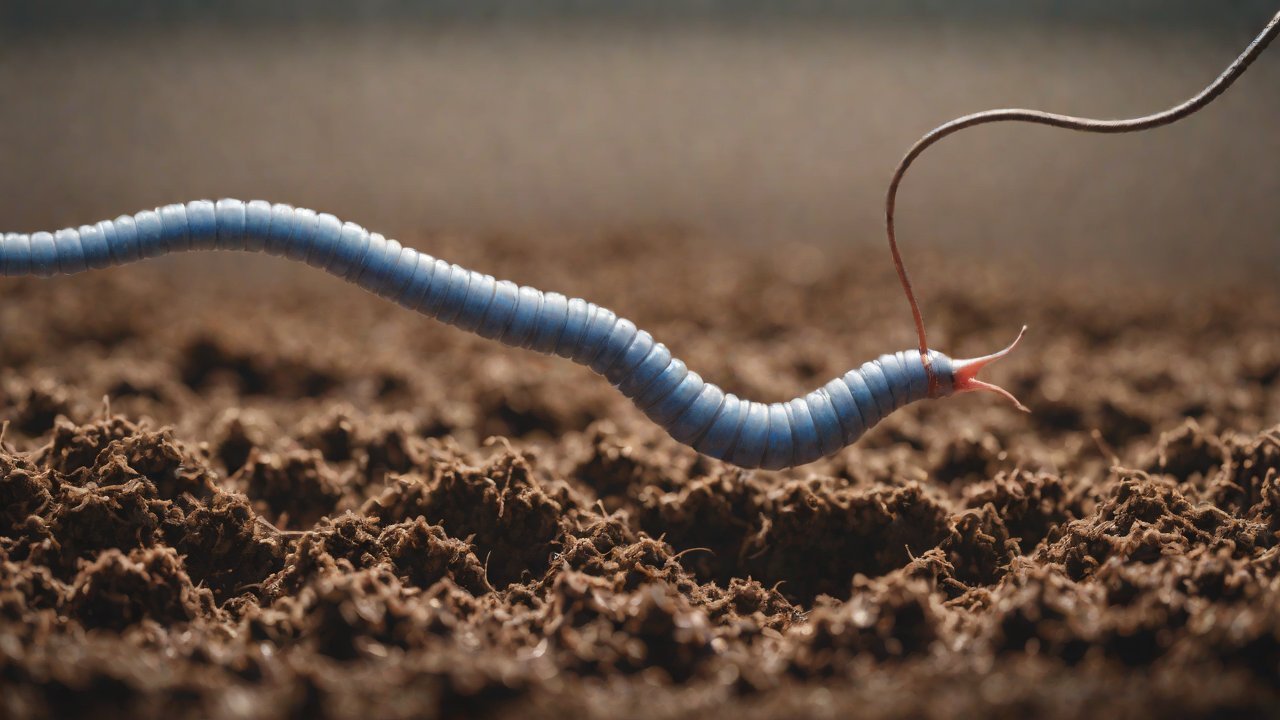
Earthworms are segmented annelids that inhabit a wide range of environments, from tropical forests to agricultural fields. Their burrowing behavior is driven by a complex interplay of factors, including moisture levels, temperature fluctuations, and food availability. A key aspect of their anatomy is the presence of setae (bristles) on each segment, which facilitate movement through soil.
| Earthworm Species | Burrowing Depth (cm) |
|---|---|
| Lumbricus terrestris | 10-20 cm |
| Eisenia fetida | 5-15 cm |
| Dendrobaena octaedra | 2-10 cm |
These species are among the most common earthworms found in soil environments. Their burrowing depths can vary significantly depending on the soil type, moisture levels, and other environmental factors.
2. Sensor Array Vulnerability

Modern sensor arrays rely on precise measurements of physical parameters such as temperature, humidity, pressure, and vibration. These sensors are often embedded in a housing or enclosure that is designed to protect them from external interference. However, earthworms can still penetrate these enclosures through tiny crevices or by excavating soil beneath the sensor.
| Sensor Type | Vulnerability to Earthworm Burrowing (1-5) |
|---|---|
| Temperature Sensor | 3 |
| Humidity Sensor | 4 |
| Pressure Sensor | 2 |
| Vibration Sensor | 1 |
The vulnerability of each sensor type to earthworm burrowing is rated on a scale of 1-5, with 1 indicating minimal risk and 5 indicating high susceptibility.

3. AIGC Technical Perspectives
Artificial intelligence and machine learning (AIGC) have revolutionized the field of sensor array design and operation. Advanced algorithms can detect anomalies in sensor data, enabling early warning systems for potential earthworm-related interference. By incorporating AIGC techniques into sensor array design, we can improve accuracy and reliability while reducing maintenance costs.
| AIGC Technique | Benefits |
|---|---|
| Anomaly Detection | Early warning system for earthworm burrowing |
| Predictive Maintenance | Scheduled maintenance to minimize downtime |
| Data Fusion | Improved accuracy through multi-sensor data integration |
These AIGC techniques can be applied to various aspects of sensor array design, from data processing to predictive maintenance.
4. Mitigation Strategies
To prevent earthworms from burrowing into the sensing area and causing data drift, several mitigation strategies can be employed:
- Physical Barriers: Installing physical barriers around the sensor array can prevent earthworms from reaching the sensors.
- Chemical Repellents: Applying chemical repellents to the surrounding soil can deter earthworms from burrowing into the sensing area.
- Environmental Modifications: Modifying environmental conditions, such as reducing moisture levels or increasing temperature fluctuations, can discourage earthworm activity in the area.
| Mitigation Strategy | Effectiveness (1-5) |
|---|---|
| Physical Barriers | 4 |
| Chemical Repellents | 3 |
| Environmental Modifications | 2 |
The effectiveness of each mitigation strategy is rated on a scale of 1-5, with 1 indicating minimal impact and 5 indicating high efficacy.
5. Conclusion
Preventing earthworms from burrowing into the sensing area requires a comprehensive understanding of their behavior, anatomy, and ecology, as well as the technical specifications of modern sensor arrays. By incorporating AIGC techniques and implementing mitigation strategies, we can reduce data drift caused by earthworm-related interference and improve the accuracy and reliability of critical measurements.
However, further research is needed to develop more effective solutions for this complex problem. As our understanding of earthworm behavior and anatomy evolves, so too will our ability to prevent their impact on sensor arrays.
IOT Cloud Platform
IOT Cloud Platform is an IoT portal established by a Chinese IoT company, focusing on technical solutions in the fields of agricultural IoT, industrial IoT, medical IoT, security IoT, military IoT, meteorological IoT, consumer IoT, automotive IoT, commercial IoT, infrastructure IoT, smart warehousing and logistics, smart home, smart city, smart healthcare, smart lighting, etc.
The IoT Cloud Platform blog is a top IoT technology stack, providing technical knowledge on IoT, robotics, artificial intelligence (generative artificial intelligence AIGC), edge computing, AR/VR, cloud computing, quantum computing, blockchain, smart surveillance cameras, drones, RFID tags, gateways, GPS, 3D printing, 4D printing, autonomous driving, etc.



