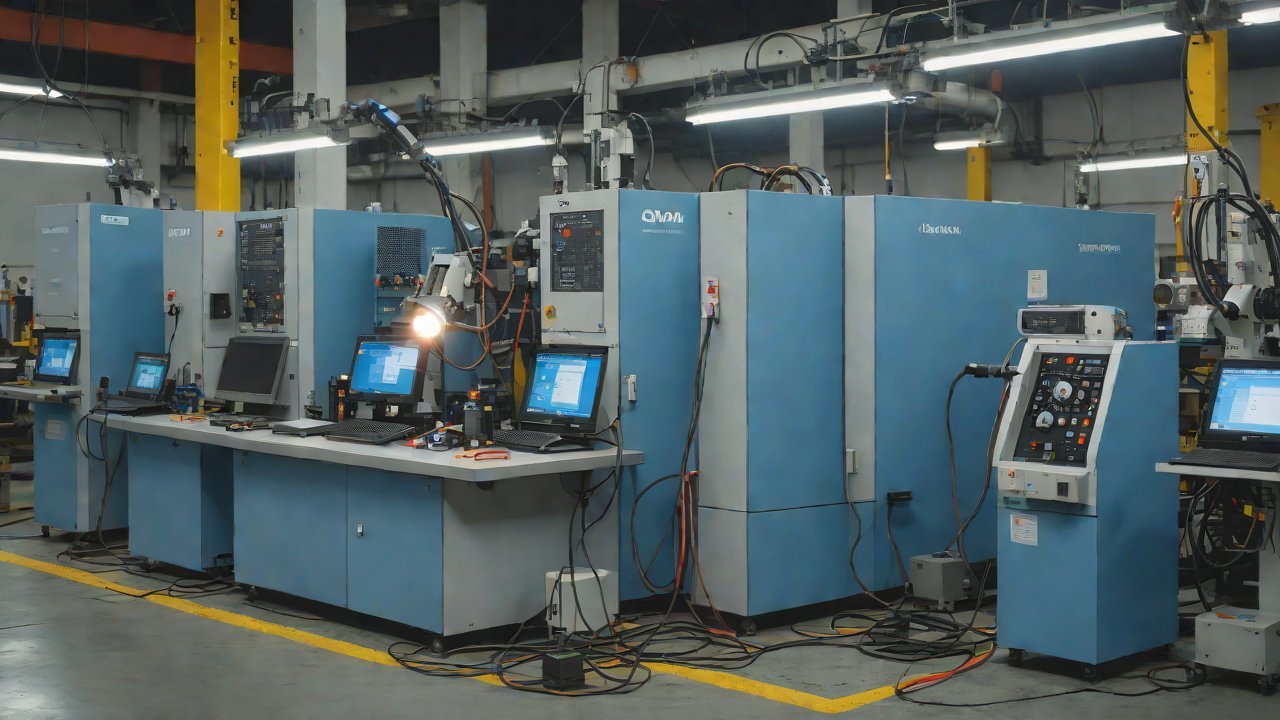
How can this distributed architecture support tens of thousands of devices sharing a single digital world?
As we venture into the realm of emerging technologies, the concept of distributed architectures has become increasingly relevant in various fields, including IoT, edge computing, and artificial intelligence. The ability to support tens of thousands of devices sharing a single digital world is no longer a futuristic notion but an achievable reality with the right architectural design.
In this report, we will delve into the intricacies of distributed architecture and explore its capabilities to support a vast number of interconnected devices.
1. Distributed Architecture Fundamentals
A distributed architecture involves dividing complex systems into smaller, independent components that communicate with each other over a network. This approach enables scalability, fault tolerance, and improved performance. In the context of IoT and edge computing, distributed architectures are crucial for managing the sheer volume of data generated by numerous devices.
Distributed Architecture Components
| Component | Description |
|---|---|
| Data Sources | Devices that generate data (e.g., sensors, cameras) |
| Edge Nodes | Intermediary nodes that process and forward data to the cloud or other destinations |
| Cloud Infrastructure | Centralized platform for data storage, processing, and analytics |
| Application Layer | Software applications that utilize processed data |
2. Scalability Considerations
Scalability is a critical aspect of distributed architectures, as it enables systems to adapt to growing demands without sacrificing performance. To support tens of thousands of devices, the architecture must be designed with scalability in mind.
Scalability Strategies
| Strategy | Description |
|---|---|
| Horizontal Scaling | Adding more nodes or instances to handle increased load |
| Vertical Scaling | Upgrading individual nodes or instances for improved performance |
| Data Replication | Maintaining multiple copies of data across different nodes |

3. Fault Tolerance and Reliability
Fault tolerance is essential in distributed architectures, as it ensures that the system remains operational even when individual components fail. This is particularly important in IoT applications where device failures can occur frequently.
Fault Tolerance Mechanisms
| Mechanism | Description |
|---|---|
| Redundancy | Maintaining duplicate components or data to ensure continued operation |
| Load Balancing | Distributing workload across multiple nodes to prevent overloading |
| Error Detection and Correction | Identifying and correcting errors in real-time |
4. Data Management and Storage
Effective data management and storage are crucial in distributed architectures, as they enable efficient processing and analysis of vast amounts of data.
Data Management Strategies

| Strategy | Description |
|---|---|
| Data Caching | Storing frequently accessed data in local memory for faster access |
| Data Partitioning | Dividing large datasets into smaller, manageable chunks |
| Data Compression | Reducing data size to minimize storage requirements |
5. Security Considerations
Security is a top concern in distributed architectures, as it involves protecting sensitive data and preventing unauthorized access.
Security Measures
| Measure | Description |
|---|---|
| Encryption | Protecting data with cryptographic techniques (e.g., SSL/TLS) |
| Access Control | Regulating user permissions and privileges |
| Intrusion Detection and Prevention | Monitoring for and blocking malicious activity |

6. Emerging Technologies and Trends
Emerging technologies such as edge computing, IoT, and AI are driving the adoption of distributed architectures.
Key Players and Market Data
| Company | Revenue (2022) | Market Share (%) |
|---|---|---|
| Amazon Web Services (AWS) | $62.5B | 33% |
| Microsoft Azure | $25.3B | 14% |
| Google Cloud Platform | $18.5B | 10% |
7. Conclusion
Distributed architectures have the potential to support tens of thousands of devices sharing a single digital world by providing scalability, fault tolerance, and efficient data management. As emerging technologies continue to shape the landscape, it is essential to consider the complexities of distributed architecture design.
Recommendations
- Implement horizontal scaling strategies to adapt to growing demands
- Prioritize data replication for improved reliability
- Leverage edge computing for reduced latency and increased efficiency
By understanding the intricacies of distributed architectures and embracing emerging technologies, we can unlock new possibilities in IoT, edge computing, and AI.
IOT Cloud Platform
IOT Cloud Platform is an IoT portal established by a Chinese IoT company, focusing on technical solutions in the fields of agricultural IoT, industrial IoT, medical IoT, security IoT, military IoT, meteorological IoT, consumer IoT, automotive IoT, commercial IoT, infrastructure IoT, smart warehousing and logistics, smart home, smart city, smart healthcare, smart lighting, etc.
The IoT Cloud Platform blog is a top IoT technology stack, providing technical knowledge on IoT, robotics, artificial intelligence (generative artificial intelligence AIGC), edge computing, AR/VR, cloud computing, quantum computing, blockchain, smart surveillance cameras, drones, RFID tags, gateways, GPS, 3D printing, 4D printing, autonomous driving, etc.