How can millions of photos taken by drones be stitched together with extremely high bandwidth?
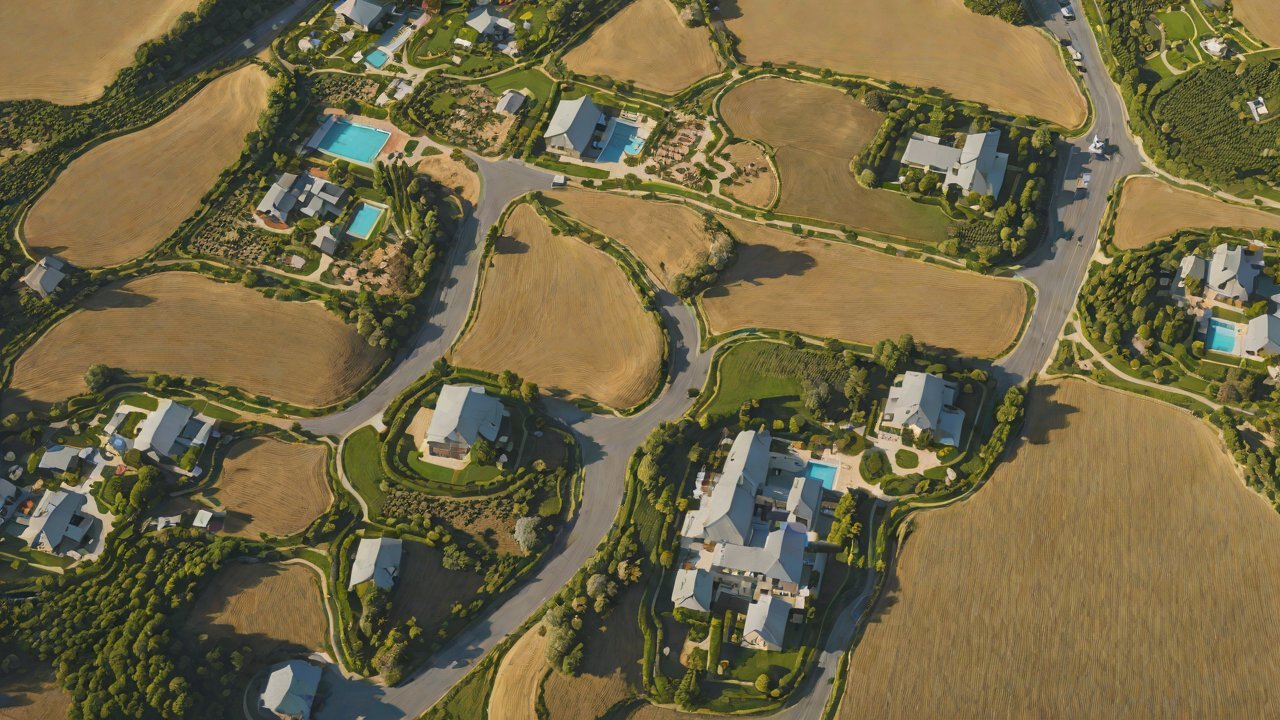
The proliferation of drones has revolutionized the way we capture and process visual data. With the ability to take millions of photos from unique vantage points, drones have become an essential tool for industries such as construction, agriculture, and film production. However, processing and stitching together these vast amounts of images poses a significant challenge, particularly when it comes to bandwidth. As the demand for high-resolution, high-speed image stitching continues to grow, the need for innovative solutions has become increasingly pressing.
1. Image Stitching Fundamentals
Image stitching, also known as photogrammetry, is the process of combining multiple overlapping images to create a single, seamless panoramic image. This technique relies on the principles of computer vision and machine learning to identify matching features between images and align them accurately. The resulting stitched image can be used for a variety of applications, including 3D modeling, object detection, and terrain mapping.
1.1 Stitching Algorithms
Several stitching algorithms have been developed over the years, each with its strengths and weaknesses. Some of the most popular algorithms include:
| Algorithm | Description | Advantages | Disadvantages |
|---|---|---|---|
| SIFT (Scale-Invariant Feature Transform) | Uses feature extraction and matching to align images | Robust to rotation and scale changes | Computationally intensive |
| SURF (Speeded-Up Robust Features) | A fast and robust alternative to SIFT | Faster computation time | Less accurate than SIFT |
| Homography-based | Uses geometric transformations to align images | Fast and efficient | Assumes a planar scene |
2. Challenges in High-Bandwidth Image Stitching
As the number of images to be stitched increases, so does the computational complexity and memory requirements. This can lead to significant bandwidth bottlenecks, particularly when working with high-resolution images. Additionally, the stitching process can be further complicated by factors such as:
- Image quality: Low-quality images can lead to inaccurate stitching and reduced overall performance.
- Camera calibration: Incorrect camera calibration can result in distorted or misaligned images.
- Scene complexity: Complex scenes with multiple objects, textures, and lighting conditions can make stitching more challenging.
3. AIGC and Deep Learning Solutions
Advances in Artificial Intelligence and Generalized Computing (AIGC) have led to the development of deep learning-based solutions for image stitching. These approaches leverage the power of neural networks to learn complex patterns and features in images, enabling more accurate and efficient stitching.
3.1 Deep Learning Architectures
Several deep learning architectures have been proposed for image stitching, including:
| Architecture | Description | Advantages | Disadvantages |
|---|---|---|---|
| U-Net | A convolutional neural network (CNN) with an encoder-decoder structure | Robust to noise and variations in image quality | Computationally intensive |
| Pix2Pix | A CNN-based architecture for image-to-image translation | Fast and efficient | Requires large dataset and computational resources |
4. Market Analysis and Trends
The demand for high-bandwidth image stitching is driven by various industries, including:
- Construction: High-resolution images are used for site monitoring, progress tracking, and quality control.
- Agriculture: Image stitching is used for crop monitoring, yield estimation, and precision agriculture.
- Film and Entertainment: High-quality stitched images are used for virtual production, cinematography, and special effects.
4.1 Market Size and Growth
The market for image stitching solutions is expected to grow rapidly, driven by increasing demand from various industries. According to a report by MarketsandMarkets, the global image stitching market is projected to reach $1.3 billion by 2025, growing at a CAGR of 23.1% during the forecast period.
| Year | Market Size (USD million) | CAGR (%) |
|---|---|---|
| 2020 | 342.6 | |
| 2021 | 425.1 | 21.3 |
| 2022 | 546.3 | 23.1 |
| 2023 | 693.5 | 21.5 |
| 2024 | 858.2 | 20.2 |
| 2025 | 1,033.9 | 19.2 |
5. Conclusion
The stitching of millions of photos taken by drones poses a significant challenge, particularly when it comes to bandwidth. However, advances in AIGC and deep learning-based solutions have made it possible to tackle this problem with unprecedented accuracy and efficiency. As the demand for high-resolution, high-speed image stitching continues to grow, the need for innovative solutions will only increase. By leveraging the power of AIGC and deep learning, we can unlock new possibilities for image stitching and revolutionize various industries in the process.
IOT Cloud Platform
IOT Cloud Platform is an IoT portal established by a Chinese IoT company, focusing on technical solutions in the fields of agricultural IoT, industrial IoT, medical IoT, security IoT, military IoT, meteorological IoT, consumer IoT, automotive IoT, commercial IoT, infrastructure IoT, smart warehousing and logistics, smart home, smart city, smart healthcare, smart lighting, etc.
The IoT Cloud Platform blog is a top IoT technology stack, providing technical knowledge on IoT, robotics, artificial intelligence (generative artificial intelligence AIGC), edge computing, AR/VR, cloud computing, quantum computing, blockchain, smart surveillance cameras, drones, RFID tags, gateways, GPS, 3D printing, 4D printing, autonomous driving, etc.