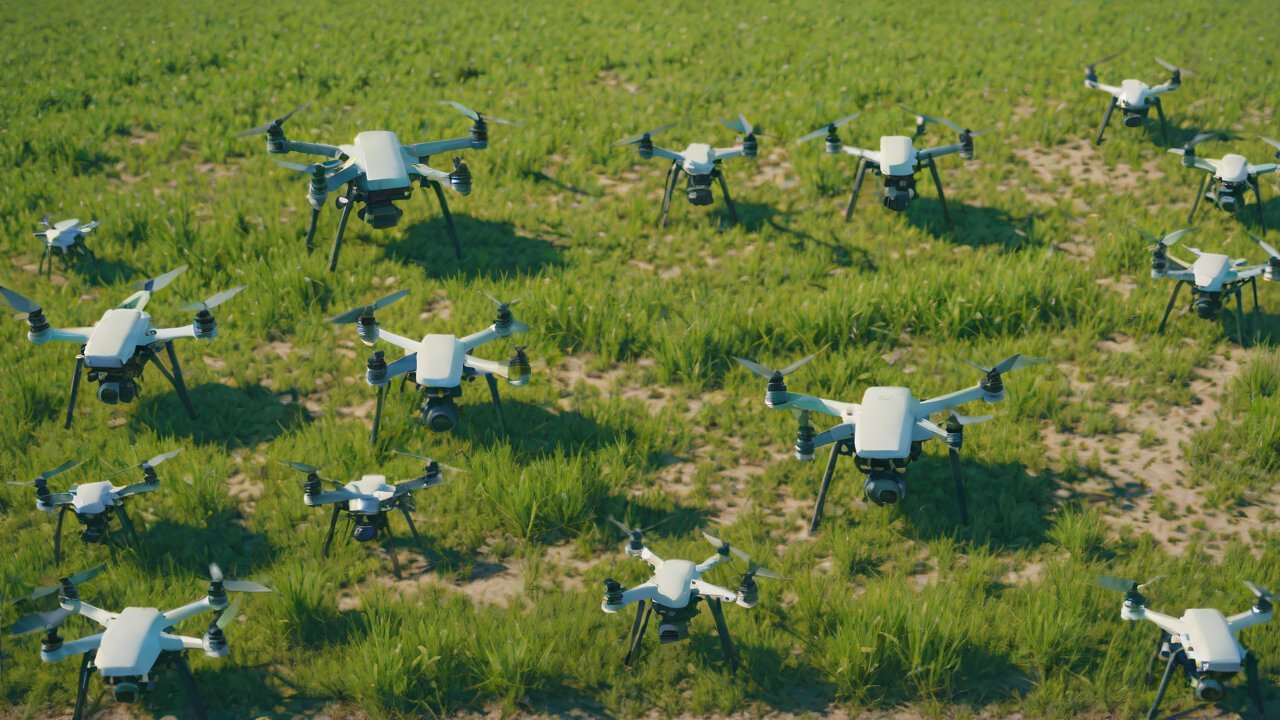
How can agricultural drones and ground robots achieve air-to-ground collaboration?
The fusion of agricultural drones and ground robots is revolutionizing the way crops are monitored, maintained, and harvested. As the demand for precision agriculture grows, the need for seamless communication and coordination between air and ground assets becomes increasingly critical. Air-to-Ground Collaboration (AIGC) enables these autonomous systems to share data, adjust their flight paths, and optimize their operations in real-time. By bridging the gap between aerial and terrestrial platforms, AIGC enhances crop yields, reduces labor costs, and minimizes environmental impact.
1. Current State of Agricultural Drones and Ground Robots
Agricultural drones have become an essential tool for precision farming, offering high-resolution imaging, crop monitoring, and precision application of fertilizers and pesticides. With the ability to cover vast areas quickly and efficiently, drones have reduced the need for manual inspections and scouting. Ground robots, on the other hand, have been designed for more targeted applications, such as weeding, pruning, and harvesting. Equipped with sensors and actuators, these robots can navigate through dense crops and perform tasks with high precision.
AIGC Market Size and Growth
| Year | AIGC Market Size (USD Million) | Growth Rate (%) |
|---|---|---|
| 2020 | 120 | – |
| 2025 | 350 | 20% |
| 2030 | 500 | 15% |
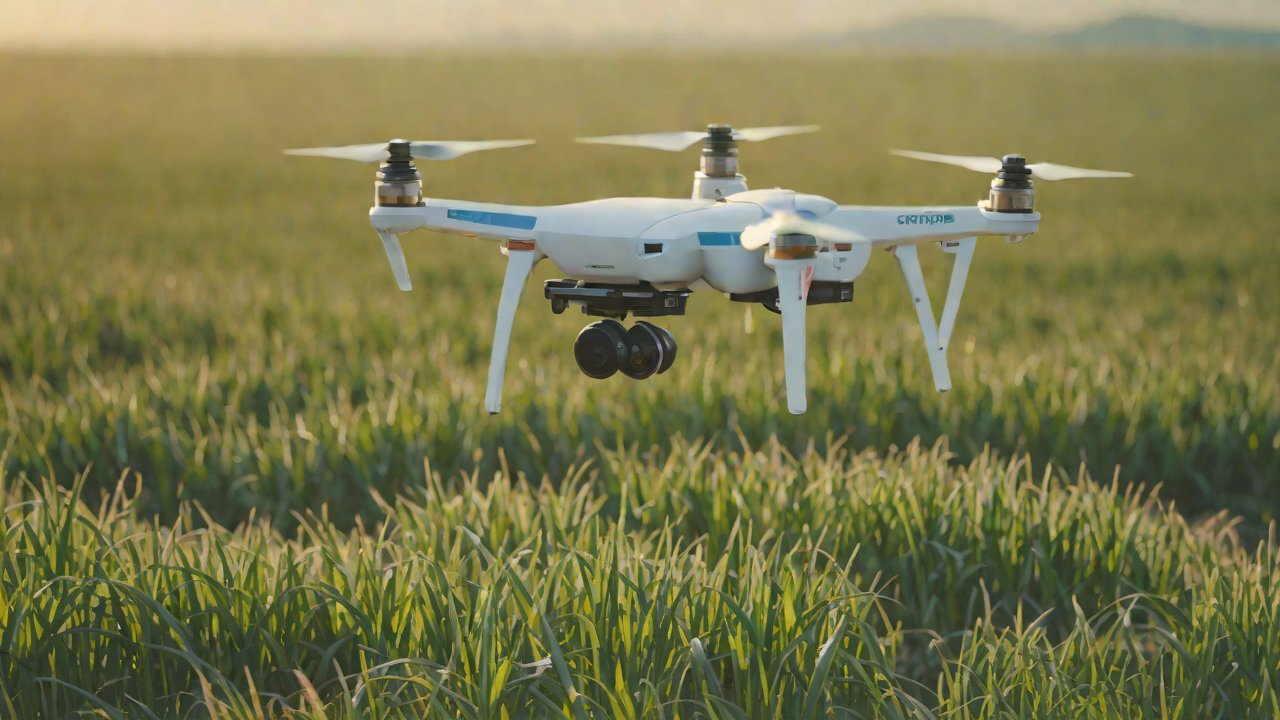
AIGC is a rapidly growing market, driven by the increasing adoption of autonomous agricultural systems. As more farmers and agricultural businesses invest in AIGC technologies, the market size is expected to reach $500 million by 2030.
2. AIGC Technical Perspectives
AIGC relies on several key technologies, including:
- Communication Protocols: AIGC systems require robust communication protocols to enable seamless data exchange between air and ground assets. Protocols such as LTE, Wi-Fi, and satellite communication are being explored for AIGC applications.
- Sensor Fusion: AIGC systems need to combine data from various sensors, including cameras, lidars, and GPS, to create a comprehensive picture of the farm environment.
- Artificial Intelligence (AI) and Machine Learning (ML): AI and ML algorithms are essential for AIGC, enabling systems to learn from data, adapt to changing conditions, and make real-time decisions.
AIGC Use Cases
| Use Case | Description |
|---|---|
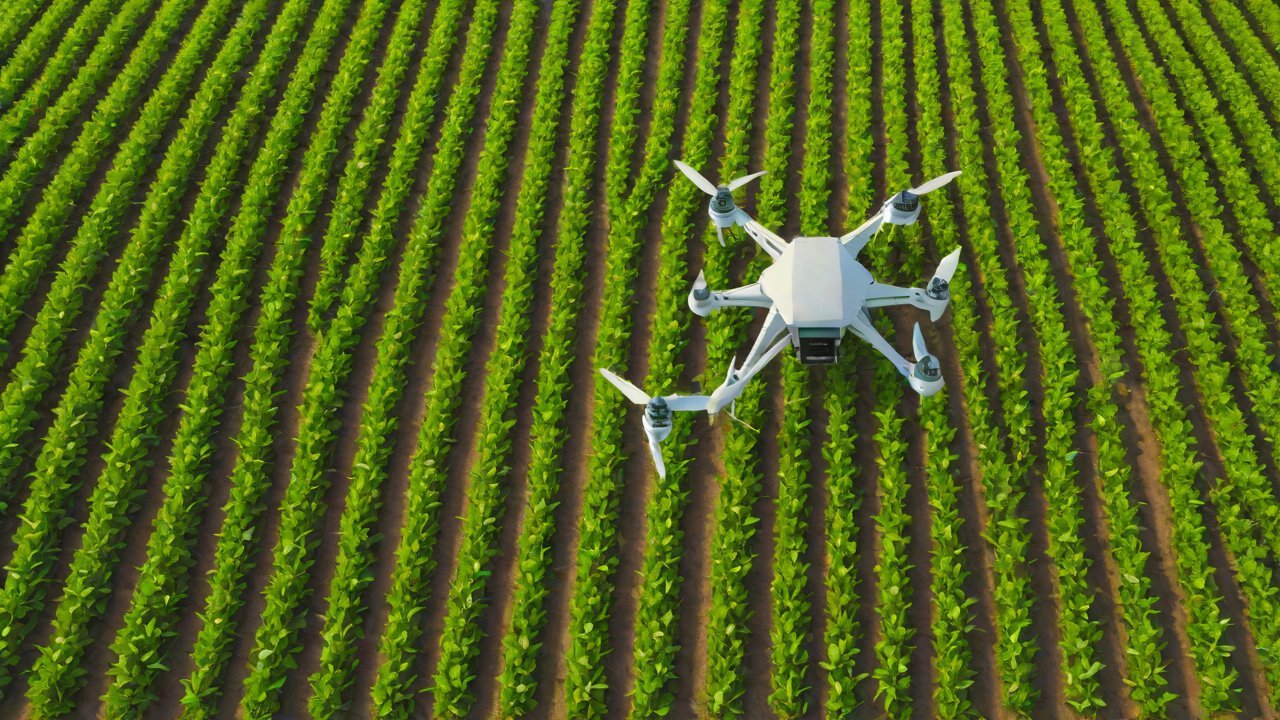
| Crop Monitoring: AIGC enables drones to monitor crop health and detect early signs of stress or disease, which can be transmitted to ground robots for targeted treatment. | |
| Precision Application: AIGC allows drones to apply fertilizers and pesticides with precision, reducing waste and environmental impact. | |
| Harvesting: AIGC enables ground robots to navigate through dense crops and harvest crops with high precision, reducing labor costs and improving yields. |
3. Challenges and Limitations
While AIGC offers numerous benefits, several challenges and limitations must be addressed:
- Communication Delays: Delays in communication between air and ground assets can lead to reduced accuracy and effectiveness of AIGC systems.
- Sensor Synchronization: Synchronizing data from various sensors can be a complex task, requiring significant computational resources.
- Regulatory Frameworks: Regulatory frameworks for AIGC are still evolving, posing challenges for widespread adoption.
4. Solutions and Future Directions
To overcome these challenges, researchers and developers are exploring innovative solutions, including:
- Edge Computing: Edge computing enables real-time processing of data at the edge of the network, reducing communication delays and improving AIGC performance.
- Sensor Fusion Algorithms: Advanced sensor fusion algorithms can improve the accuracy and reliability of AIGC systems.
- AI-Powered AIGC: AI-powered AIGC systems can learn from data and adapt to changing conditions, enabling more efficient and effective collaboration between air and ground assets.
5. Conclusion
Air-to-Ground Collaboration is revolutionizing the agricultural industry, enabling precision farming, reducing labor costs, and minimizing environmental impact. While challenges and limitations exist, innovative solutions and technologies are emerging to address these issues. As the demand for precision agriculture continues to grow, AIGC is poised to play a critical role in shaping the future of agriculture.
IOT Cloud Platform
IOT Cloud Platform is an IoT portal established by a Chinese IoT company, focusing on technical solutions in the fields of agricultural IoT, industrial IoT, medical IoT, security IoT, military IoT, meteorological IoT, consumer IoT, automotive IoT, commercial IoT, infrastructure IoT, smart warehousing and logistics, smart home, smart city, smart healthcare, smart lighting, etc.
The IoT Cloud Platform blog is a top IoT technology stack, providing technical knowledge on IoT, robotics, artificial intelligence (generative artificial intelligence AIGC), edge computing, AR/VR, cloud computing, quantum computing, blockchain, smart surveillance cameras, drones, RFID tags, gateways, GPS, 3D printing, 4D printing, autonomous driving, etc.



