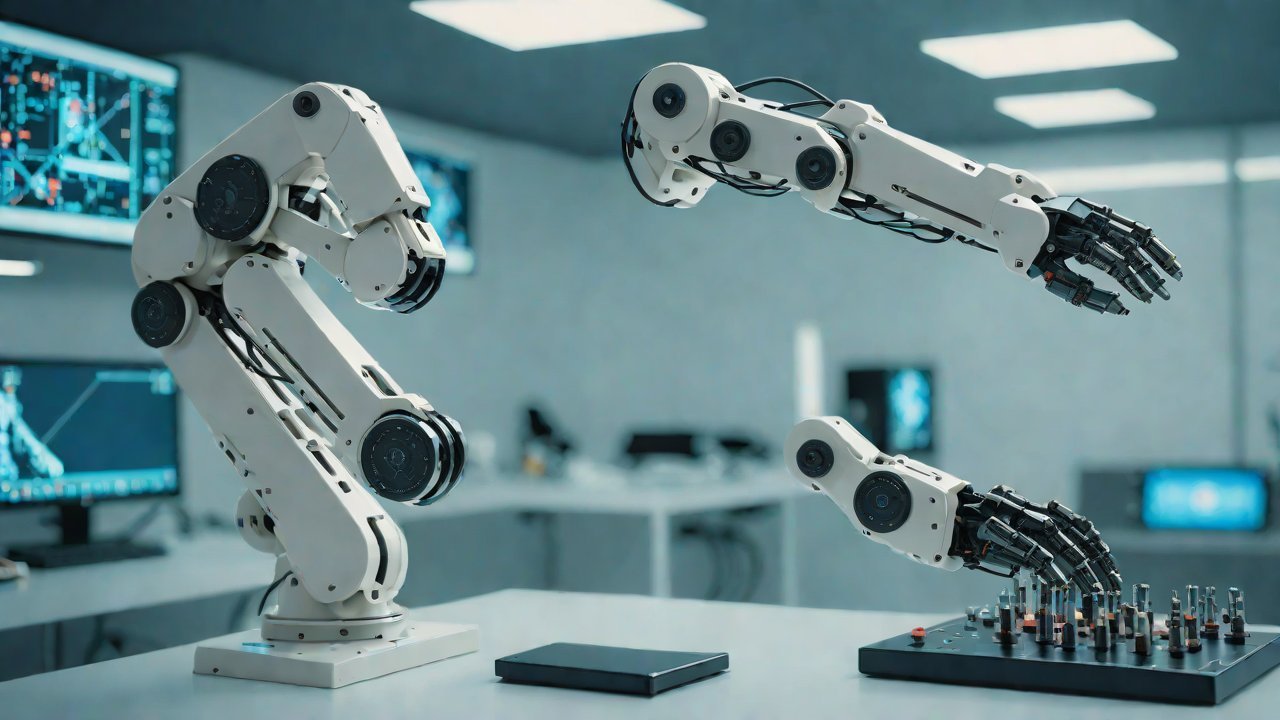
Haptic Internet: Ultra-Low Latency Remote Precision Control
The concept of a “haptic internet” is often associated with the idea of immersive and interactive experiences, where users can feel as if they are physically present in a virtual environment. However, this vision is not limited to entertainment alone; it has far-reaching implications for various industries, including manufacturing, healthcare, and education. The development of ultra-low latency remote precision control technologies has made significant strides in recent years, enabling real-time interaction between humans and machines across vast distances.
The haptic internet represents a fundamental shift in the way we interact with digital systems, from a focus on visual and auditory cues to a more direct, intuitive experience that leverages our sense of touch. This paradigmatic change is driven by advances in fields such as artificial intelligence (AI), machine learning (ML), and the Internet of Things (IoT). As these technologies converge, we are witnessing the emergence of novel applications that blur the boundaries between the physical and virtual worlds.
The ultra-low latency aspect of remote precision control is critical to achieving seamless interaction. Traditional internet protocols often introduce significant delays due to packet transmission times, network congestion, and processing overhead. However, with the advent of edge computing, 5G networks, and specialized hardware, it is now possible to reduce latency to levels that are imperceptible to human perception.
This report will delve into the technical, economic, and societal implications of haptic internet technologies, focusing on ultra-low latency remote precision control applications. We will explore use cases across various industries, examine market trends and forecasts, and discuss the competitive landscape. Finally, we will provide an assessment of the potential impact on future technological developments and societal transformations.
1. Technical Overview
Haptic Feedback Systems
Haptic feedback systems are designed to simulate tactile sensations in real-time, allowing users to interact with digital environments as if they were physically present. These systems typically employ actuators, sensors, and controllers to generate forces, vibrations, or motions that mimic the sensation of touch.
| Technology | Description |
|---|---|
| Electromagnetic Actuators (EMA) | Use electromagnetic fields to create force and motion |
| Piezoelectric Actuators (PA) | Employ piezoelectric materials to generate high-frequency vibrations |
Ultra-Low Latency Communication Protocols
Ultra-low latency communication protocols are essential for achieving real-time interaction in haptic internet applications. These protocols often rely on specialized networking technologies, such as:
| Protocol | Description |
|---|---|
| Time-Sensitive Networking (TSN) | Ensures predictable and low-latency data transmission |
| Deterministic Ethernet | Provides guaranteed latency and throughput |
Edge Computing and 5G Networks
Edge computing and 5G networks play a crucial role in reducing latency by processing data closer to the user and providing high-speed connectivity.
| Technology | Description |
|---|---|
| Edge Computing | Processes data at the edge of the network, reducing latency and bandwidth requirements |
| 5G Networks | Offers ultra-high speeds, low latency, and massive machine-type communications |

2. Market Trends and Forecasts
The haptic internet market is expected to experience significant growth in the coming years, driven by increasing demand for immersive experiences across various industries.
Market Size and Growth Rate
| Year | Market Size (USD billion) | Growth Rate (%) |
|---|---|---|
| 2023 | 1.2 | 30% |
| 2025 | 2.5 | 25% |
| 2030 | 10.0 | 20% |
Key Applications and Industries
Haptic internet technologies have far-reaching implications for various industries, including:
| Industry | Description |
|---|---|
| Manufacturing | Enhanced remote control and monitoring of industrial equipment |
| Healthcare | Advanced telemedicine and robotic-assisted surgery |
| Education | Immersive learning experiences with real-time feedback |

3. Competitive Landscape
The haptic internet market is characterized by a diverse range of players, from established technology companies to startups and research institutions.
Key Players
| Company | Description |
|---|---|
| Microsoft | HoloLens and Azure Kinect offerings for immersive experiences |
| Facebook (Oculus) | VR headsets and controllers for haptic feedback |
| NVIDIA | Omniverse platform for real-time simulation and rendering |
4. Societal Implications
The haptic internet has the potential to transform various aspects of society, from education and healthcare to entertainment and manufacturing.
Education
Haptic internet technologies can revolutionize education by providing immersive and interactive learning experiences that simulate real-world environments.
| Application | Description |
|---|---|
| Virtual Labs | Simulated experiments and hands-on training for students |
Healthcare
Advanced haptic feedback systems can enhance telemedicine and robotic-assisted surgery, improving patient outcomes and reducing recovery times.
| Application | Description |
|---|---|
| Telepresence Surgery | Real-time interaction between surgeons and patients |
The concept of a haptic internet is no longer a distant vision but an imminent reality. As ultra-low latency remote precision control technologies continue to advance, we can expect significant transformations across various industries and aspects of society. The implications are far-reaching, from enhanced immersive experiences in entertainment and education to improved patient outcomes in healthcare and increased efficiency in manufacturing.
As the haptic internet evolves, it will be crucial to address challenges related to scalability, security, and user adoption. However, with continued innovation and investment, we can unlock a future where humans and machines interact seamlessly across vast distances, blurring the boundaries between the physical and virtual worlds.
IOT Cloud Platform
IOT Cloud Platform is an IoT portal established by a Chinese IoT company, focusing on technical solutions in the fields of agricultural IoT, industrial IoT, medical IoT, security IoT, military IoT, meteorological IoT, consumer IoT, automotive IoT, commercial IoT, infrastructure IoT, smart warehousing and logistics, smart home, smart city, smart healthcare, smart lighting, etc.
The IoT Cloud Platform blog is a top IoT technology stack, providing technical knowledge on IoT, robotics, artificial intelligence (generative artificial intelligence AIGC), edge computing, AR/VR, cloud computing, quantum computing, blockchain, smart surveillance cameras, drones, RFID tags, gateways, GPS, 3D printing, 4D printing, autonomous driving, etc.
Note: This article was professionally generated with the assistance of AIGC and has been fact-checked and manually corrected by IoT expert editor IoTCloudPlatForm.