fog computing in internet of things
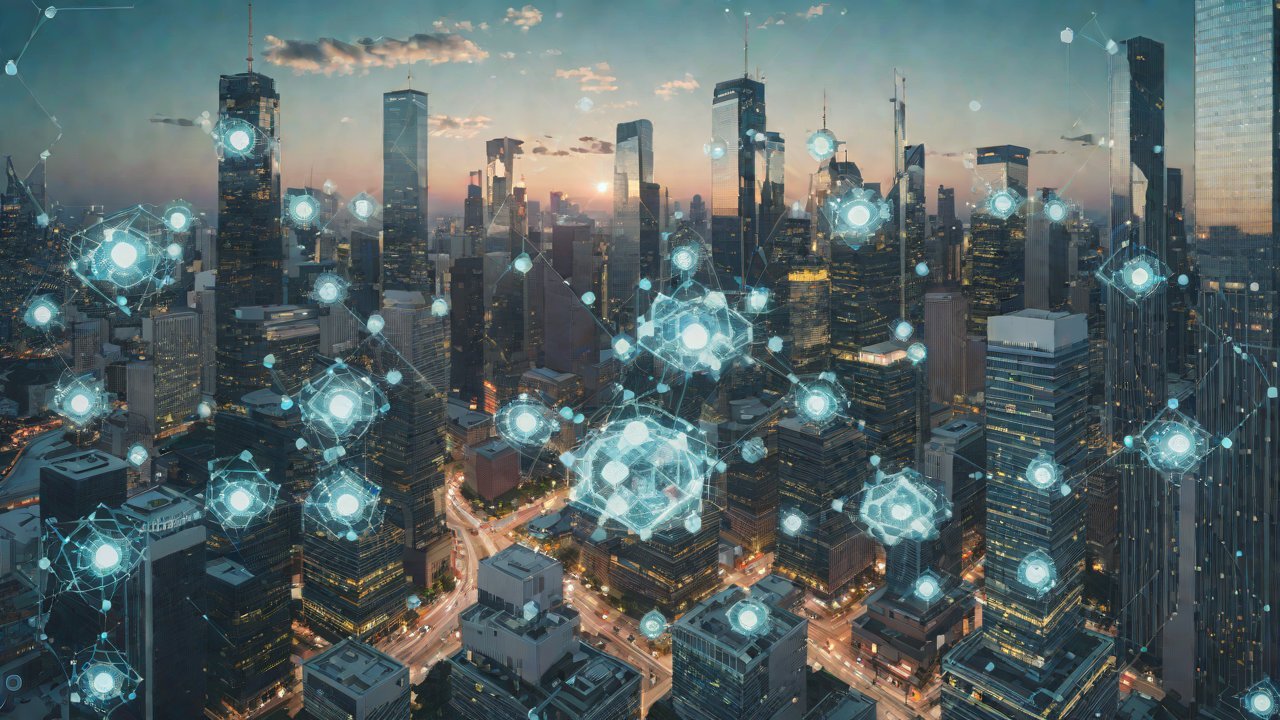
As the Internet of Things (IoT) continues to expand its reach, the traditional cloud computing model is facing increasing pressure to adapt. The sheer volume of data being generated by IoT devices is overwhelming the cloud’s ability to process and respond in real-time. This is where Fog Computing comes in – a distributed computing paradigm that brings processing power closer to the edge of the network, reducing latency and improving overall system efficiency.
Fog Computing is not a replacement for cloud computing, but rather a complementary technology that extends the cloud’s reach to the edge of the network. By offloading complex computations from the cloud to edge devices, Fog Computing enables real-time processing of IoT data, reducing the need for centralized processing and analysis. This, in turn, enables new use cases and applications that were previously impossible with traditional cloud computing.
One of the key benefits of Fog Computing is its ability to reduce latency. Traditional cloud computing models rely on centralized processing, which can introduce significant latency due to the distance between the device and the cloud. By moving processing power to the edge of the network, Fog Computing can reduce latency to a matter of milliseconds, enabling real-time processing and response.
1. Fog Computing Architecture
Fog Computing architecture is designed to be highly distributed and scalable. It consists of multiple layers, each with its own set of functions and responsibilities. The architecture can be broken down into the following components:
| Component | Description |
|---|---|
| Edge Devices | These are the devices that collect and process data from IoT sensors. They can be anything from smart home devices to industrial sensors. |
| Fog Nodes | These are the intermediate nodes that process and forward data to the cloud. They can be routers, switches, or specialized fog nodes. |
| Cloud | This is the central hub that processes and analyzes data from the fog nodes. It can be a public or private cloud. |
2. Fog Computing vs. Edge Computing
Fog Computing and Edge Computing are often used interchangeably, but they have distinct differences. Edge Computing is a subset of Fog Computing that focuses on processing data at the edge of the network. It is primarily used for real-time processing and analytics.
Fog Computing, on the other hand, is a more comprehensive approach that extends the cloud’s reach to the edge of the network. It is designed to be more flexible and scalable than Edge Computing, allowing for a wider range of applications and use cases.
| Fog Computing | Edge Computing |
|---|---|
| Distributed computing paradigm | Subset of Fog Computing |
| Extends cloud’s reach to the edge | Focuses on real-time processing |
| Highly scalable and flexible | Limited scalability and flexibility |

3. Fog Computing Applications
Fog Computing has a wide range of applications across various industries. Some of the most notable use cases include:
| Industry | Application | Description |
|---|---|---|
| Smart Cities | Traffic Management | Fog Computing can be used to process real-time traffic data from IoT sensors, enabling smart traffic management and optimization. |
| Industrial Automation | Predictive Maintenance | Fog Computing can be used to process data from industrial sensors, enabling predictive maintenance and reducing downtime. |
| Healthcare | Remote Patient Monitoring | Fog Computing can be used to process real-time patient data from wearable devices, enabling remote patient monitoring and telemedicine. |
4. Fog Computing Market
The Fog Computing market is expected to grow significantly in the coming years, driven by the increasing adoption of IoT devices and the need for real-time processing and analytics.
| Year | Market Size (USD) | Growth Rate |
|---|---|---|
| 2020 | 1.3B | 23% |
| 2025 | 5.6B | 31% |
5. Fog Computing Challenges
While Fog Computing offers many benefits, it also presents several challenges. Some of the key challenges include:
| Challenge | Description |
|---|---|
| Scalability | Fog Computing requires a highly distributed and scalable architecture, which can be challenging to implement. |
| Security | Fog Computing introduces new security risks, as data is processed and stored at the edge of the network. |
| Standardization | Fog Computing requires standardization across different industries and applications, which can be challenging to achieve. |
6. Fog Computing Future
Fog Computing is expected to play a critical role in the future of IoT, enabling real-time processing and analytics at the edge of the network. As the IoT continues to grow, Fog Computing will become increasingly important for industries such as smart cities, industrial automation, and healthcare.
| Future Trend | Description |
|---|---|
| Increased Adoption | Fog Computing is expected to be widely adopted across various industries, driven by the need for real-time processing and analytics. |
| Advancements in AI | Fog Computing will be closely tied to advancements in AI, enabling more sophisticated and complex processing and analytics. |
| Standardization | Fog Computing will require standardization across different industries and applications, enabling seamless integration and interoperability. |
IOT Cloud Platform
IOT Cloud Platform is an IoT portal established by a Chinese IoT company, focusing on technical solutions in the fields of agricultural IoT, industrial IoT, medical IoT, security IoT, military IoT, meteorological IoT, consumer IoT, automotive IoT, commercial IoT, infrastructure IoT, smart warehousing and logistics, smart home, smart city, smart healthcare, smart lighting, etc.
The IoT Cloud Platform blog is a top IoT technology stack, providing technical knowledge on IoT, robotics, artificial intelligence (generative artificial intelligence AIGC), edge computing, AR/VR, cloud computing, quantum computing, blockchain, smart surveillance cameras, drones, RFID tags, gateways, GPS, 3D printing, 4D printing, autonomous driving, etc.