
Edge Computing Nodes Complete Local Data Preprocessing
The proliferation of IoT devices has led to an explosion in the amount of data generated at the edge, where it is often too expensive to transmit this data back to the cloud for processing. To address this challenge, edge computing nodes are being deployed to preprocess and analyze data locally, reducing latency and bandwidth requirements.
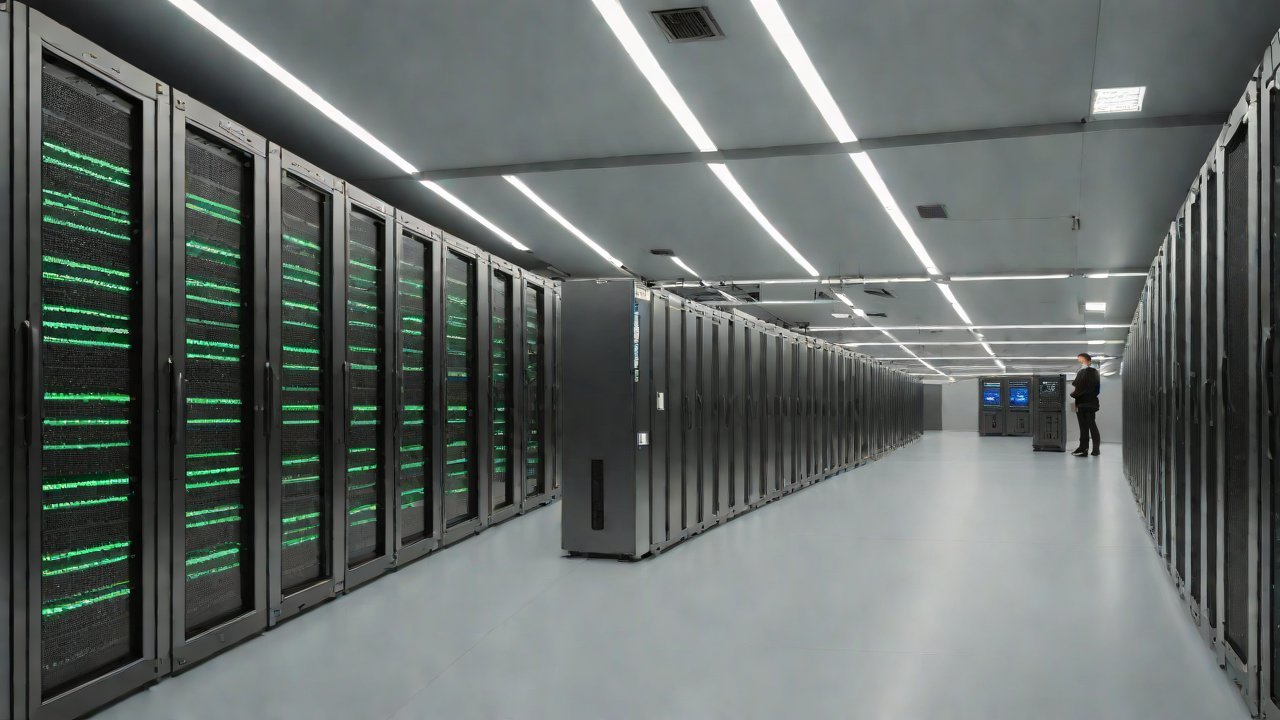
Edge computing nodes are essentially small-scale data centers or servers that can be placed anywhere in a network, from industrial settings to smart cities. These nodes are equipped with powerful processors, storage, and networking capabilities, allowing them to handle complex computations and data analysis tasks on-site.
One of the primary benefits of edge computing is its ability to reduce latency by processing data closer to where it is generated. Traditional cloud-based approaches can introduce significant delays due to network congestion and transmission times, which can be critical in applications such as autonomous vehicles or industrial control systems.
**
1. Edge Computing Architecture**
Edge computing nodes typically consist of several key components:
| Component | Description |
|---|---|
| Processor | A high-performance CPU or GPU for executing complex computations |
| Storage | Local storage for data and programs, often in the form of solid-state drives (SSDs) |
| Networking | Connectivity options such as Wi-Fi, Ethernet, or cellular connectivity to transmit data to other nodes or the cloud |
| Operating System | A lightweight OS such as Linux or Windows IoT that manages node resources and provides a platform for applications |

**
2. Data Preprocessing at the Edge**
Data preprocessing is an essential step in any data analysis pipeline, and edge computing nodes are well-suited to perform this task locally. By pre-processing data on-site, edge nodes can:
- Reduce bandwidth requirements by transmitting only processed data
- Improve latency by minimizing the need for remote processing
- Enhance security by storing sensitive data locally
Common preprocessing tasks include:
| Task | Description |
|---|---|
| Filtering | Removing irrelevant or duplicate data to improve analysis efficiency |
| Aggregation | Combining multiple data points into a single value or summary statistic |
| Normalization | Scaling data to a common range for comparison and analysis |

**
3. Edge Computing Use Cases**
Edge computing nodes are being applied in a variety of industries, including:
- Industrial Automation: Edge nodes can monitor equipment performance, detect anomalies, and trigger maintenance schedules
- Smart Cities: Edge nodes can manage traffic flow, optimize energy consumption, and enhance public safety
- Autonomous Vehicles: Edge nodes can process sensor data, navigate roads, and make real-time decisions
**
4. Market Trends and Outlook**
The edge computing market is expected to grow significantly over the next few years, driven by increasing demand for IoT applications and the need for reduced latency and bandwidth requirements.
| Year | Market Size (Billion USD) |
|---|---|
| 2020 | 1.6 |
| 2025 | 13.4 |
| 2030 | 34.8 |
**
5. Technical Considerations**
When implementing edge computing nodes, several technical considerations must be taken into account:
- Scalability: Edge nodes should be designed to scale with increasing data volumes and complexity
- Security: Edge nodes require robust security measures to protect against cyber threats
- Interoperability: Edge nodes must be able to communicate seamlessly with other devices and systems in the network
**
6. Conclusion**
Edge computing nodes are a crucial component of modern IoT architectures, enabling local data preprocessing and analysis that reduces latency and bandwidth requirements. As the market continues to grow, it is essential for organizations to consider the technical and business implications of edge computing and plan accordingly.
By deploying edge computing nodes strategically, businesses can unlock new revenue streams, improve operational efficiency, and stay ahead of the competition in a rapidly evolving landscape.
IOT Cloud Platform
IOT Cloud Platform is an IoT portal established by a Chinese IoT company, focusing on technical solutions in the fields of agricultural IoT, industrial IoT, medical IoT, security IoT, military IoT, meteorological IoT, consumer IoT, automotive IoT, commercial IoT, infrastructure IoT, smart warehousing and logistics, smart home, smart city, smart healthcare, smart lighting, etc.
The IoT Cloud Platform blog is a top IoT technology stack, providing technical knowledge on IoT, robotics, artificial intelligence (generative artificial intelligence AIGC), edge computing, AR/VR, cloud computing, quantum computing, blockchain, smart surveillance cameras, drones, RFID tags, gateways, GPS, 3D printing, 4D printing, autonomous driving, etc.