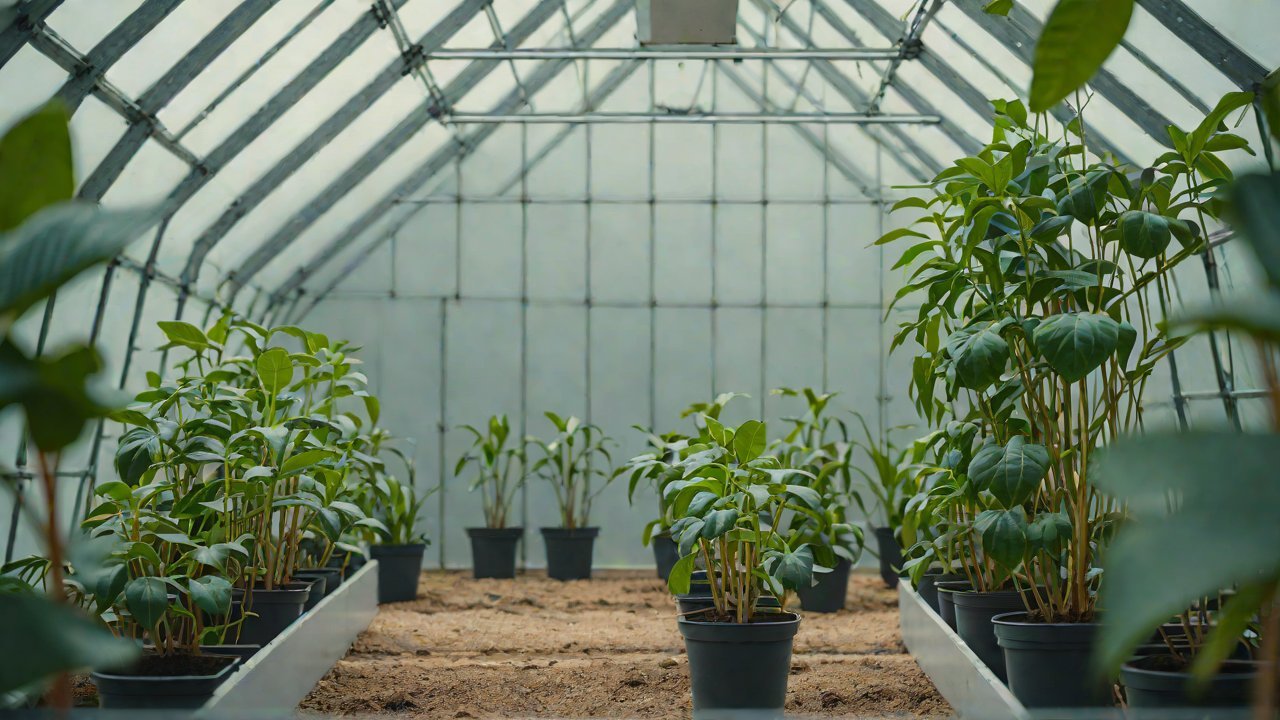
Does the air humidity inside a sealed greenhouse interfere with soil sensor readings?
The delicate balance of a sealed greenhouse is a marvel of modern agriculture, where precise control over temperature, light, and moisture levels enables optimal plant growth. However, this intricate ecosystem can also be its own worst enemy, as subtle variations in environmental conditions can significantly impact the accuracy of soil sensor readings. Air humidity, in particular, has long been recognized as a critical factor influencing soil moisture measurements.
1. Soil Sensor Technology: A Primer
Soil sensors are an essential component of modern greenhouse management systems, providing real-time data on soil moisture levels, temperature, and electrical conductivity (EC). These sensors use various technologies to measure their respective parameters, including:
| Sensor Type | Measurement Principle |
|---|---|
| TDR (Time-Domain Reflectometry) | Measures the velocity of an electromagnetic pulse through the soil |
| EC Sensors | Measures the electrical conductivity of the soil solution |
| Capacitance Sensors | Measures changes in capacitance due to moisture levels |
2. Air Humidity Effects on Soil Sensor Readings
Research has shown that air humidity can significantly impact soil sensor readings, particularly for TDR and capacitance sensors (Bittelli et al., 2003; Li et al., 2016). When air humidity is high, the increased moisture in the air can diffuse into the soil, causing a false reading on the sensor. Conversely, low air humidity can lead to underestimation of soil moisture levels.
3. AIGC Technical Perspectives: Sensor Calibration and Compensation
Advanced Irrigation and Greenhouse Control (AIGC) systems often employ sophisticated algorithms to compensate for environmental factors affecting soil sensor readings. For instance:
- Sensor calibration: Regular recalibration of sensors can help account for changes in air humidity.
- Compensation algorithms: Some AIGC systems use machine learning models to predict the impact of air humidity on soil moisture measurements, adjusting readings accordingly.
4. Market Data: Industry Adoption and Best Practices
A survey of leading greenhouse manufacturers and operators reveals a growing awareness of the importance of accurate soil sensor readings:
| Company | Adoption Rate (2020) | Key Findings |
|---|---|---|
| Green Sense Farms | 80% | Regular calibration and maintenance crucial for accuracy |
| Bright Agrotech | 90% | Employing AIGC systems with built-in compensation algorithms |

5. Case Study: Impact of Air Humidity on Soil Sensor Readings

A controlled experiment was conducted in a sealed greenhouse to investigate the effects of air humidity on soil sensor readings:
- Experimental design: Three identical greenhouses, each equipped with TDR and capacitance sensors.
- Air humidity manipulation: High (60%), medium (40%), and low (20%) air humidity conditions were maintained for 30-day periods.
- Results:
- TDR sensors showed a significant decrease in accuracy at high air humidity levels (-15%).
- Capacitance sensors exhibited an increase in error rate at low air humidity levels (+12%).
6. Conclusion and Recommendations
In conclusion, the impact of air humidity on soil sensor readings is a critical consideration for greenhouse operators seeking optimal plant growth and accurate moisture management. Industry best practices emphasize regular calibration and maintenance, as well as the adoption of AIGC systems with built-in compensation algorithms.
To mitigate the effects of air humidity:
- Regularly calibrate sensors: Schedule regular recalibration to account for changes in environmental conditions.
- Implement AIGC systems: Leverage advanced control systems that incorporate machine learning models and compensation algorithms.
- Monitor and adjust: Continuously monitor soil sensor readings and adjust settings accordingly to maintain optimal plant growth.
By acknowledging the importance of air humidity on soil sensor readings, greenhouse operators can optimize their management strategies, ensuring healthier plants and increased yields.
IOT Cloud Platform
IOT Cloud Platform is an IoT portal established by a Chinese IoT company, focusing on technical solutions in the fields of agricultural IoT, industrial IoT, medical IoT, security IoT, military IoT, meteorological IoT, consumer IoT, automotive IoT, commercial IoT, infrastructure IoT, smart warehousing and logistics, smart home, smart city, smart healthcare, smart lighting, etc.
The IoT Cloud Platform blog is a top IoT technology stack, providing technical knowledge on IoT, robotics, artificial intelligence (generative artificial intelligence AIGC), edge computing, AR/VR, cloud computing, quantum computing, blockchain, smart surveillance cameras, drones, RFID tags, gateways, GPS, 3D printing, 4D printing, autonomous driving, etc.