
Comparison of NB-IoT and LoRa protocols in urban street light coverage
Urban streets are increasingly being equipped with smart lighting systems that utilize cellular technologies to enable efficient energy management, intelligent control, and real-time monitoring. Two prominent contenders vying for dominance in this space are Narrowband Internet of Things (NB-IoT) and Long Range Wide Area Network (LoRa). These protocols boast unique characteristics that cater to the specific needs of urban streetlight coverage.
1. Technical Overview
NB-IoT Protocol
NB-IoT is a cellular-based protocol designed for low-bandwidth, low-power wide area networks (LPWANs) applications. It operates on licensed spectrum and employs advanced technologies such as Narrowband-Cellular IoT to optimize spectral efficiency. Key features of NB-IoT include:
| Feature | Description |
|---|---|
| Bandwidth | 200 kHz or 8.6 MHz |
| Data Rate | Up to 27 kbps |
| Power Consumption | Ultra-low power consumption (typically 1-10 mA) |
LoRa Protocol
LoRa is a proprietary LPWAN protocol developed by Semtech Corporation, utilizing unlicensed spectrum for IoT applications. It operates on the Sub-GHz frequency band and boasts enhanced features such as adaptive data rate and low-power mode.
| Feature | Description |
|---|---|
| Bandwidth | 125-500 kHz (depending on the region) |
| Data Rate | Up to 27 kbps (similar to NB-IoT) |
| Power Consumption | Low power consumption (typically 10-100 mA) |

2. Comparison of Key Performance Indicators
Coverage and Range
Both protocols offer competitive coverage, but with some notable differences:
- NB-IoT typically has a longer range (up to 50 km), making it more suitable for large urban areas.
- LoRa, on the other hand, offers better penetration through obstacles like buildings and foliage.
Interference Mitigation
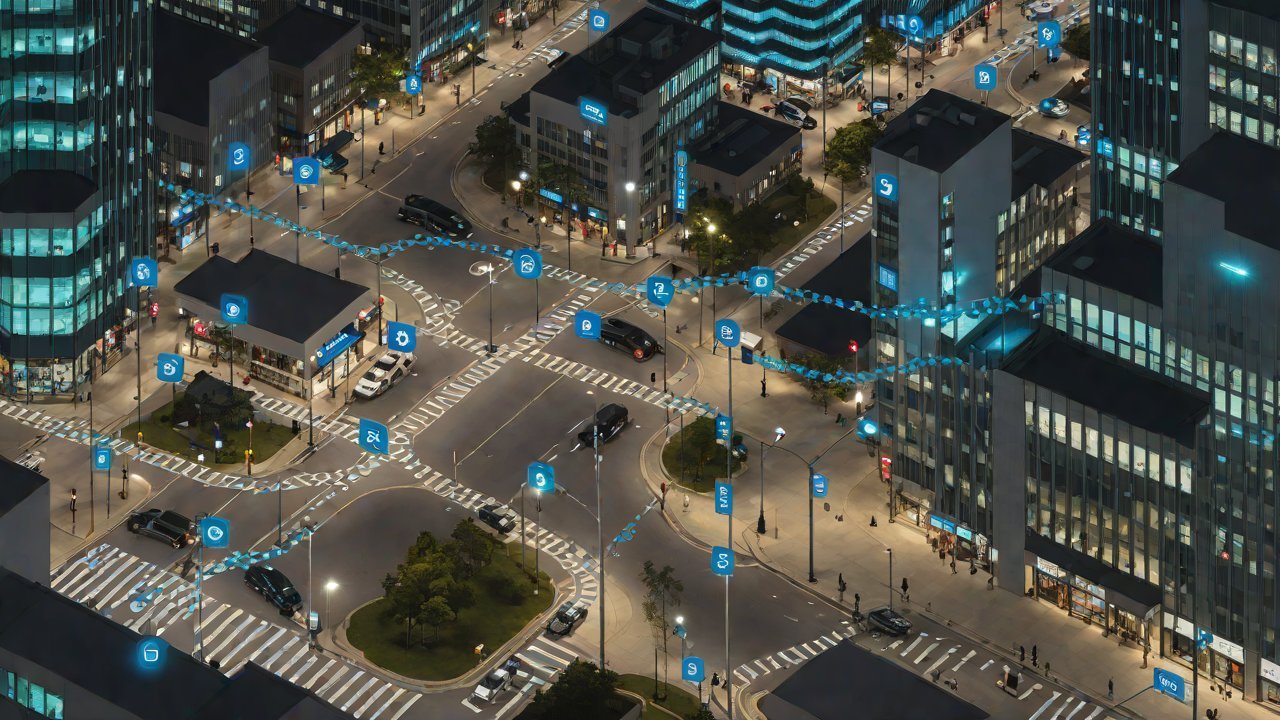
Both protocols employ techniques to minimize interference. However, LoRa’s Adaptive Data Rate allows it to dynamically adjust transmission power and data rate in response to changing signal conditions.
| Protocol | Interference Mitigation Technique |
|---|---|
| NB-IoT | Advanced frequency reuse, adaptive modulation, and coding |
| LoRa | Adaptive Data Rate (ADR), channel hopping, and spreading factor |
3. Implementation Considerations
Network Infrastructure
NB-IoT typically requires a more extensive network infrastructure setup due to the need for licensed spectrum.
- LoRa, in contrast, can operate on unlicensed spectrum, simplifying deployment.
- However, this comes at the cost of potential interference from other devices operating on the same frequency band.
Security
Both protocols implement security measures such as encryption and authentication. However, NB-IoT’s use of licensed spectrum provides inherent protection against unauthorized access.
| Protocol | Security Features |
|---|---|
| NB-IoT | Licensed spectrum, encryption (AES), and authentication (e.g., UMTS-based) |
| LoRa | Proprietary encryption (AES-128), secure key exchange (ECDH), and network-level security |

4. Market Adoption and Future Outlook
Current Adoption
NB-IoT is widely adopted in various industries, including smart cities, utilities, and manufacturing.
- LoRa, while popular in IoT applications, has seen significant adoption in the industrial automation sector.
- However, its market share lags behind NB-IoT due to factors like regulatory support and ecosystem maturity.
Future Outlook
As the demand for low-power wide area networks continues to grow, both protocols are expected to expand their presence. NB-IoT will likely benefit from increased adoption in smart cities and industrial automation sectors.
- LoRa, on the other hand, is poised to gain traction in new areas such as agriculture and logistics.
- Advancements in technologies like edge computing and artificial intelligence (AIGC) will enable more efficient data processing and analytics for both protocols.
IOT Cloud Platform
IOT Cloud Platform is an IoT portal established by a Chinese IoT company, focusing on technical solutions in the fields of agricultural IoT, industrial IoT, medical IoT, security IoT, military IoT, meteorological IoT, consumer IoT, automotive IoT, commercial IoT, infrastructure IoT, smart warehousing and logistics, smart home, smart city, smart healthcare, smart lighting, etc.
The IoT Cloud Platform blog is a top IoT technology stack, providing technical knowledge on IoT, robotics, artificial intelligence (generative artificial intelligence AIGC), edge computing, AR/VR, cloud computing, quantum computing, blockchain, smart surveillance cameras, drones, RFID tags, gateways, GPS, 3D printing, 4D printing, autonomous driving, etc.