Carbon Sequestration Monitoring IoT: How Does Land Help Us Earn “Carbon Tickets”?
The world is on a precipice, staring into an abyss of uncertainty as climate change threatens to upend the delicate balance of our ecosystem. The effects of global warming are far-reaching and devastating, from scorching heatwaves that ravage crops to rising sea levels that displace entire communities. Amidst this backdrop of despair, a beacon of hope emerges in the form of carbon sequestration – the process by which we absorb and store excess CO2 from the atmosphere.
Carbon sequestration is not a new concept; it has been around for decades, with various methods employed to mitigate the effects of climate change. However, with the advent of IoT technology, monitoring and tracking carbon emissions have become more efficient, reliable, and cost-effective. The integration of land-based carbon sequestration monitoring systems with IoT devices has revolutionized our understanding of this critical process.
Land plays a pivotal role in carbon sequestration, as it is capable of absorbing and storing significant amounts of CO2 through various mechanisms. Trees, for instance, are natural carbon sinks that absorb CO2 during photosynthesis and store it in their biomass and soil. Similarly, agricultural lands can be used to sequester carbon by implementing sustainable farming practices such as no-till or reduced-tillage agriculture.
1. Overview of Carbon Sequestration
Carbon sequestration is a critical component of climate change mitigation strategies. The process involves capturing CO2 emissions from various sources, including power plants, industrial processes, and transportation systems. Land-based carbon sequestration methods include afforestation/reforestation, soil conservation, and agroforestry.
| Method | Description | Carbon Sequestration Potential (tCO2-eq/ha/year) |
|---|---|---|
| Afforestation/Reforestation | Planting trees on previously deforested land or degraded forests | 5-10 |
| Soil Conservation | Implementing conservation tillage, cover cropping, and reduced-tillage agriculture | 1-3 |
| Agroforestry | Integrating trees into agricultural landscapes to promote biodiversity and ecosystem services | 2-4 |
2. IoT in Carbon Sequestration Monitoring
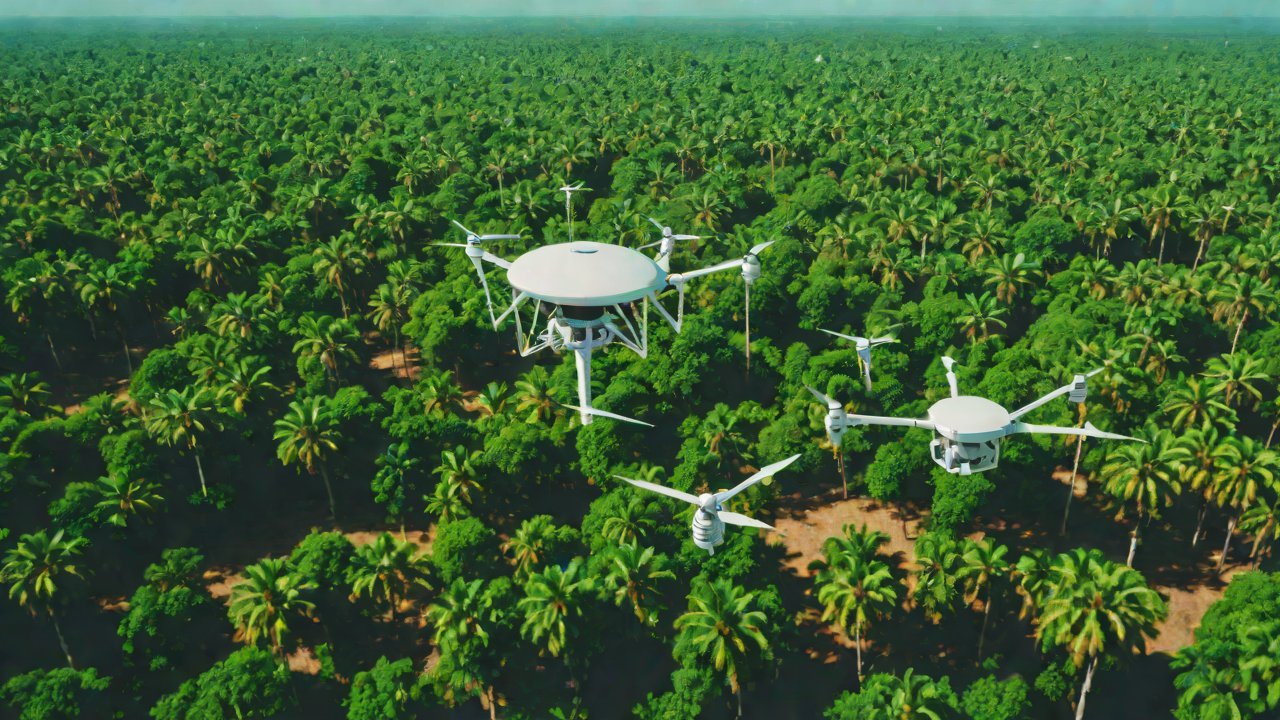
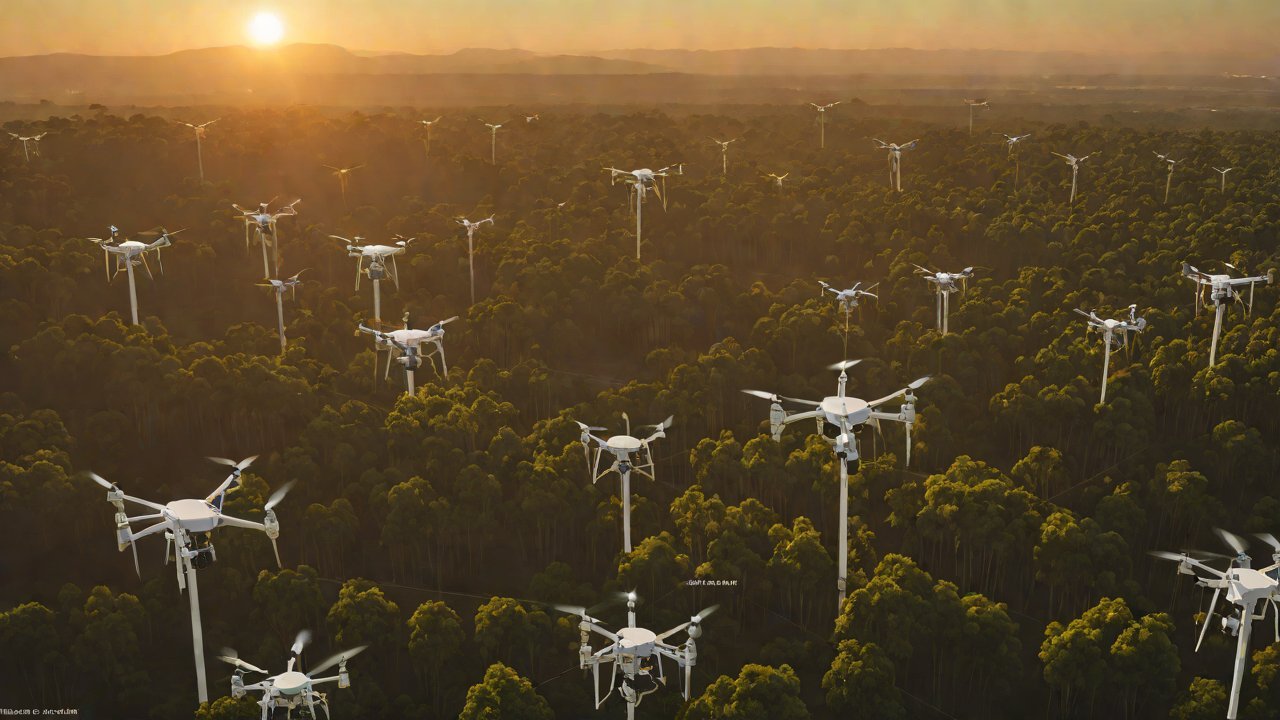
The integration of IoT technology with land-based carbon sequestration monitoring systems has transformed the landscape of climate change mitigation efforts. IoT devices, such as sensors and drones, provide real-time data on soil moisture, temperature, and CO2 levels, enabling more accurate tracking of carbon emissions.
| IoT Device | Description | Benefits |
|---|---|---|
| Soil Moisture Sensors | Monitoring soil water content to optimize irrigation schedules | Reduced water waste, improved crop yields |
| Temperature Sensors | Tracking temperature fluctuations to identify optimal planting times | Improved crop resilience, enhanced carbon sequestration |
| CO2 Sensors | Measuring atmospheric CO2 levels to monitor carbon emissions | Enhanced accuracy in carbon credits allocation |
3. Land-Based Carbon Sequestration
Land-based carbon sequestration methods are critical components of climate change mitigation strategies. Afforestation/reforestation, soil conservation, and agroforestry are some of the most effective ways to sequester carbon from the atmosphere.
| Method | Description | Carbon Sequestration Potential (tCO2-eq/ha/year) |
|---|---|---|
| Reforestation | Restoring degraded or deforested lands through tree planting | 5-10 |
| Agroforestry | Integrating trees into agricultural landscapes to promote biodiversity and ecosystem services | 2-4 |
| Soil Conservation | Implementing conservation tillage, cover cropping, and reduced-tillage agriculture | 1-3 |
4. Carbon Credits Allocation
Carbon credits are a critical component of climate change mitigation strategies. They provide a financial incentive for landowners and farmers to adopt sustainable practices that sequester carbon from the atmosphere.
| Carbon Credit Program | Description | Benefits |
|---|---|---|
| Verified Carbon Standard (VCS) | A global standard for verifying and issuing carbon credits | Ensures transparency, credibility, and market access |
| Gold Standard | A certification scheme that verifies sustainable development projects, including those related to climate change mitigation | Promotes sustainable development, social responsibility, and environmental stewardship |

5. Market Trends and Outlook
The market for carbon sequestration monitoring IoT is rapidly expanding, driven by growing demand for climate change mitigation strategies. Key trends include:
- Increased adoption of IoT technology in land-based carbon sequestration monitoring
- Growing importance of carbon credits allocation and verification schemes
- Expanding role of governments, corporations, and NGOs in promoting sustainable practices
| Market Trend | Description | Impact |
|---|---|---|
| IoT Adoption | Increased use of IoT devices for land-based carbon sequestration monitoring | Improved accuracy, efficiency, and cost-effectiveness |
| Carbon Credits Allocation | Growing importance of carbon credits allocation and verification schemes | Financial incentives for sustainable practices, increased transparency and credibility |
6. Conclusion
Carbon sequestration is a critical component of climate change mitigation strategies. Land-based methods, such as afforestation/reforestation, soil conservation, and agroforestry, are capable of absorbing and storing significant amounts of CO2 from the atmosphere. The integration of IoT technology with land-based carbon sequestration monitoring systems has revolutionized our understanding of this process, enabling more accurate tracking of carbon emissions and improved allocation of carbon credits.
As we move forward in this era of climate change, it is essential that we prioritize sustainable practices and invest in technologies that promote environmental stewardship. The market for carbon sequestration monitoring IoT is rapidly expanding, driven by growing demand for climate change mitigation strategies. By embracing these trends and adopting innovative solutions, we can earn “carbon tickets” – a metaphorical representation of the credits allocated to landowners and farmers who adopt sustainable practices that sequester carbon from the atmosphere.
IOT Cloud Platform
IOT Cloud Platform is an IoT portal established by a Chinese IoT company, focusing on technical solutions in the fields of agricultural IoT, industrial IoT, medical IoT, security IoT, military IoT, meteorological IoT, consumer IoT, automotive IoT, commercial IoT, infrastructure IoT, smart warehousing and logistics, smart home, smart city, smart healthcare, smart lighting, etc.
The IoT Cloud Platform blog is a top IoT technology stack, providing technical knowledge on IoT, robotics, artificial intelligence (generative artificial intelligence AIGC), edge computing, AR/VR, cloud computing, quantum computing, blockchain, smart surveillance cameras, drones, RFID tags, gateways, GPS, 3D printing, 4D printing, autonomous driving, etc.