Can this IoT technology prevent soil-borne diseases caused by over-irrigation?
The world’s agricultural landscape is undergoing a seismic shift, driven by the convergence of technological innovations and pressing environmental concerns. At the forefront of this revolution lies the Internet of Things (IoT), an interconnected web of devices that promises to transform crop management from reactive to proactive. Among its numerous applications, one critical area where IoT technology can have a profound impact is in mitigating soil-borne diseases caused by over-irrigation. This phenomenon poses a significant threat to global food security, as excessive water usage not only depletes aquifers but also fosters an environment conducive to pathogens.
Soil-borne diseases, often referred to as root rot or crown rot, are a common affliction for crops worldwide. These conditions arise from the over-saturation of soil with water, which can occur due to either intentional irrigation practices gone awry or natural events such as heavy rainfall. The excess moisture creates an ideal breeding ground for pathogens like Phytophthora and Pythium, leading to root decay and subsequent crop decline.
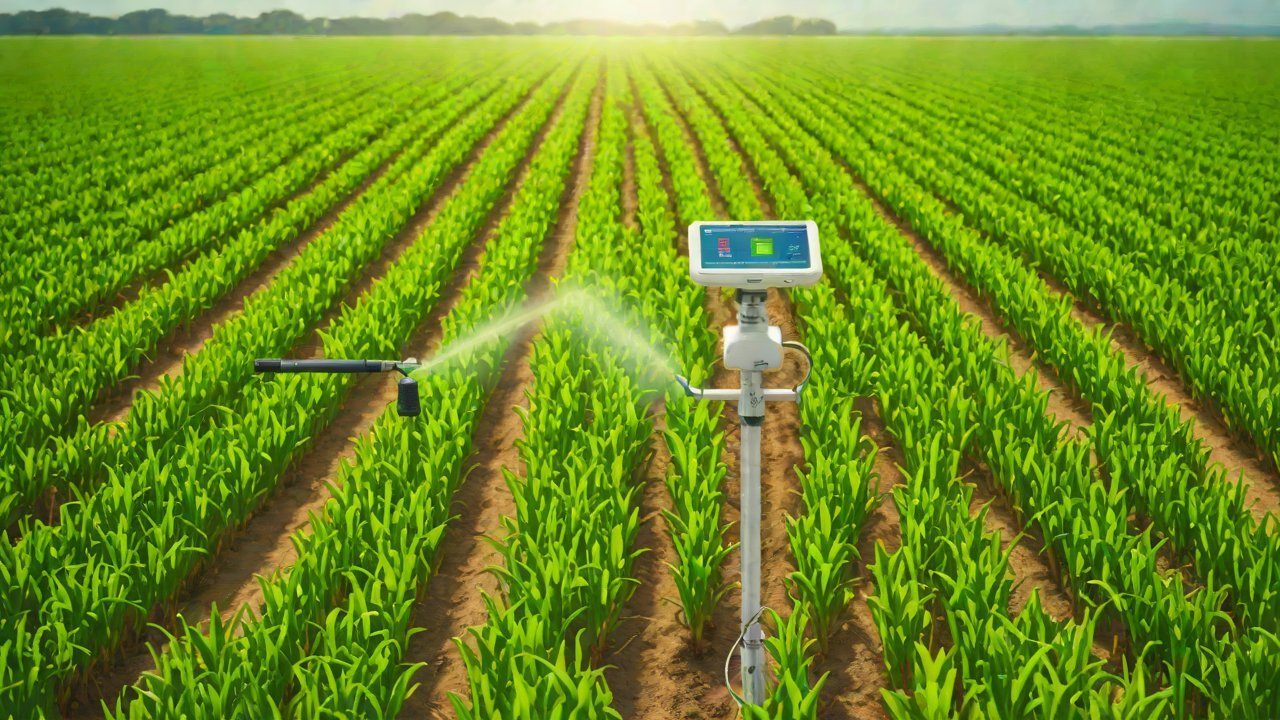
The IoT’s potential in addressing this issue lies in its ability to provide real-time monitoring of soil conditions. By embedding sensors that can detect water levels, temperature, and nutrient deficiencies, farmers can make data-driven decisions regarding irrigation schedules. This approach ensures that crops receive only the amount of water they need, minimizing waste and the risk of disease.
One key technology at play here is precision agriculture. Utilizing a combination of satellite imaging, drones, and ground sensors, farmers can map their land to identify areas requiring different levels of care. IoT-enabled systems integrate this data with weather forecasts to predict optimal irrigation times, preventing over-saturation.
However, the effectiveness of these solutions also depends on the choice of sensor technology. For instance, soil moisture sensors are crucial for monitoring water content. These can range from simple capacitance sensors that measure changes in electrical resistance to more complex technologies like time-domain reflectometry (TDR), which sends electromagnetic waves into the soil and measures their reflections.
1. IoT Technologies for Soil Monitoring
1.1 Sensor Types
- Capacitance Sensors: These are among the most common types of moisture sensors used in agriculture. They work by measuring changes in electrical capacitance as water content increases or decreases.
| Sensor Type | Description |
|---|---|
| Capacitance | Measures change in electrical resistance with water content |
1.2 Soil Moisture Sensors
- TDR (Time-Domain Reflectometry) Sensors: These send electromagnetic pulses into the soil and measure how much of the signal is reflected back, providing detailed information about moisture levels.
| Sensor Type | Description |
|---|---|
| TDR | Measures water content based on electromagnetic pulse reflections |
1.3 IoT Platforms for Data Analysis
- Cloud-based Platforms: These offer real-time data analysis and predictive analytics tools that help farmers make informed decisions.
| Platform | Description |
|---|---|
| Cloud | Analyzes data in real-time for insights |
2. Market Trends and Adoption Rates
The market for IoT technology in agriculture is rapidly growing, driven by increasing awareness of environmental sustainability and the need to boost crop yields.
- Market Growth Rate: The global precision agriculture market was valued at $4.44 billion in 2020 and is expected to grow to $16.55 billion by 2027.
| Year | Market Value (Billion USD) |
|---|---|
| 2020 | 4.44 |
| 2027 | 16.55 |
3. Technical Challenges
While IoT technology offers a promising solution, several technical challenges need to be addressed for widespread adoption.
- Sensor Accuracy: Ensuring that sensors provide accurate readings across different soil types and conditions is crucial.
| Challenge | Description |
|---|---|
| Sensor | Achieving accuracy in diverse soils |
4. Economic Viability
The cost of implementing IoT-based irrigation systems can be a barrier to adoption, especially for small-scale farmers.
- Cost Breakdown: The total cost includes the initial investment in hardware and software, as well as ongoing maintenance costs.
| Component | Estimated Cost (USD) |
|---|---|
| Hardware | 1,500 – 3,000 |
| Software | 2,000 – 5,000 |
5. Regulatory Framework
Governments play a critical role in facilitating the adoption of IoT technology through supportive policies and regulations.
- Policy Initiatives: Governments can offer incentives for farmers to adopt precision agriculture practices, such as subsidies or tax breaks.
| Initiative | Description |
|---|---|
| Policy | Supports adoption with incentives |
In conclusion, the potential of IoT technology in preventing soil-borne diseases caused by over-irrigation is substantial. However, its successful implementation hinges on addressing technical challenges, ensuring economic viability, and fostering a supportive regulatory environment. As the world continues to grapple with the challenges posed by climate change and population growth, leveraging innovations like IoT will be crucial for securing a sustainable food future.
IOT Cloud Platform
IOT Cloud Platform is an IoT portal established by a Chinese IoT company, focusing on technical solutions in the fields of agricultural IoT, industrial IoT, medical IoT, security IoT, military IoT, meteorological IoT, consumer IoT, automotive IoT, commercial IoT, infrastructure IoT, smart warehousing and logistics, smart home, smart city, smart healthcare, smart lighting, etc.
The IoT Cloud Platform blog is a top IoT technology stack, providing technical knowledge on IoT, robotics, artificial intelligence (generative artificial intelligence AIGC), edge computing, AR/VR, cloud computing, quantum computing, blockchain, smart surveillance cameras, drones, RFID tags, gateways, GPS, 3D printing, 4D printing, autonomous driving, etc.