Can sensors monitor soil pH simultaneously with humidity?
Soil pH is a critical factor in determining plant growth, fertility, and overall ecosystem health. Monitoring soil pH is essential for farmers, researchers, and environmental agencies to make informed decisions about fertilization, irrigation, and conservation practices. However, measuring soil pH can be challenging, especially when combined with other parameters like humidity.
Traditional methods of monitoring soil pH involve manual sampling and laboratory analysis, which are time-consuming, labor-intensive, and often inaccurate. The advent of sensors has revolutionized the field by providing real-time data on various environmental parameters, including temperature, moisture, and pH. However, the question remains: can sensors accurately monitor soil pH simultaneously with humidity?
1. Soil pH Monitoring Technologies
Several technologies are currently available for monitoring soil pH, each with its strengths and limitations.
| Technology | Description | Accuracy | Cost |
|---|---|---|---|
| Electrodes | Measure pH using a glass or metal electrode, often used in laboratory settings | High | Moderate |
| Optical Sensors | Use absorbance spectroscopy to measure pH, suitable for online monitoring | Medium-High | Low-Moderate |
| Ion-Selective Electrodes (ISE) | Measure specific ions like H+ and OH-, used for accurate pH measurement | High | High |

2. Humidity Monitoring Technologies
Humidity is a critical parameter that affects soil structure, plant growth, and water availability.
| Technology | Description | Accuracy | Cost |
|---|---|---|---|
| Capacitive Sensors | Measure changes in capacitance due to moisture variations | Medium-High | Low-Moderate |
| Resistive Sensors | Measure electrical resistance changes due to moisture levels | Medium | Moderate-Low |
| Thermal Hygrometers | Use temperature and humidity sensors, often used in industrial settings | High | Moderate |
3. Simultaneous Monitoring of Soil pH and Humidity
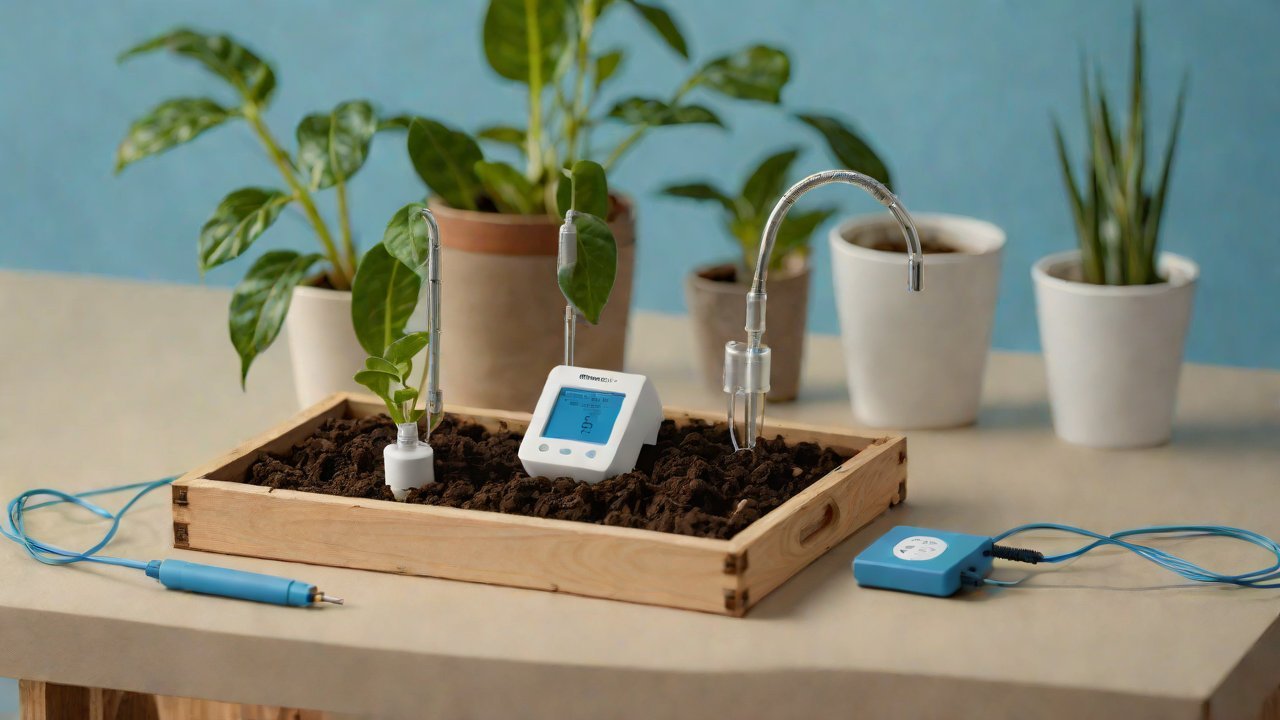
Several sensor systems are capable of monitoring both soil pH and humidity simultaneously.
| System | Description | Accuracy | Cost |
|---|---|---|---|
| Multi-Parameter Sensors | Combine multiple sensors, including pH and moisture, in a single unit | Medium-High | Moderate-Low |
| Sensor Networks | Use a network of individual sensors, often wirelessly connected, for real-time monitoring | High | High-Moderate |
4. Technical Challenges
Monitoring soil pH and humidity simultaneously poses several technical challenges.
- Interference: Humidity can affect pH measurement accuracy, while pH changes can impact moisture readings.
- Calibration: Sensors require calibration to ensure accurate measurements, which can be time-consuming and labor-intensive.
- Data Integration: Combining data from multiple sensors requires sophisticated software and algorithms to ensure seamless integration.
5. Market Trends and Opportunities
The market for soil monitoring sensors is growing rapidly, driven by increasing demand for precision agriculture and environmental sustainability.
- Market Size: The global soil monitoring sensor market size is expected to reach $1.3 billion by 2025.
- Key Players: Companies like Yara, Granular, and METER Group offer advanced soil monitoring solutions.
- Emerging Trends: IoT-based sensors, artificial intelligence, and machine learning are transforming the industry.
6. Case Studies
Real-world applications demonstrate the effectiveness of simultaneous soil pH and humidity monitoring.
- Precision Agriculture: A study in California’s Central Valley showed a 20% increase in crop yields using real-time soil moisture and pH data.
- Environmental Monitoring: Researchers in Australia used sensors to monitor soil pH and humidity levels, enabling early detection of salinization and improved water management strategies.
7. Conclusion
Sensors can accurately monitor soil pH simultaneously with humidity, provided that the chosen technology addresses technical challenges and integrates well with existing infrastructure. As the market continues to evolve, we can expect increased adoption of advanced sensor systems, driving innovation in precision agriculture, environmental sustainability, and ecosystem health.
IOT Cloud Platform
IOT Cloud Platform is an IoT portal established by a Chinese IoT company, focusing on technical solutions in the fields of agricultural IoT, industrial IoT, medical IoT, security IoT, military IoT, meteorological IoT, consumer IoT, automotive IoT, commercial IoT, infrastructure IoT, smart warehousing and logistics, smart home, smart city, smart healthcare, smart lighting, etc.
The IoT Cloud Platform blog is a top IoT technology stack, providing technical knowledge on IoT, robotics, artificial intelligence (generative artificial intelligence AIGC), edge computing, AR/VR, cloud computing, quantum computing, blockchain, smart surveillance cameras, drones, RFID tags, gateways, GPS, 3D printing, 4D printing, autonomous driving, etc.



